
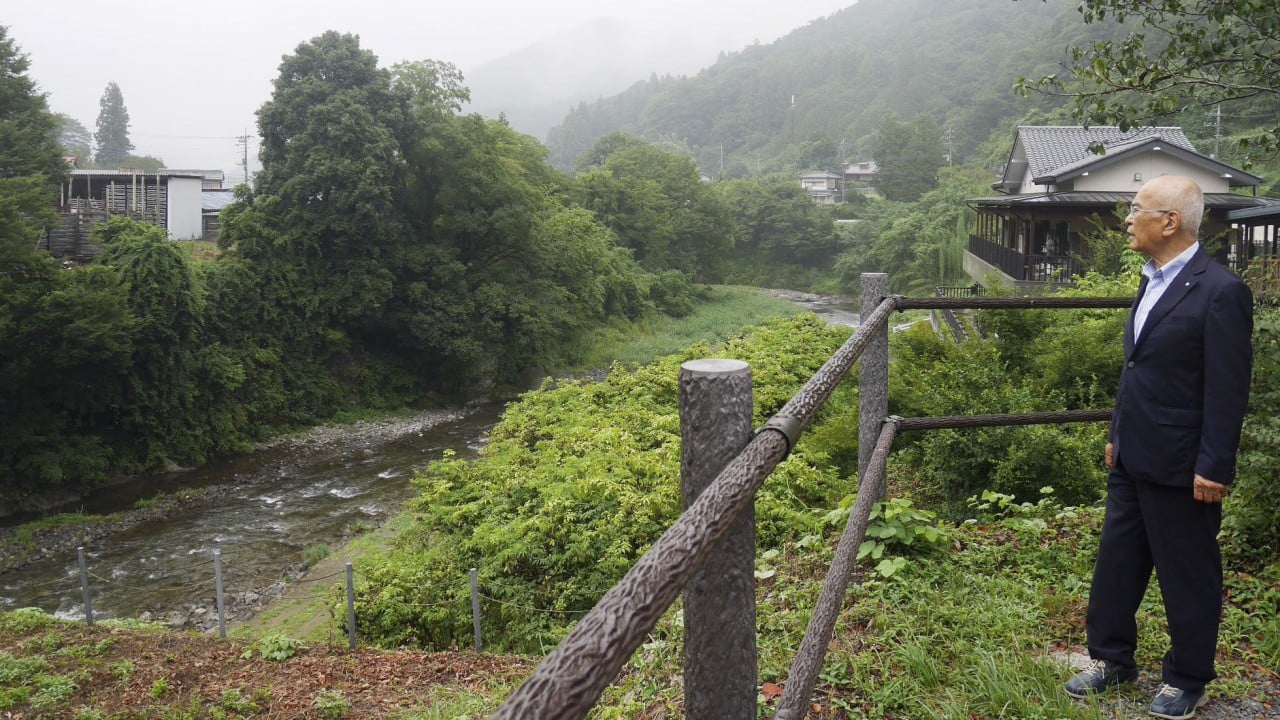
Japan’s most greying municipality has turned to its Peruvian sister city in search of a way to reverse its population decline and address the labour shortage that together threaten its survival.
The mountain village of Nanmoku in Gunma prefecture, where 65.2 per cent of residents were aged 65 or older in the 2020 census, signed a sister-city agreement with Belen in northern Peru in November, hoping cultural exchanges under the framework will eventually bring young people to live and work in the Japanese village.
“In five years, we may no longer have enough people to support the community,” said Nanmoku Mayor Saijo Hasegawa, 73. “We need people from overseas if we are to survive.”
The village with a population of just 1,337 at the end of July once thrived on sericulture and forestry, but the labour shortage is now straining its essential services, with care workers in short supply and many of its community bus drivers in their seventies.
The move comes at a time when Japan as a country faces a labour shortage stemming from its low birth rate, and is increasingly turning to foreign workers, even as anti-immigrant sentiment has also grown among the public in recent years.
Nanmoku has tried to attract new residents from across Japan by introducing vacant homes to potential migrants and taking other steps to encourage relocation. It has also entrusted the operation of a nursing home and a roadside station to a non-profit organisation established by residents to enable more flexible hiring.