
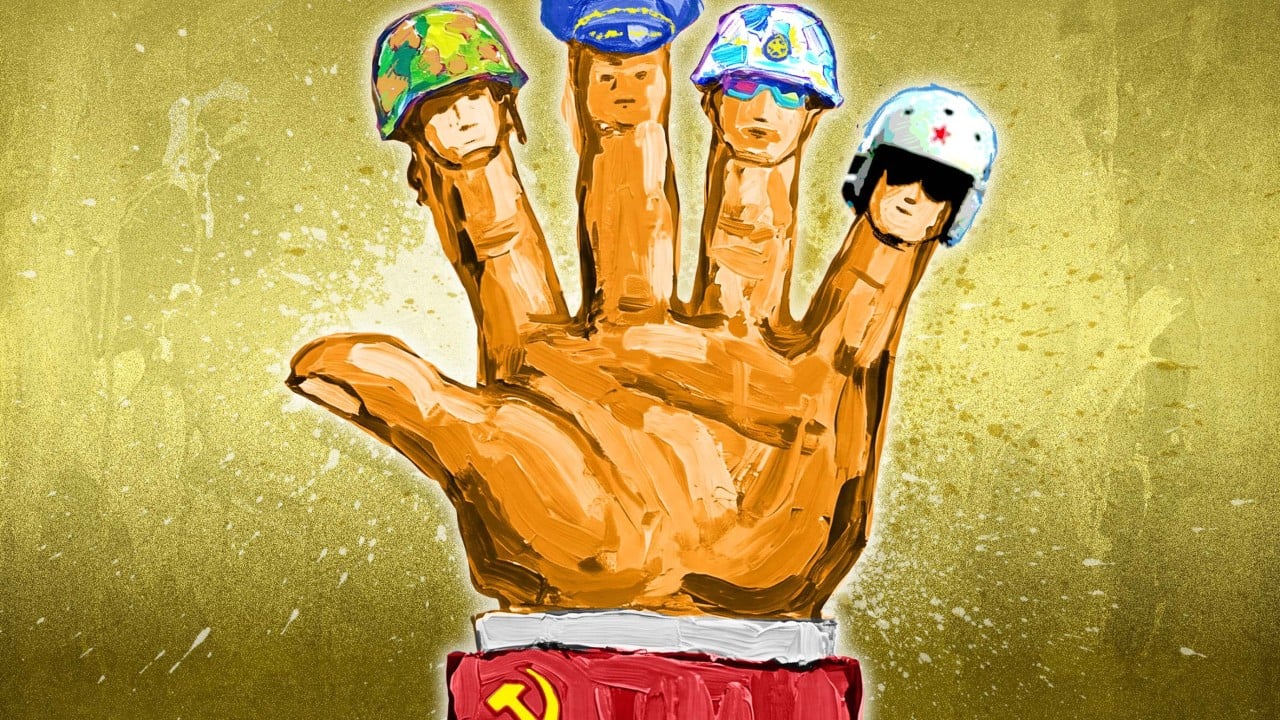
Having marked its 99th anniversary on August 1, the People’s Liberation Army is now just one year away from its centenary goals, with its evolution highlighting the past, present and future of China’s military strategy. In the third part of a series, Yuanyue Dang and William Zheng examine how Beijing leans on Mao-era doctrines and anti-corruption drives to guarantee absolute party control over the armed forces.
In December 1929, then Communist revolutionary Mao Zedong led a pivotal meeting in Gutian, Fujian province.
The Communist Party’s armed wing at the time was a coalition of rebel forces fighting the ruling Nationalists or Kuomintang (KMT). The “Gutian conference” defined the Chinese Workers’ and Peasants’ Red Army as “an armed body for carrying out the political tasks of the revolution” and set up party organisations throughout the military.
The next two decades witnessed some of the defining moments leading up to the Communist victory of 1949, including the Long March, the consolidation of Mao’s leadership and the renaming of the armed forces as the People’s Liberation Army (PLA).
In 1938, as the party faced a turning point following the departure of co-founder and Mao’s revolutionary rival Zhang Guotao, Mao wrote: “Our principle is that the party commands the gun, and the gun must never be allowed to command the party.”
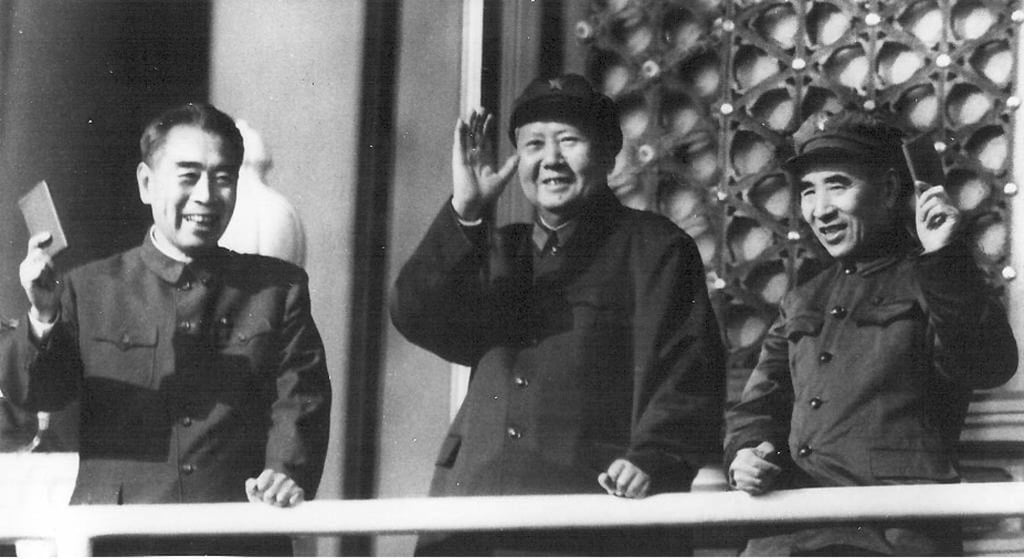
Nearly a century on, those principles still serve as the political bedrock of the party’s control over the military.