
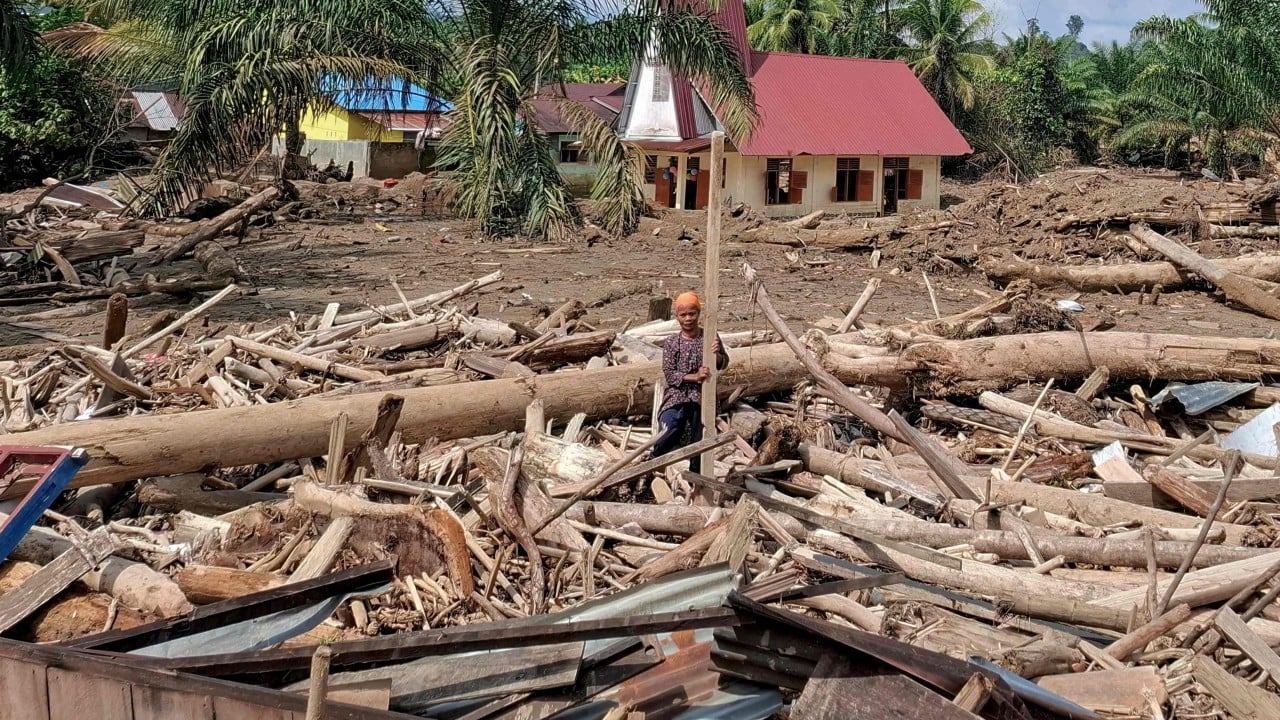
The deadly floods in Sumatra at the end of November that killed more than 1,000 people exposed the devastating effects of deforestation, with massive logs washed downstream.
Public pressure has forced the Indonesian government to respond and environmental authorities have announced investigations into eight companies suspected of contributing to the flooding and landslides.
What happened in Indonesia was not an isolated tragedy. Similar floods have devastated Thailand, Malaysia and Vietnam, driven by the same combination of weak forest governance and persistent deforestation. Climate change intensifies rainfall, but it is deforestation that determines whether heavy rain is absorbed safely or turns into destructive floods for communities downstream.
Advertisement
Forest biodiversity lies at the heart of the issue. These ecosystems underpin economic security and human well-being across Southeast Asia. Forests sustain livelihoods for hundreds of millions of people, regulate water systems essential to agriculture, store carbon crucial for climate stability and shelter roughly one-fifth of global plant and animal species.
However, the region’s forests tell a sad story. In 1990, Southeast Asia held roughly 268 million hectares (662.2 million acres) of forest. By 2010, that had fallen to around 236 million hectares and by the early 2020s, it stood at about 200 million hectares. To this day, deforestation continues in many countries, driven by plantation expansion, infrastructure and mining.
Advertisement
The destruction persists despite rising environmental ambitions. Recent assessments under the Convention on Biological Diversity explain part of the gap. While most countries have adopted forest biodiversity targets, many lack monitoring systems capable of tracking real outcomes. This disconnect allows governments to project environmental leadership while forest loss continues with few effective constraints.