
A security expert from the United States and her counterpart from China have warned that rogue AI, or its manipulation by a bad actor, could leave Washington or Beijing with just minutes to decide whether they were coming under a genuine attack from their adversary.
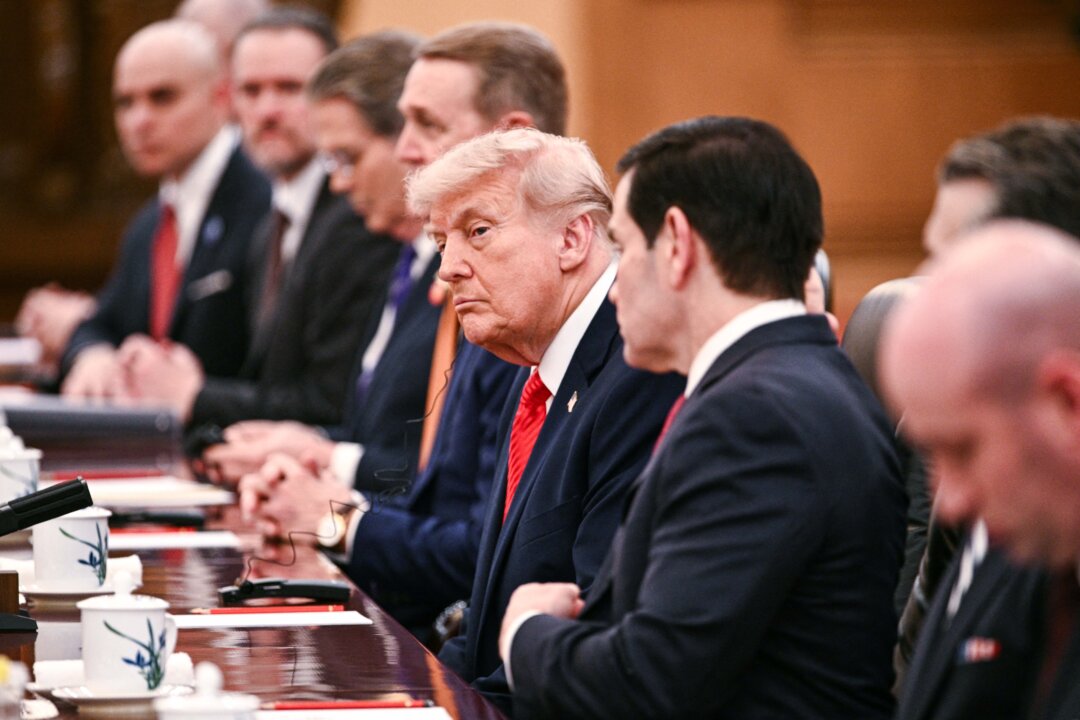
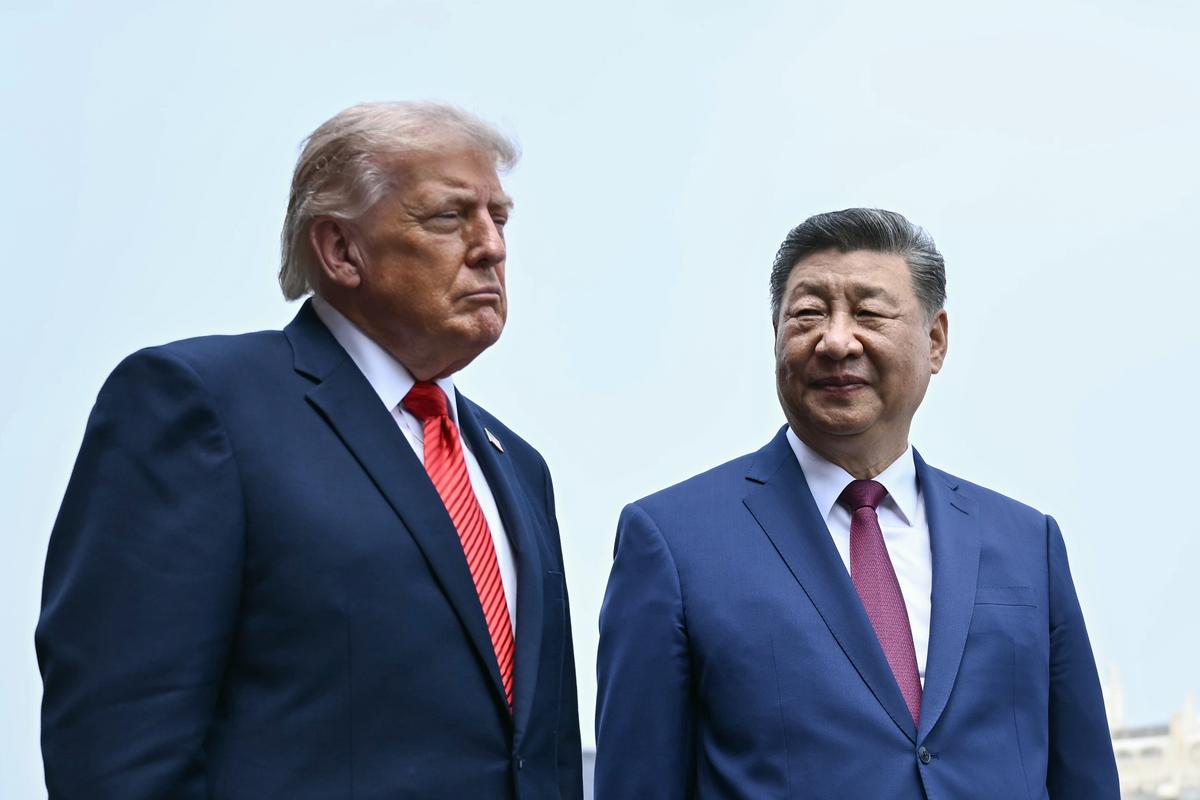
Melanie Sisson, a senior fellow at the Brookings Institution think tank, and Tianjiao Jiang, an associate professor at Fudan University, jointly authored an article that was published last week, ahead of talks between President Donald Trump and Chinese leader Xi Jinping in Washington on Sept. 24.
The pair participated in the U.S.-China AI and national security dialogue, which has been convened since 2019 by Brookings and Tsinghua University’s Center for International Security and Strategy.
Sisson and Jiang have urged the United States and China to prepare for such a scenario, amid growing concerns about increasingly powerful and more autonomous AI systems.
Anthropic CEO Dario Amodei suggested on Sept. 13 that the United States and China should hold talks about artificial intelligence to lower the risks of “potential destruction.”
“We should talk with the Chinese and see if we can work together to put a speed limit on the rate of this technology,” Amodei said, drawing a parallel with the nuclear weapons disarmament talks between the United States and the Soviet Union during the Cold War.
Sisson says humans should retain sole authority to initiate AI-enabled cyberattacks against the other country’s nuclear command, control and communications systems.
‘Possibly Catastrophic Effects’
“An intentional AI-powered cyberattack on another state’s NC3 [nuclear command, control and communications] would … initiate a military crisis with possibly catastrophic effects,” Sisson wrote, but said an unintentional attack was possible.
“An unplanned attack could still result from human error, technical limitations in the AI models, or AI agents that act in ways that humans did not anticipate,” Sisson wrote.
She also warned of another scenario.
“A bad actor could use the AI-powered cyber capability to execute an unauthorized attack,” Sisson wrote.
“The United States and China have not developed a common approach to governing AI in the military domain,” Sisson wrote.
“This does not mean, however, that they are uninterested in addressing the possibility that some military applications of AI will harm civilians, endanger societies, and undermine global stability.”
Jiang proposed red lines to prevent AI from independently deciding to use nuclear weapons, and also urged a shared definition between the United States and China of the phrase “meaningful human control.”
He also proposed a military hotline between the two countries, and said a 2023 balloon incident, in which a Chinese surveillance balloon drifting toward the Atlantic Ocean was shot down by the U.S. military, should be a “wake-up call.”
“Without the safeguard of a hotline mechanism, AI-driven drones and unmanned vessels are highly likely to trigger more accidental escalations in the future,” Jiang wrote.
‘House of Dynamite’ Scenario
The scenario suggested by Sisson and Tianjiao is similar to the plot of the film “House of Dynamite”—which was aired on Netflix last year—in which an intercontinental ballistic missile, with a nuclear warhead, is fired at Chicago from somewhere in the Pacific, after a cyberattack takes down military satellites, preventing the United States from reliably assessing whether it was fired by China or North Korea, and limiting its options to respond.
The Nuclear Threat Initiative, a Washington-based nonprofit, posted a blog on Oct. 9, 2025, which suggested the basis of the film’s plot was feasible and there was a need to strengthen mechanisms which “safeguard against cyber and other threats that could contribute to the unauthorized, inadvertent, or accidental use of a nuclear weapon.”
Chinese State Security Minister Chen Yixin wrote in the China Cyberspace magazine this week that AI “fundamentally transforms the form of military struggle.”
He said AI was now playing a role on the battlefield, citing AI-directed strikes during the current conflict between the United States and Iran.
But earlier this week the Chinese Ministry of Foreign Affairs’ spokesman, Guo Jiakun, reacted negatively to Amodei’s essay about the threat AI posed to humanity.
“Fearmongering, confrontation and vicious competition will only disrupt the process of global AI governance which serves no one’s interest,” Guo said.
Reuters contributed to this report.
We had a problem loading this article. Please enable javascript or use a different browser. If the issue persists, please visit our help center.