
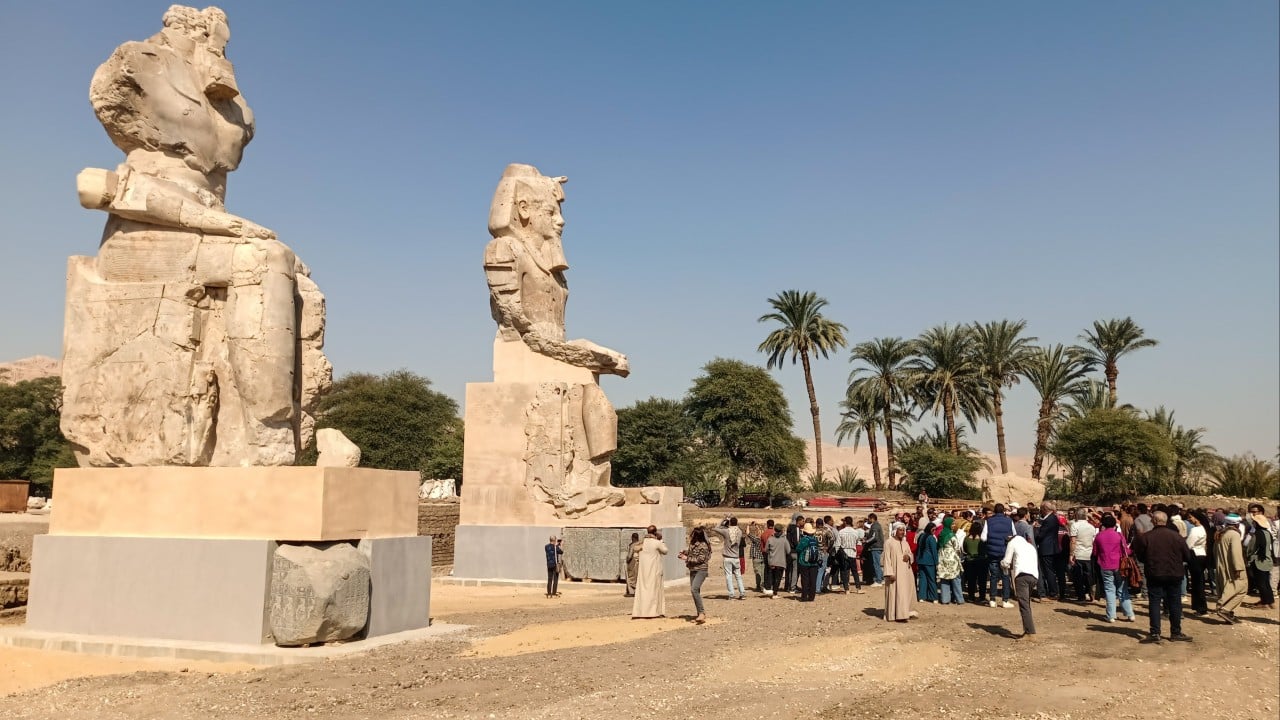
Egypt on Sunday revealed the revamp of two colossal statues of a prominent pharaoh in the southern city of Luxor, the latest in the government’s archaeological events that aim at drawing more tourists to the country.
The giant alabaster statues, known as the Colossi of Memnon, were reassembled in a renovation project that lasted about two decades. They represent Amenhotep III, who ruled ancient Egypt about 3,400 years ago.
“Today we are celebrating, actually, the finishing and the erecting of these two colossal statues,” Mohamed Ismail, secretary general of the Supreme Council of Antiquities, told Associated Press ahead of the ceremony.
Advertisement
Ismail said the colossi are of great significance to Luxor, a city known for its ancient temples and other antiquities. They are also an attempt to “revive how this funerary temple of king Amenhotep III looked like a long time ago”, Ismail said.
Amenhotep III, one of the most prominent pharaohs, ruled during the 500 years of the New Kingdom, which was the most prosperous time for ancient Egypt.
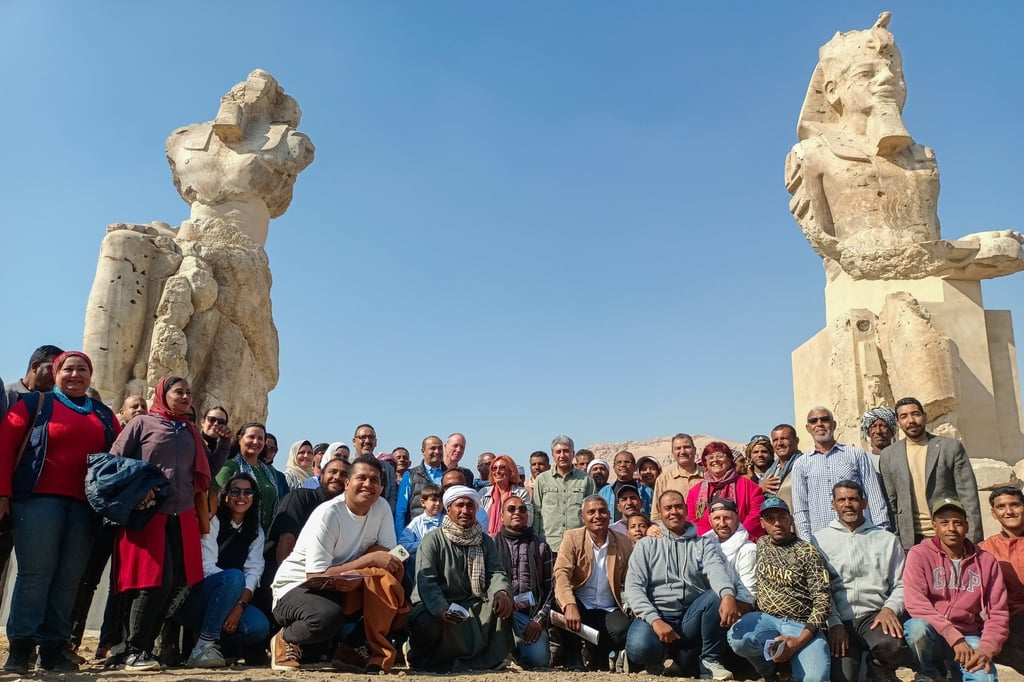
The pharaoh, whose mummy is showcased at a Cairo museum, ruled between 1390-1353BC, a peaceful period known for its prosperity and great construction, including his mortuary temple, where the Colossi of Memnon are located, and another temple, Soleb, in Nubia.