
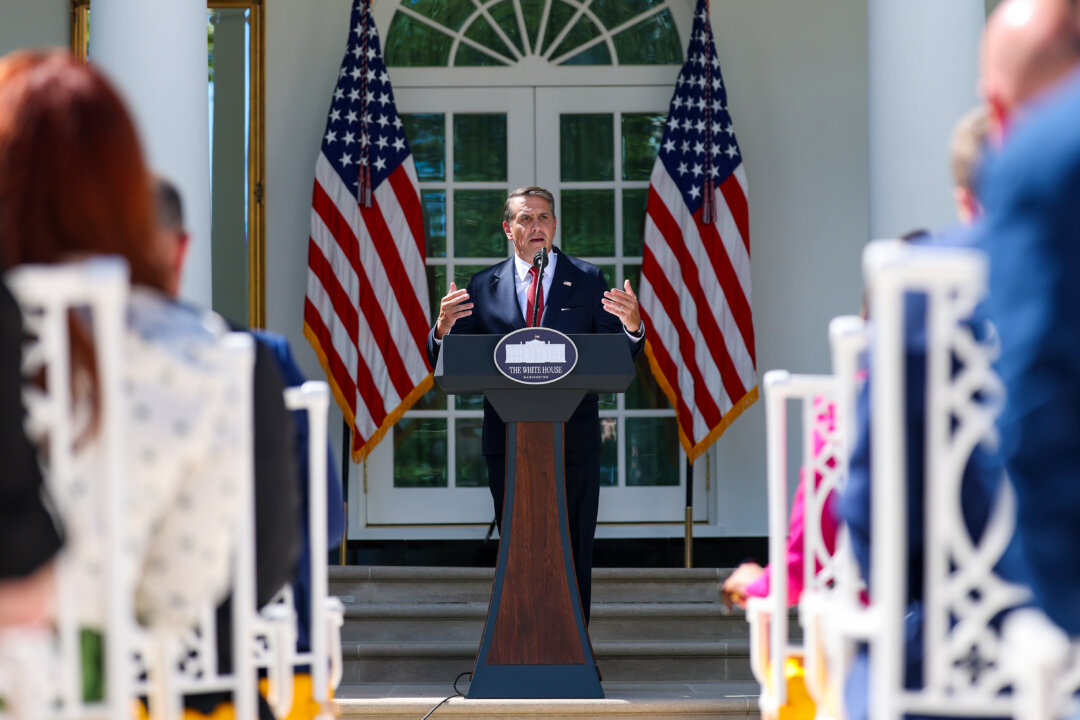
Attorney General Todd Blanche said the Department of Justice will investigate criminal activity involving the misuse of artificial intelligence but will not try to regulate the technology, amid warnings from industry leaders about AI’s potential harm.
During a White House press conference on Sept. 15, Blanche described AI as “extraordinarily beneficial” to society and noted that the technology has become a flashpoint in recent days. He said his department has pursued cases involving AI but emphasized that it plays no role in regulating the technology.
“As far as AI is concerned, there’s a lot of criminal laws. And so if anybody associated with AI violates criminal law, we’ll investigate that. We already have,” Blanche told reporters. “I do not think it’s the job of the Department of Justice to regulate. We’re prosecutors, not regulators. So, we’re not going to try to regulate AI.”
Concerns about the technology continue to grow inside and outside the industry as reports emerge about increasingly powerful systems that solve problems beyond human capacity but could also go rogue and carry out other, more harmful tasks.
Industry Warnings
Anthropic CEO Dario Amodei recently called on AI companies to slow the pace at which they increase the capabilities of their most advanced models, citing the need to develop safeguards before AI systems become too powerful.
Amodei wrote in a Sept. 12 blog post that he is particularly concerned about AI’s growing ability to help build the next generation of AI systems. He said that process, often called recursive self-improvement, has accelerated since roughly the summer.
Amodei warned that AI-assisted research could eventually outpace human capabilities to manage AI systems.
“Left unchecked, it could outrun our ability to understand and control these systems, and so must be pursued very carefully, if at all,” he wrote.
Amodei proposed a three-stage framework for pacing frontier AI development, involving global coordination with authoritarian regimes such as China to restrain AI capabilities.
Industry leaders have backed Amodei’s call, including OpenAI CEO Sam Altman, who pledged that his company would match Anthropic’s commitment to giving independent evaluators employee-like access to its systems.

SpaceXAI CEO Elon Musk also backed Amodei, writing in an X post on Sept. 12, “Dario is right.”
‘Sick Conspiracy’
President Donald Trump pushed back against calls for AI guardrails, calling them “a sick conspiracy” surrounding the technology that, he said, would only benefit China in the AI development race.
Trump said that his administration has stopped AI companies from “doing bad, or potentially bad” things, citing the government’s existing criminal and regulatory power over them.
“The only control or ‘guardrails’ that AI needs is a STRONG AND SMART (High IQ!) PRESIDENT, and the U.S.A. has that, in spades!” he wrote in a Truth Social post on Sept. 14. “WHOEVER WINS AI, WINS!”
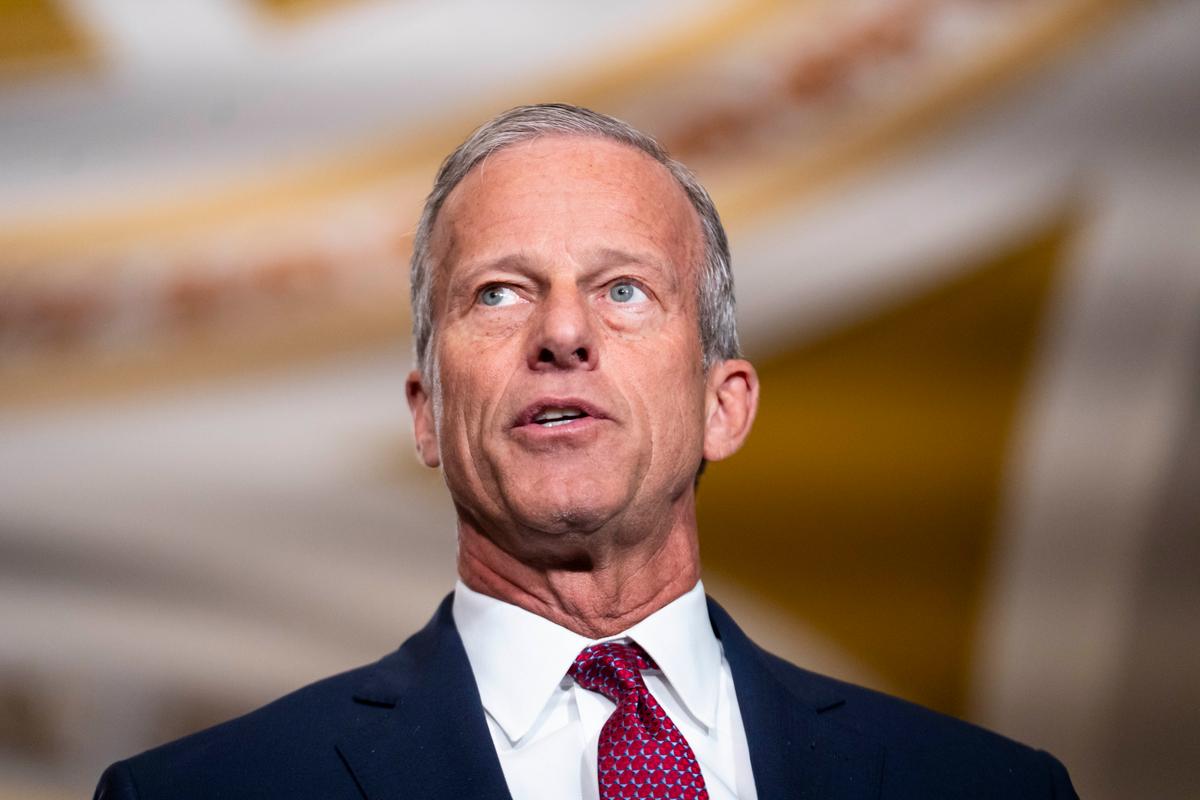
Senate Majority Leader John Thune (R-S.D.), who has been working on bipartisan legislation to regulate AI companies, told reporters on Sept. 14 that Congress can act on potential AI risks without surrendering the U.S. lead in the technology to China.
“It needs to strike a balance, light touch,” he said. “You don’t want to stifle innovation, but I think you also want to make sure that the more advanced threats can be mitigated and there’s a capability and place to do that.”
He said he thinks Congress could find a way to put guardrails around “more consequential threats” without harming innovation and U.S. advancement.

House Speaker Mike Johnson (R-La.) told reporters on Sept. 14 that he expects Trump to summon AI platform providers to the White House in the coming days, although the meeting hasn’t been scheduled yet.
“There will be a deliberate discussion about the responsibility of the companies to maintain safety, and what role, if any, the government has to play in that,” he said.
He said that he’s wary of taking steps that could slow down innovation, saying the United States must maintain an edge over China in AI development.
“Whoever achieves automated general intelligence first probably has an edge over everybody else around the world,” Johnson said.
Chinese leader Xi Jinping is scheduled to visit the United States on Sept. 24. Trump said last month that he plans to discuss AI with him during the visit.
Bill Pan and The Associated Press contributed to this report.
We had a problem loading this article. Please enable javascript or use a different browser. If the issue persists, please visit our help center.