
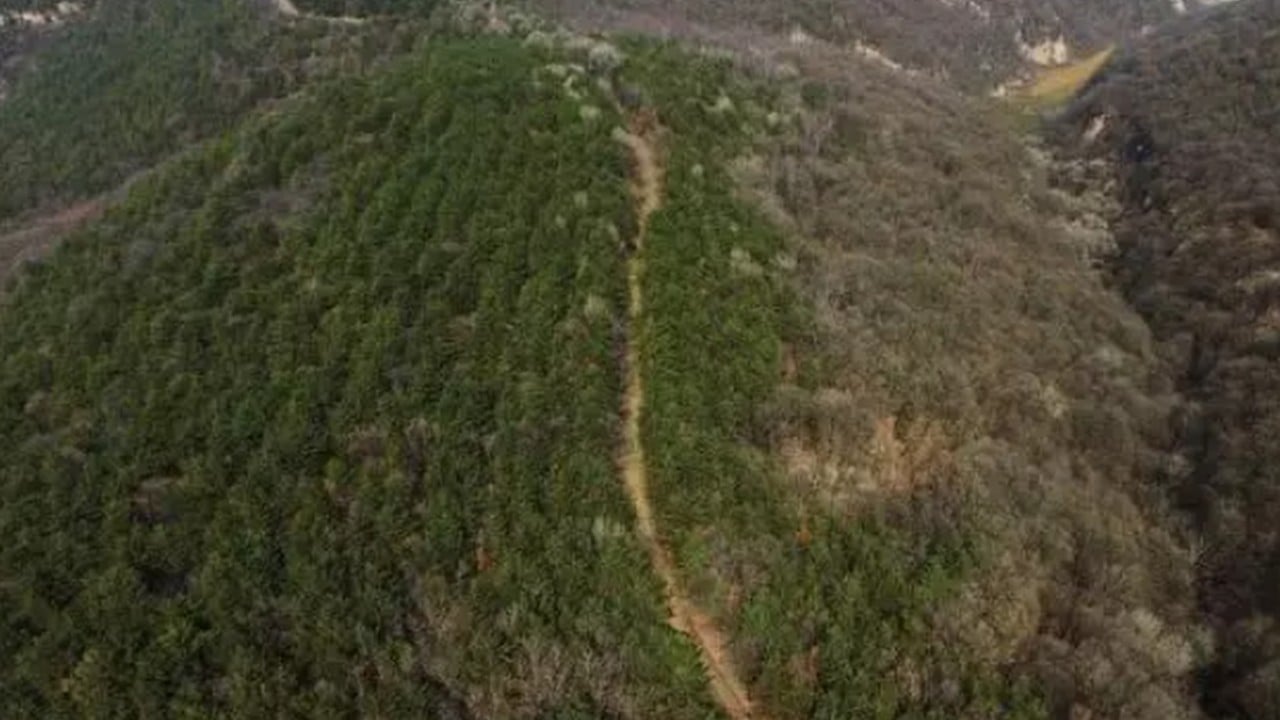
Chinese archaeologists have uncovered a stretch of the celebrated Qin Straight Road, one of the most ambitious infrastructure projects in human history.
Unveiled on December 9, following a 2024 survey by the Cultural Heritage Protection and Research Institute of Yulin, Shaanxi province, the discovery of a 13km (8-mile) stretch offers fresh evidence of the 2,200-year-old “highway” that once spanned nearly 900km across northern China.
According to historical records, the Qin Straight Road was built under the orders of Qin Shi Huang, China’s first emperor, and completed in just five years.
Advertisement
Excavations reveal sophisticated construction techniques, such as trench passes aligned in a straight line, rammed-earth slope reinforcements, compacted roadbeds and filled valleys. It averaged about 40 metres (130ft) in width – enough space for four lanes of traffic.
Historical records described how workers “filled valleys and levelled mountains” to create a direct north-south corridor from Xianyang, the capital of the Qin dynasty (221-207BC), in modern-day Shaanxi province, to Jiuyuan, now the city of Baotou in Inner Mongolia, enabling rapid military deployment against the Xiongnu nomads.
Advertisement
The discovery also included a small site nearby, believed to be a relay station that spanned the Qin era and its successor the Han dynasty (206BC-AD220). Ceramic fragments found there helped confirm its age and function.