
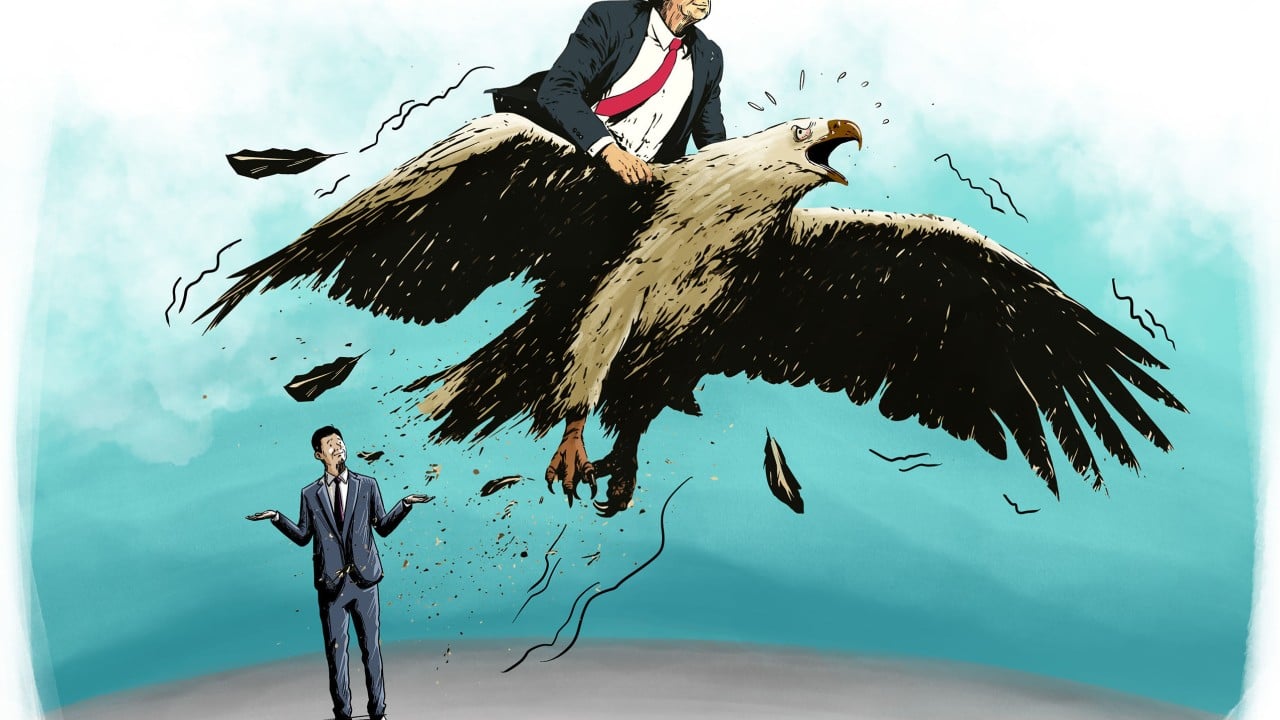
There is no shortage of Western commentary on US President Donald Trump’s second term. What’s missing is an honest account of how 1.4 billion of us in China see it – or at least how China’s officials and scholars do, since that’s who I can speak for here. I’ve spent a decade watching that view change, from real alarm in 2017 to something closer to a shrug today.
Four things now count as consensus among Chinese scholars. One, Trump is undermining America’s alliance system. His first term rattled Washington’s furniture. His second is dismantling the house. He has purged the civil service, stretched executive power, taxed friend and foe alike, and gutted America’s contribution to global public goods.
He appears to be governing for the next election, not the next generation – and this is speeding up the arrival of a multipolar world.
Two, hostility to China is bipartisan in Washington, but Trump’s version comes with a price tag, which we find oddly reassuring. When tariffs on Chinese goods hit 145 per cent last year, American retailers, farmers and manufacturers howled, inflation bit and the White House backed into a truce. The lesson we draw: his toughness is a negotiating tactic, not a crusade. That leaves room to manage the relationship.
Three, pressure has been a poor substitute for actual containment. The 2018 trade war spooked Chinese firms. By 2026, the mood has flipped. Turns out sanctions are quite good at building the thing they’re meant to prevent.
Chinese chipmakers have scaled up mature 28-nanometre production. Home-grown chip-design software now holds a quarter of the domestic market. Solar panels and electric vehicles have found new buyers across Southeast Asia, the Middle East and Latin America. America’s share of China’s trade shrank.