
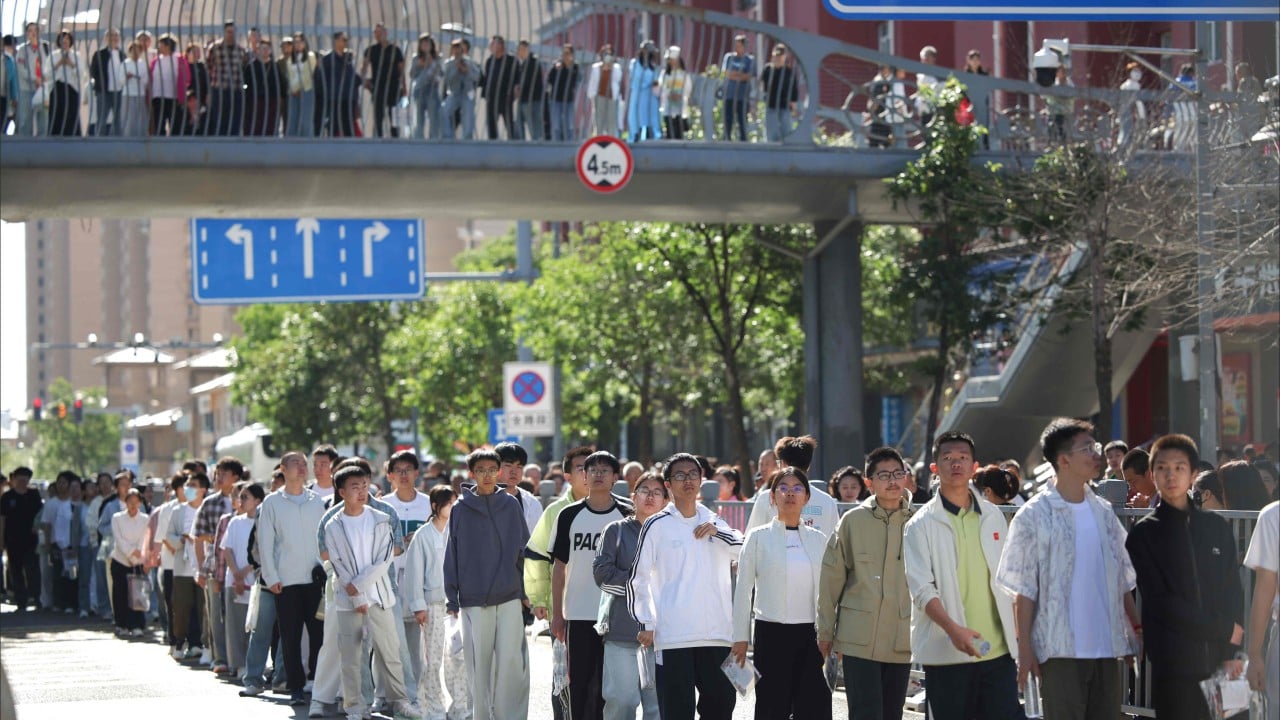
Every summer, China’s gaokao, the national higher education entrance examination, provides an unusually revealing snapshot of household expectations. The critical metrics are not average scores or admission volumes. They are the choices families make about how their children will spend four years of their lives.
The 2026 examination attracted 12.9 million registered candidates. This is a decline from 13.35 million in 2025 and 13.42 million in 2024. Demographics explain much of this contraction. The broader question is where Chinese households now choose to direct their human capital.
The answer suggests a rational repricing of systemic risk rather than a retreat from ambition. For much of the past two decades, Chinese families effectively invested in economic growth through education. The implicit assumption was straightforward: align with a growing industry, acquire the right degree and the economy would do much of the rest. That assumption is becoming harder to sustain.
Consider the rising appeal of police colleges. Admissions figures from a police college in Zhejiang show that its admission scores have been rising year by year, and some of its police programmes have attracted applicants with rankings well inside the province’s upper tier. The attraction is not that police officers necessarily earn more money than graduates entering the private sector. It is that the career path is unusually clear: admission, professional training and a defined public sector recruitment system create a clearer route from education to employment.
Some observers describe this trend as a flight to safety. That misses a crucial dynamic. Chinese families are not abandoning risk altogether. They are becoming more precise about the risks they agree to underwrite.
Human capital theory has long offered economists a simple way to think about education: an upfront outlay calibrated against expected lifetime returns. Today, Chinese households are applying this balance sheet logic with surgical precision. At one end of the spectrum lie options with clear public sector guarantees.