
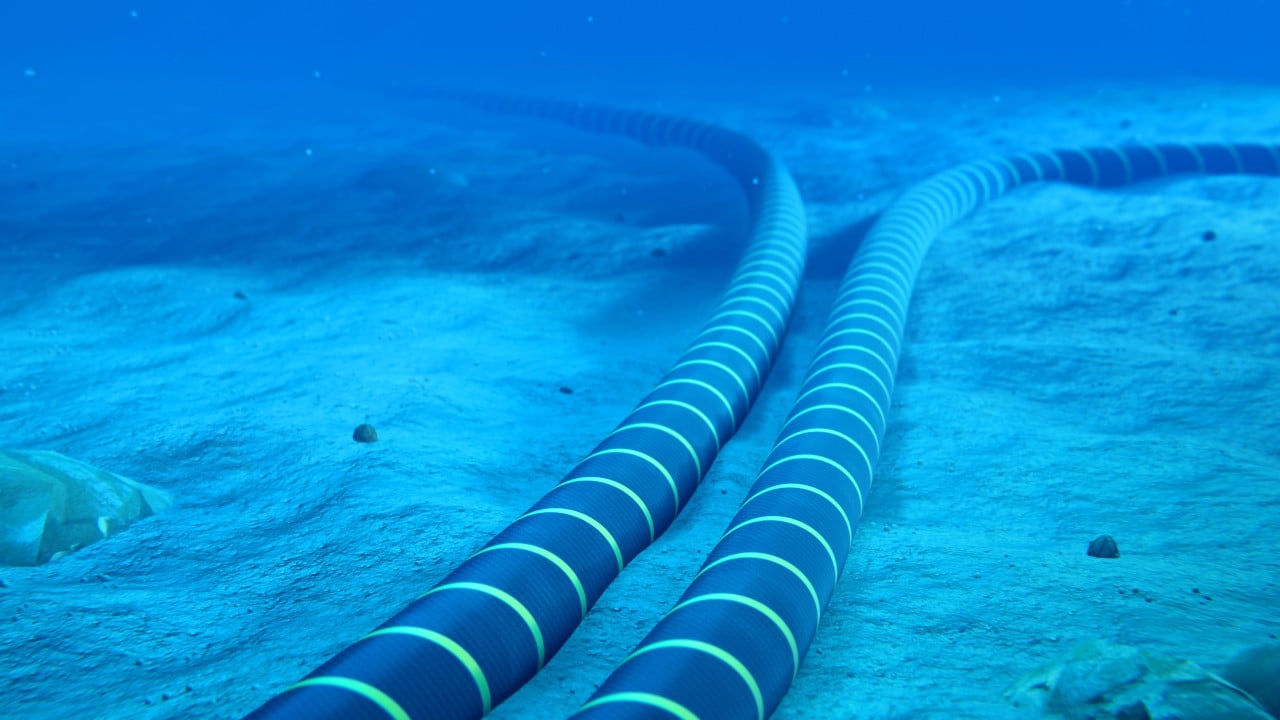
Beijing has been urged to create its own law to protect its underwater fibre-optic cables, as global fears grow over sabotage of critical ocean infrastructure.
The recommendation by Shanghai Maritime University law professor Guo Ran comes amid growing threats to the undersea cables that carry about 99 per cent of global intercontinental data, including in critical chokepoints such as the Red Sea and the Baltic Sea.
As a major coastal state and a key investor in the Digital Silk Road, China has a strong interest in safeguarding these cables, which serve as the physical backbone for global artificial intelligence (AI), according to an article by Guo published last month in Democracy and Legal System.
The policy journal is supervised by the China Law Society, a state-run organisation that advises on legislation.
The Digital Silk Road is Beijing’s push to build digital and telecommunications infrastructure as part of its Belt and Road Initiative to grow global trade.
China should establish a governance system for international subsea cable security that has both international legal legitimacy and practical defence capabilities
In recent years, China has introduced the Data Security Law and the Cybersecurity Law to tighten its grip on the digital realm, but these legal frameworks have focused on data processing and cross-border data flows, while physical seabed infrastructure has remained largely unregulated.