
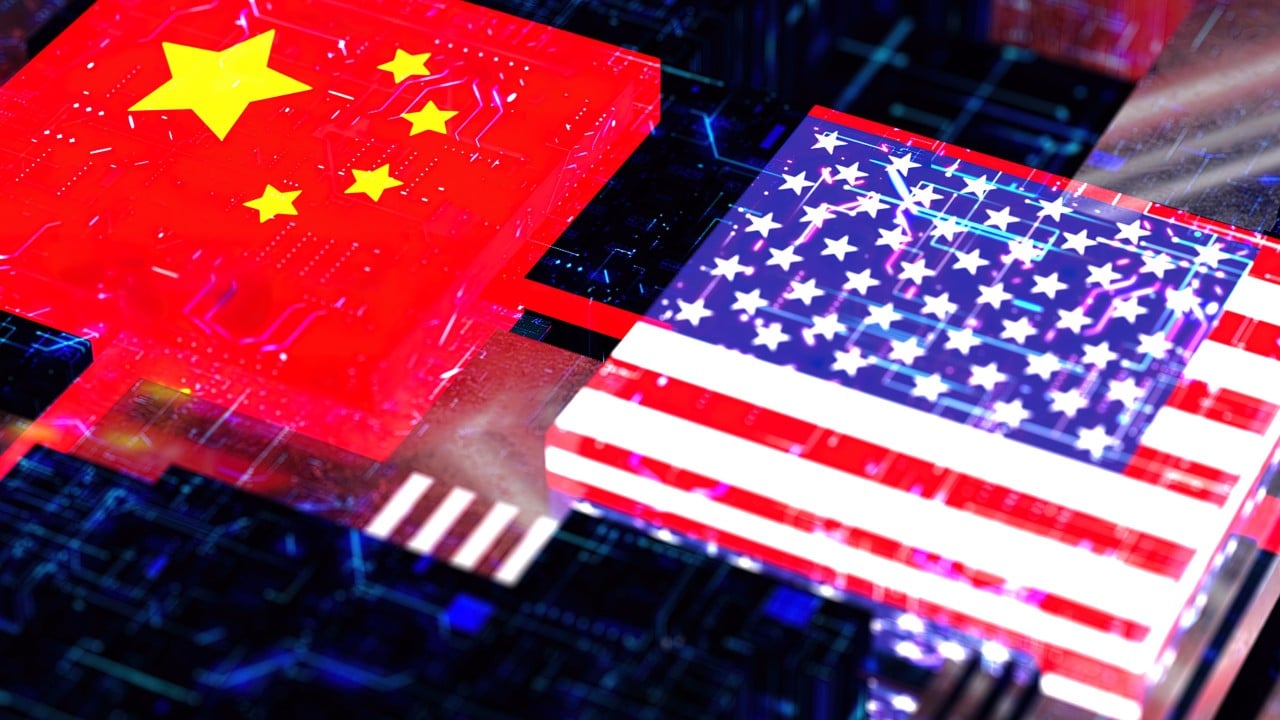
For policymakers in Beijing and Washington, artificial intelligence (AI) has become a high-stakes arena in their strategic rivalry, closely tied to national interests and security.
From export controls on high-end semiconductors to heavy scrutiny of foreign investment, the future of AI would appear to represent a stark binary choice: one country’s technological leap is seen as a direct threat to the other.
Yet, far from the halls of power, some developers and scientists contend that the true potential of AI is in expanding global capabilities.
This view united a diverse group of AI innovators and entrepreneurs who gathered in Hong Kong this month to explore how global collaboration and knowledge sharing could forge an entrepreneurial ecosystem that transcends deepening geopolitical rifts.
For Pak-Sun Ting, co-founder and CEO of Votee AI – developer of the first open-source Cantonese large language model (LLM) – scientific progress and collaboration in AI are like a “small undercurrent to help go against geopolitics”.
“Geopolitical winds change from time to time,” Ting said. “Government to government, there could be some disagreements. But from civilian to civilian, technology to technology, as long as they allow us and it is doable, we will take it and work with it.”