
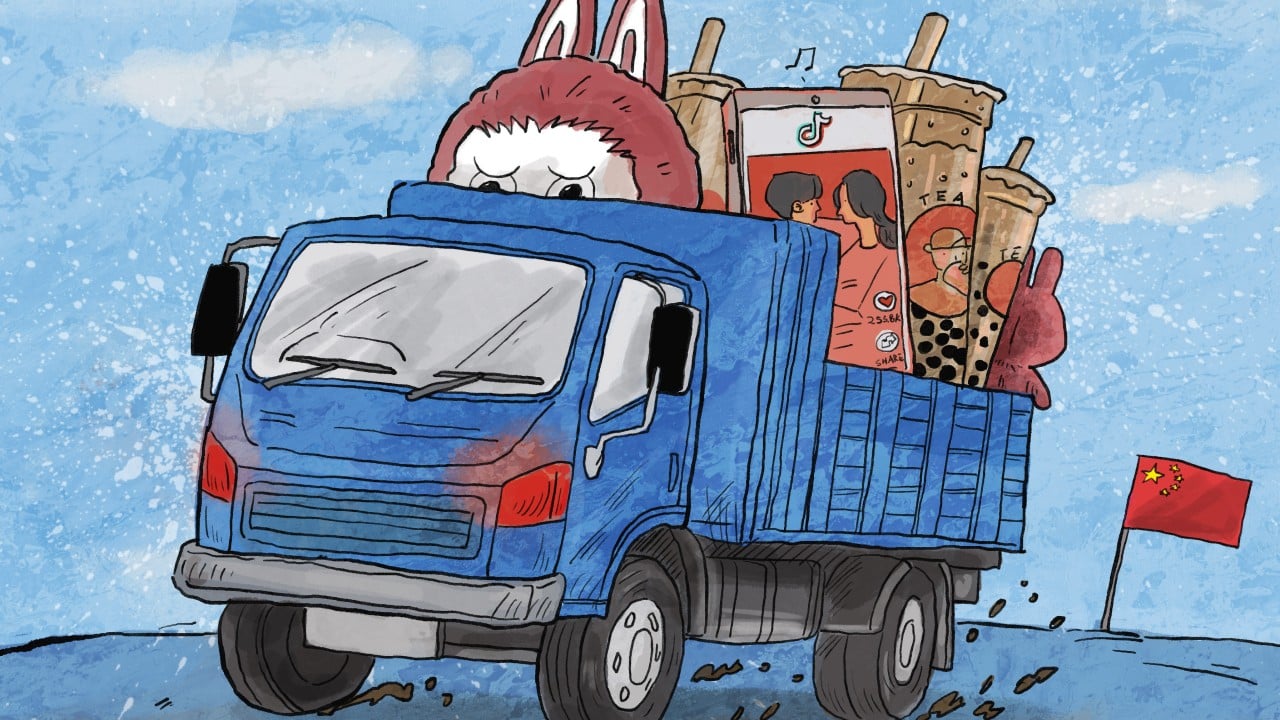
With their domestic profits narrowing and production capacity expanding, China’s firms are continuing to widen their overseas footprints in search of new, more lucrative markets. In this series, we examine China Inc.’s next phase of “going global” and the complex, challenging international environment its companies have chosen to enter.
On a busy roadside in Riyadh, K-pop music – popular among the city’s youth – pulses from the speakers of Javis Wang’s bubble tea shop.
His stores have continually stayed ahead of local trends. Two years ago, few in Saudi Arabia had heard of Labubu – the toy by Chinese company Pop Mart, now a global phenomenon – but it was already available in his outlets.
Advertisement
Wang bundled the plush toys with milk tea, a marketing tactic common among Chinese drink chains. The promotion recently ended, but his Whoa Tea brand – now spanning 18 stores across the country – had sold tens of thousands of the figures, he said.
The 30-year-old Chinese national credited his success to a strategy many domestic brands have now perfected: tapping into the preferences and emotional needs of young consumers.
Advertisement
“Saudi consumers tire quickly of the old. They’re going through a period of reform and opening. They accept new things very fast,” he said, adding that customers desire more than a cup of tea: they want places to take photos, socialise and enjoy novel experiences.
Taking a proven Chinese strategy abroad mirrors a broader trend among firms that have found success at home. From milk tea chains to blind box toy brands, companies are leveraging the strategic flexibility honed during the country’s digital boom to scale rapidly overseas, aided by growing online sales, a maturing distribution infrastructure and shifting global perceptions.