
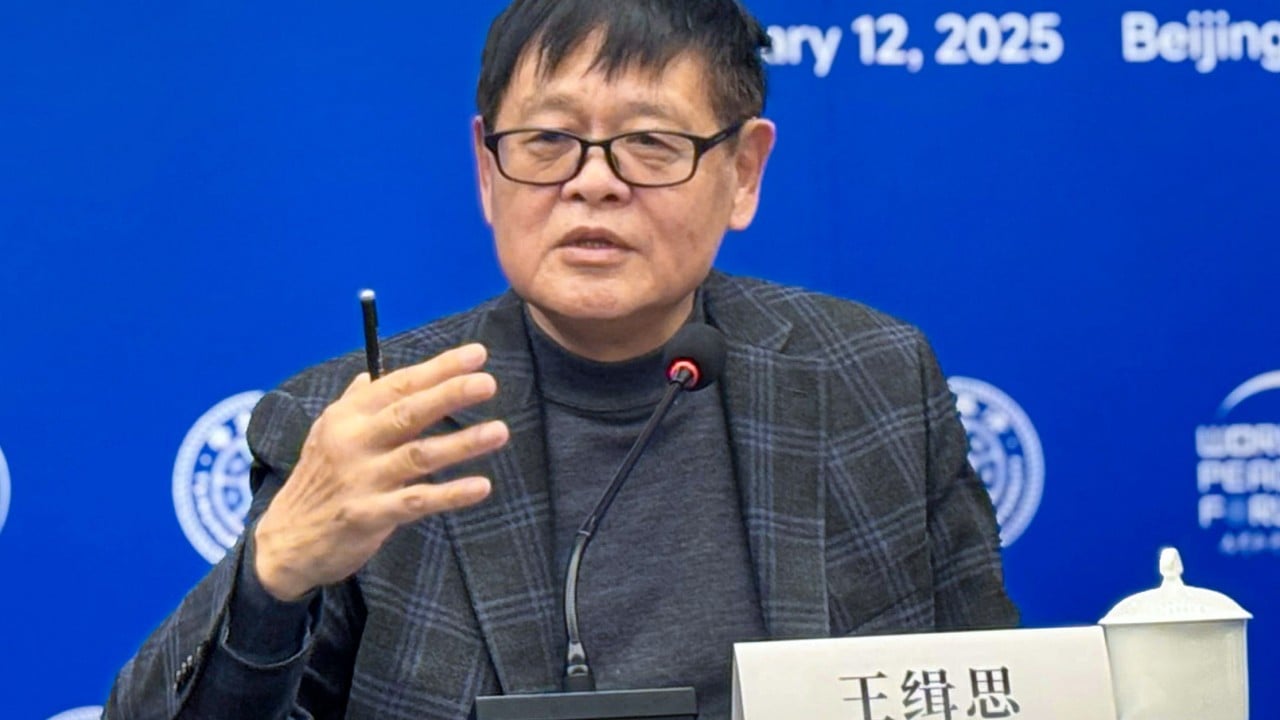
The world has not slid into a simple US–China bipolar order but has become “two superpowers and many strong powers”, veteran Peking University scholar Wang Jisi has warned, pointing to a relationship plagued by structural confrontation, deep misunderstandings and rising risks of conflict.
In a wide-ranging virtual conversation on Friday at the University of Hong Kong’s Centre on Contemporary China and the World (CCCW), Wang voiced concerns about America’s inward turn under US President Donald Trump, Washington’s pursuit of containment in both geopolitical and geoeconomic terms, and mounting cross-strait tensions.
He dismissed the notion that Washington had “attitude, not strategy” towards Beijing, describing the newly released US National Security Strategy (NSS) as “symbolically important” but filled with contradictions.
Advertisement
“I do think the United States has an attitude towards China, but it also has strategies towards China,” Wang told CCCW director Cheng Li. “But it is difficult to define the strategy, especially the current strategy of the Trump administration.”
One of the most striking elements of the NSS, according to Wang, is its declaration of the western hemisphere as Washington’s top strategic priority – above Asia, Europe or the Middle East – in an unusual shift that reflects a country increasingly consumed by internal challenges.
Advertisement
“The United States is looking inward, very much so than in the past … curbing illegal immigration, curbing drug trafficking, especially fentanyl … This is where Maga and his supporters come from,” Wang said, referring to Trump’s “Make America Great Again” slogan.
Wang said that despite its relatively mild rhetoric towards China, the NSS had broadened the scope of national security beyond military threats to include economic, technological and homeland vulnerabilities.