
News Analysis
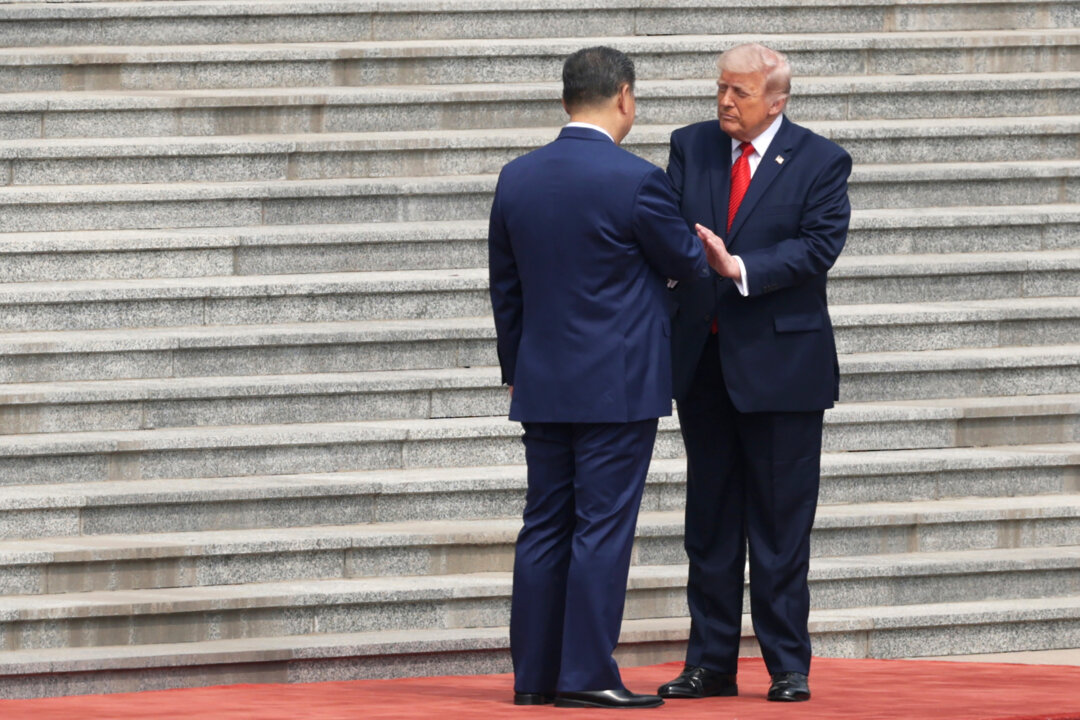
As Chinese leader Xi Jinping is expected to visit the United States on Sept. 24 for a meeting with President Donald Trump, two insiders with knowledge of the internal workings of the Chinese Communist Party (CCP) say that senior Chinese officials want to use the meeting to stabilize relations with Washington and prevent further economic damage from escalating trade tensions.
They said Beijing hopes a period of relative calm will give China more time to address domestic economic difficulties and political issues ahead of the CCP’s next National Congress, expected next year.
The insiders and a Chinese regime military scholar spoke to The Epoch Times on condition of anonymity out of fear of reprisal.
The scholar said that Beijing’s efforts to ease tensions with Washington are a tactical move intended to create breathing room for its domestic economic and political challenges.
One of the CCP insiders told The Epoch Times that Xi’s primary objective during the visit is to keep the U.S.–China relationship functioning normally.
“Both sides hope to establish guardrails in various fields and manage crises. The United States needs rare earths, and China needs to end sanctions,” he said. “The Xi administration believes that only by stabilizing U.S.–China relations can domestic economic development continue to develop steadily. This is the main goal of Xi’s visit.”
The insider said the approach resembles former Chinese leader Deng Xiaoping’s efforts to improve relations with the United States in the 1980s in order to support China’s economic development at the time.
However, China now faces a more difficult domestic environment, he said, with the economic downturn increasing the potential for social tension. With the next Party Congress approaching, internal political struggles also remain a concern, he added.
For Beijing, avoiding a major external shock that could further complicate domestic economic and political challenges is therefore particularly important, according to the insider.
Economic Pressures Drive Push for Stability
A second CCP insider told The Epoch Times that some economic indicators in the first half of the year failed to meet the Party’s internal expectations, and foreign exports remained an important source of growth.
According to the second insider, materials submitted by China’s Ministry of Commerce to the Central Financial and Economic Affairs Commission placed particular emphasis on improving economic and trade relations with Western countries and reducing obstacles facing Chinese goods and companies.

The second insider said Beijing’s calculations for Xi’s visit center on keeping U.S.–China relations stable over the next three years, giving China time to deal with its economic difficulties. The materials and discussions described by the insider have not been made public.
Beijing has already signaled an interest in reducing trade friction.
China’s Ministry of Commerce said on Sept. 10 that Chinese and U.S. economic and trade teams were negotiating reciprocal tariff reductions covering about $30 billion in goods on each side, with the goal of implementing the arrangements as soon as possible. The same day, China’s Foreign Ministry said the two countries remained in communication over possible high-level interactions later this year.
Whether the tariff arrangements can ultimately be implemented will depend on the outcome of those negotiations.
Washington is also preparing for negotiations ahead of the scheduled Trump–Xi meeting. Treasury Secretary Scott Bessent said at a House Financial Services Committee hearing on Sept. 15 that he expected to meet Chinese Vice Premier He Lifeng over the coming weekend.
Bessent said the two sides had previously held productive private discussions and that he expected those talks to continue.
Beijing Seeks Guardrails Before Party Congress
The Chinese scholar said Xi’s expected decision to lead a business delegation to the United States signals that Beijing does not want a full-scale confrontation with Washington and instead prefers greater cooperation.
He described Beijing’s current U.S. strategy as distinctly “tactical,” arguing that maintaining a relatively stable external environment has become a political priority for China’s top leadership.

The scholar said Xi’s goal in meeting with Trump is to establish “safety guardrails” around key areas of economic and trade relations and prevent Washington from introducing additional restrictions before the next Party Congress.
The objective, he said, would be to give Beijing more time to manage its domestic economic and political agenda.
The United States, however, appears to be approaching the negotiations on a more limited basis.
U.S. Trade Representative Jamieson Greer has previously said Washington is seeking to manage the economic and trade relationship with China rather than reach a comprehensive trade agreement. During the Xi–Trump meeting, the two sides could announce arrangements involving agricultural products and related non-tariff barriers, according to Greer.
That means Beijing’s broader objective of maintaining long-term stability in the relationship may not fully align with the specific issues currently being negotiated by Washington.
Bessent has also indicated that Chinese financial dealings with Iran could remain an issue through the leaders’ meeting. Beijing therefore faces competing interests since it wants to reduce trade barriers with Washington while maintaining its relationship with Tehran.
Even if Xi secures progress on tariffs or Chinese purchases of U.S. goods during the visit, those broader strategic differences would remain unresolved.
Jiang Fei contributed to this report.
We had a problem loading this article. Please enable javascript or use a different browser. If the issue persists, please visit our help center.