
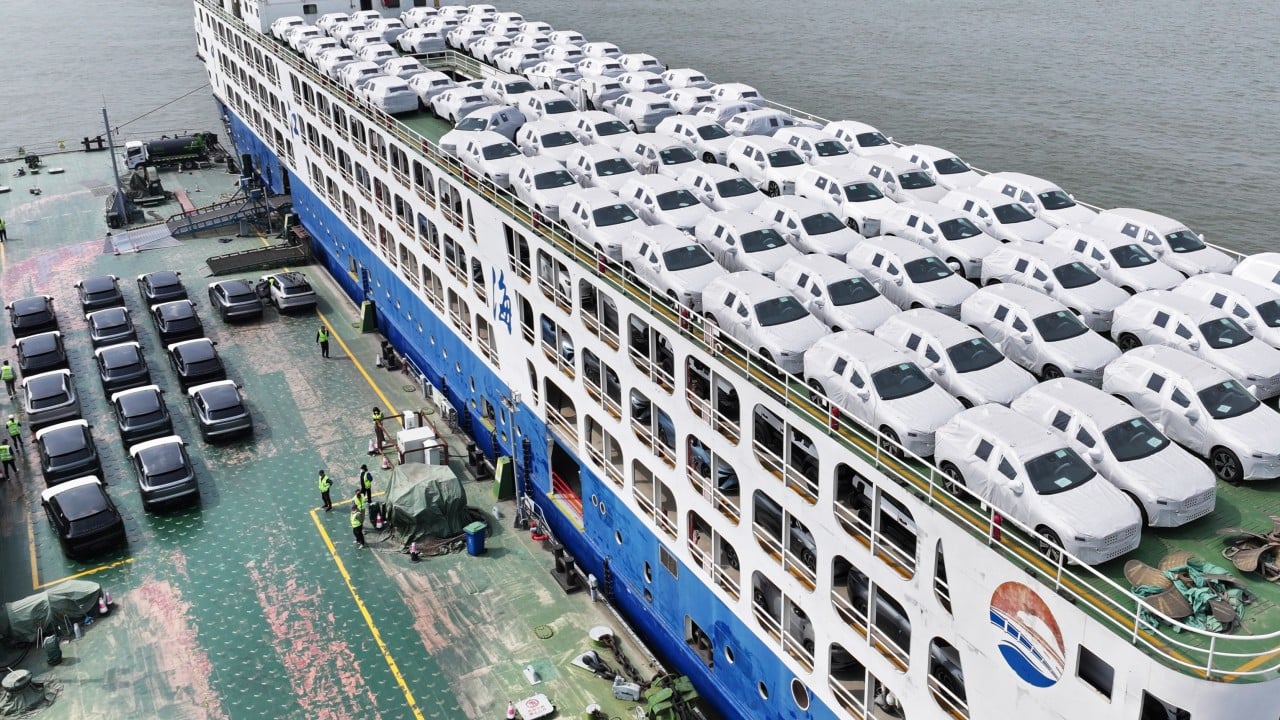
With their domestic profits narrowing and production capacity expanding, China’s firms are continuing to widen their overseas footprints in search of new, more lucrative markets. In this series, we examine China Inc.’s next phase of “going global” and the complex, challenging international environment its companies have chosen to enter.
The “Made in China” label has evolved considerably in recent decades. Mostly found affixed to low-cost goods of relative simplicity in China’s early years as a manufacturing powerhouse, it can now be seen on a multitude of sophisticated, high-value products from an array of companies that have become formidable competitors to some of the world’s wealthiest multinational firms.
Between 2001 – when China joined the World Trade Organization after 15 years of negotiations – and 2024, the country’s value-added share of global manufacturing rocketed from 11 per cent to 33 per cent, with a hand in the production of goods across most of the world’s supply chains.
Advertisement
In this explainer, the Post examines the current global footprint of China Inc. as the country’s companies seek leadership roles – or have already taken them – in numerous industries, including the highly complex and technologically advanced sectors of tomorrow.
In the driver’s seat
China’s carmakers, particularly those producing electric and hybrid vehicles, have entered a new phase of global expansion.
Advertisement
To date, eight out of the country’s 10 largest carmakers have announced overseas investment plans this year – including factories – spanning at least 15 countries, according to calculations made by the Post.