
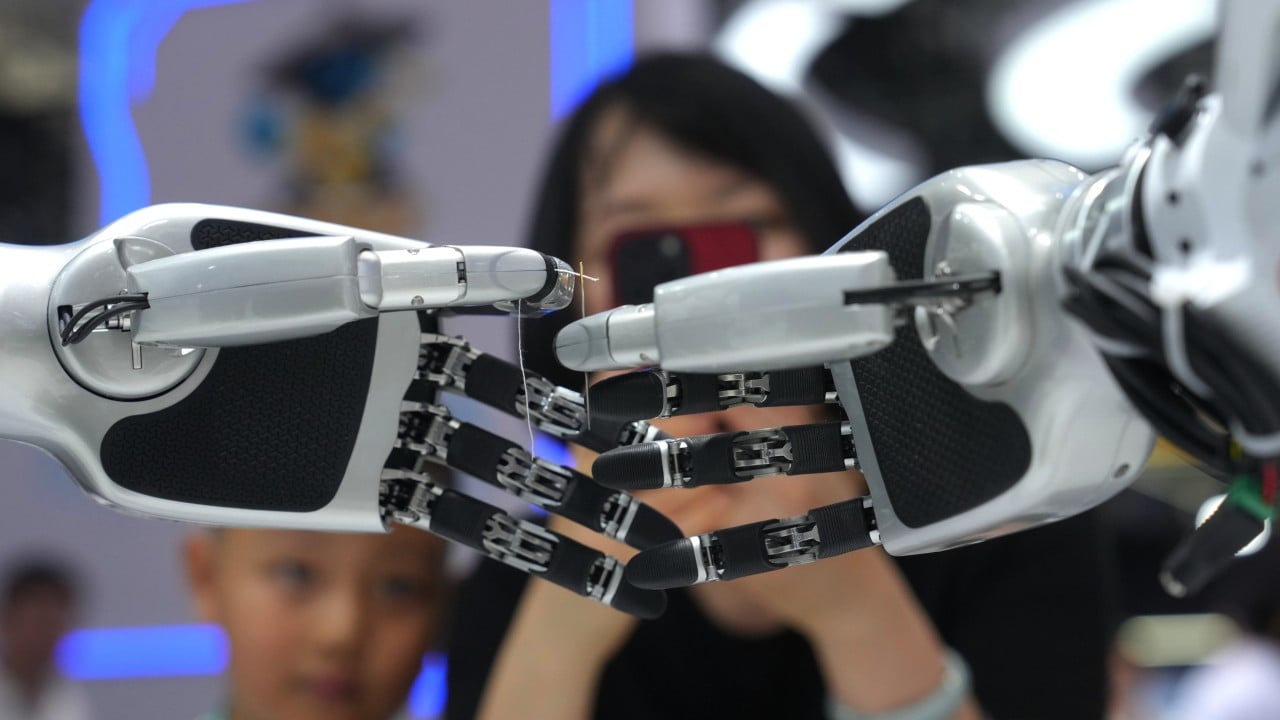
Humanoid robots were still among the biggest crowd-pleasers at this year’s World Robot Conference (WRC) in Beijing, though other types of robots, such as wheeled machines, were gaining momentum as the industry moves from demonstration to deployment.
At Unitree Robotics’ packed booth at the conference, bipedal models played table tennis or squared off in fighting matches, showing off levels of speed, balance and coordination that the industry has only seen in the last few years.
But elsewhere across the exhibition halls, robots were sorting parcels, loading production lines, or moving materials. Many moved on wheels instead of legs, while others had conventional-looking robotic arms.
“If wheels can get the job done, do we really need two legs?” asked Yang Li, senior engineer of start-up X Square Robot.
Bipedal robots may be more impressive to spectators if they can punch, run and jump, but industrial users ultimately cared about factors such as payload, reliability and return on investment, he said.
During an hour-long, controlled test this month, a two-armed WALL-B embodied model designed by X Square Robot was able to sort 1,816 packages, according to the company. It said that it was more efficient than the bipedal Figure 03 robot, from US start-up Figure AI, which handled an average of 1,248 parcels an hour.
At the WRC, AI2 Robotics, another Chinese start-up, had a wheeled robot making coffee and ice cream for visitors. The machine used different end effectors for different jobs, with a gripper on one arm and a dexterous hand on the other.