
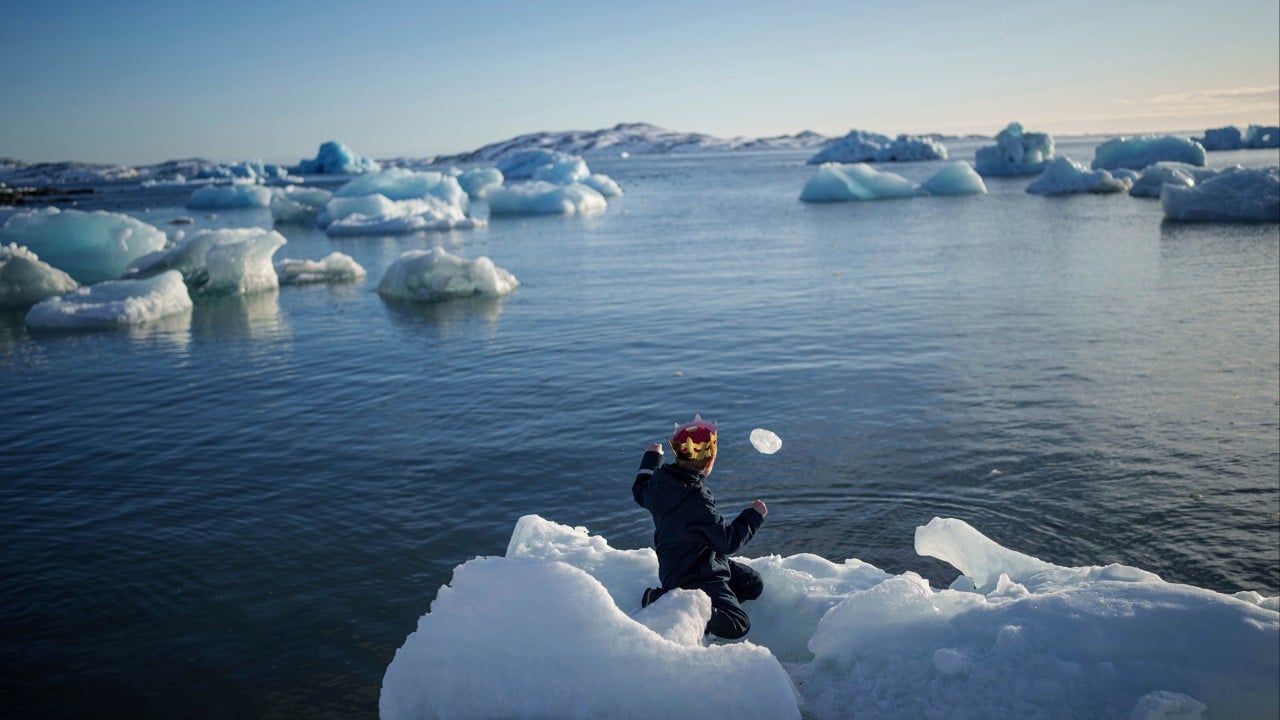
The Arctic has experienced its hottest year since records began, a US science agency announced on Tuesday, as climate change triggers cascading impacts from melting glaciers and sea ice to greening landscapes and disruptions to global weather.
Between October 2024 and September 2025, temperatures were 1.60 degrees Celsius (2.88 degrees Fahrenheit) above the 1991-2020 mean, the National Oceanic and Atmospheric Administration said in its annual Arctic Report Card, which draws on data going back to 1900.
Co-author Tom Ballinger of the University of Alaska said it was “certainly alarming” to see such rapid warming over such a short timespan, calling the trend “seemingly unprecedented in recent times and maybe back thousands of years”.
Advertisement
The year included the Arctic’s warmest autumn, second warmest winter, and third warmest summer since 1900, the report said.
Driven by human-caused burning of fossil fuels, the Arctic is warming significantly faster than the global average, with a number of reinforcing feedback loops – a phenomenon known as “Arctic Amplification”.

For example, rising temperatures increase water vapour in the atmosphere, which acts like a blanket absorbing heat and preventing it from escaping into space. At the same time, the loss of bright, reflective sea ice exposes darker ocean waters that absorb more heat from the sun.