
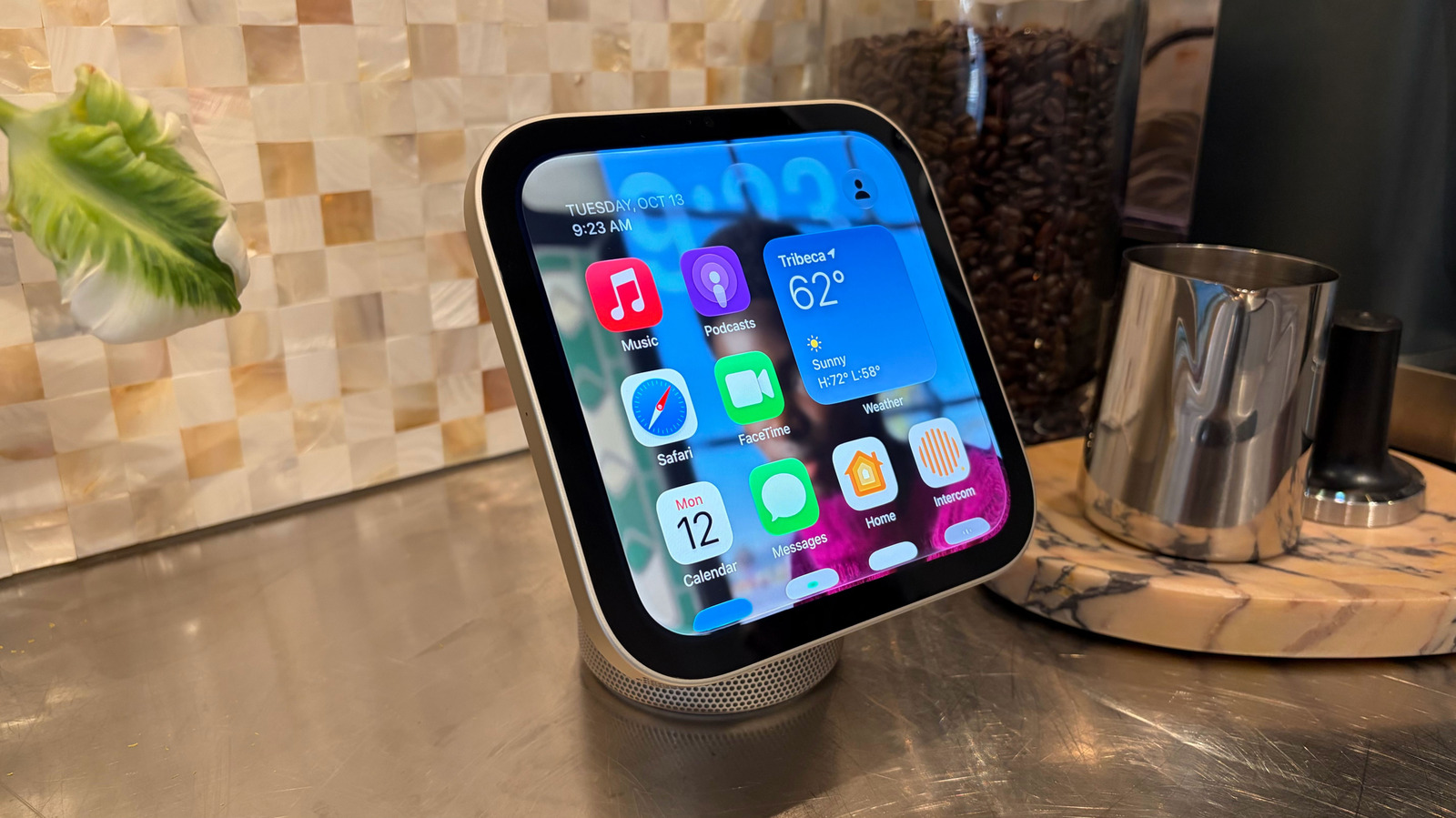
Apple’s big smart home push has finally arrived, and the cornerstone of that initiative is the HomeView display. It’s a combination of a smart screen and speaker, providing personalized info from your iPhone or iPad for a better in-home experience. Of course, the device works with various smart home gadgets from LG, including cameras, a door lock and a thermostat (and also a thermostat from Schneider Electric). After the official announcement this morning, I got to spend some time with the HomeView, swiping through menus and watching someone chat with Siri AI.
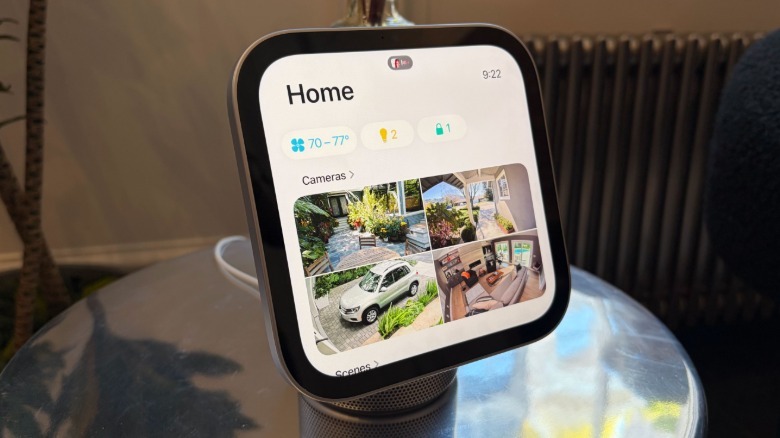
While the HomeView may look like an enlarged Apple Watch, the smart display is very much an in-home hub. It pulls from your recently used apps on an iPhone or iPad and serves as the control center for smart home devices via the Home app. It’s impressive how Apple has integrated its new Apple Home Collection of devices here, giving you live camera feeds as well as thermostat and lighting controls in just a few swipes. In my brief time with controlled demos today, the HomeView seemed to respond quickly to various swipes and taps, loading camera feeds as needed.
Siri AI is a big piece of the HomeView puzzle and it does a lot to help you throughout the day. The assistant now draws from info from your iPhone, so you can ask the HomeView to “play that song Jeff texted me about” and the device knows just what you mean. During a quick demo of this, Siri was quick to respond, although I’m looking forward to seeing how responsive the HomeView really is when I get a unit in to test.
One of my favorite features of the HomeView is the recipe integration in Safari. So long as the recipe you’re looking at is formatted to Google’s standards, a recipe mode will pull out the ingredients list and directions for the HomeView display. What’s more, there are inline timer shortcuts throughout recipes, so you can set the countdowns with just a tap on the screen. This will be helpful when you want to make sure you simmer for just the right duration before moving to the next step. You can also hand off recipes from Safari on an iPhone just by holding it near the display. This was as quick and easy as passing audio from an iPhone to a HomePod speaker.
In terms of design, the HomeView looks every bit like an Apple product. The aluminum frame wraps around a 7-inch Liquid Retina display, and the tabletop model has a stand to match. That stand houses extra speakers that bolster the low-end tone of the device, complemented by two full-range drivers in the display itself. The wall-mounted version doesn’t have the woofer and radiators, but that pair of drivers will be enough for FaceTime calls, casual music listening sessions and more. The demo area at Apple’s event was noisy and chaotic, but my first impression of the sound quality was positive overall. I don’t think the company is going to blow us away with the tuning here, but there will be a wide enough soundstage for tunes from your kitchen, end table or nightstand.
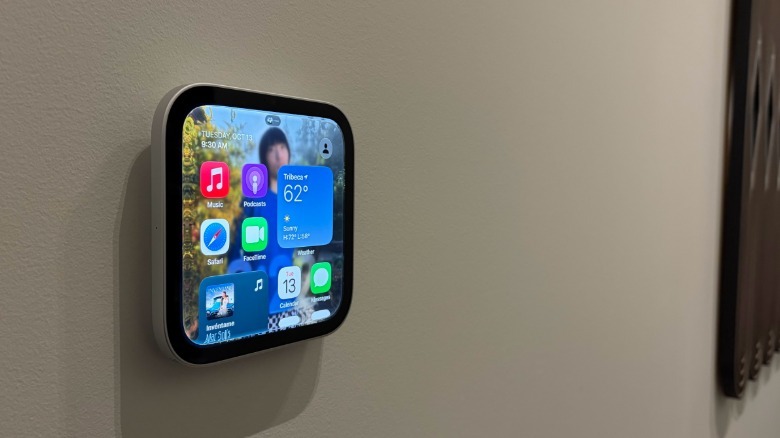
I was also impressed by the security features on the HomeView. I watched multiple demos where the display quickly recognized a company representative and showed their personalized screens. And when they were just out of view, or preferred another method, the HomeView allowed them to use their iPhone to unlock the device instead. Once you get one of these displays home, it will revert to a quest mode until another recognized user is standing in front of it. So if you don’t want someone else to see your calendar or text messages, the HomeView will shut them out by the time they’re standing in front of it.
It’s hard to tell after a few brief demos is the HomeView will be the in-home control center Apple designed it to be. However, I should be getting a review unit soon, so hopefully I won’t have to wait until mid-November to find out.