
Democrats appear poised to win control of the House of Representatives and possibly the Senate on Nov. 3 as Republicans labor to overcome a decades-long pattern of midterm losses by any party controlling the White House.
Voter dissatisfaction with fuel prices and the war with Iran bode well for Democrats.
Yet the X-factor in this contest is the sitting president and his uncanny ability to rally supporters to the polls.
Despite some $6 billion spent on House and Senate races, this election may be decided by the one name not on the ballot: Donald Trump.
Here’s what to know about the stakes, the issues, and the state of the race as America prepares to vote.
Voter Engagement High
Midterm elections historically draw lower voter turnout, yet objective signs indicate high engagement this year.
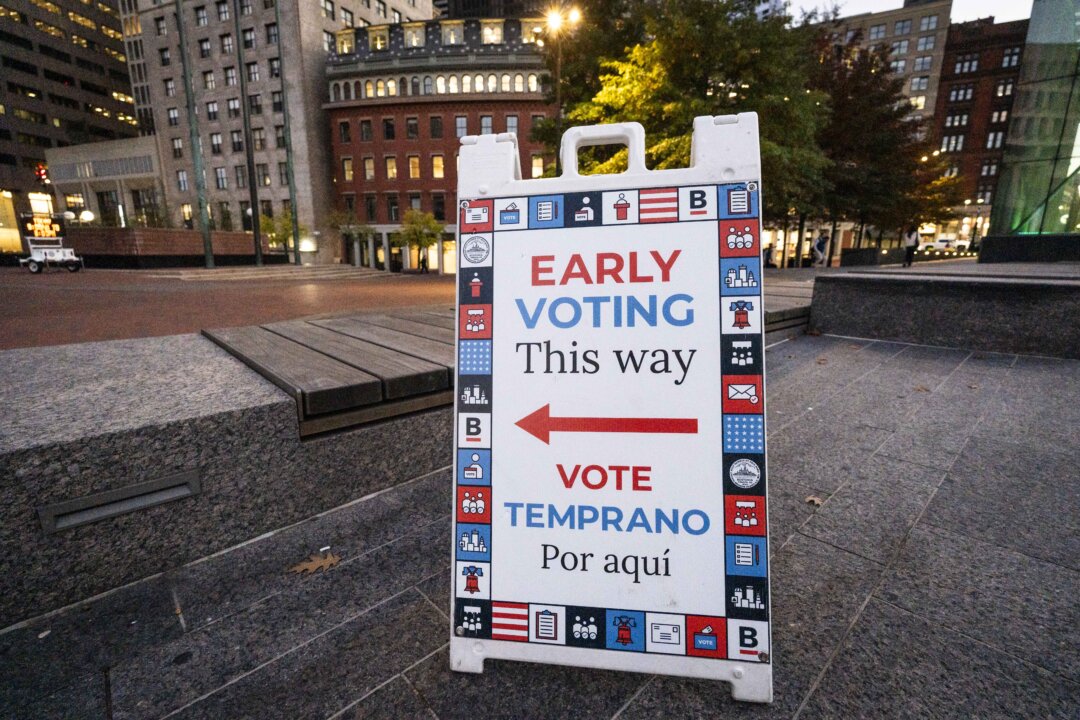
More than 46 million Americans voted early in this election, and 14 states had exceeded their 2022 early voting totals by Oct. 29. At least 14 others were well ahead of their 2022 pace.
About three-quarters of respondents from both parties agreed that “it really matters who wins this election” in mid-October opinion polling by Pew Research.
Interactive polls also indicate high voter interest, pollster Tom Carroll told The Epoch Times.
Carroll’s firm, Convos, conducts polls via text message for candidates of both parties. Using AI-generated follow-up questions, Convos engages voters in open-ended conversations that he said reveal high voter passion.
“They’re going on 30, 40, 50-text rants with our AI agent, diving deep into the frustration, telling personal stories,” Carroll said.

Democrats have dominated early voting in some key areas, according to Jeffrey Wice, a professor at New York Law School.
“Democratic early voting was outpacing Republican voting by about a two-to-one margin,” Wice told The Epoch Times, speaking of recent data from highly competitive Long Island, New York.
Carroll’s polling confirms a Democratic edge in voter interest. “We’re just seeing a lot higher percentage of Democrats engaging,” he said.
Affordability Front and Center
The economy (85 percent) and the cost of living (84 percent) topped voter concerns in an Oct. 15 poll by The Associated Press and the National Opinion Research Center.
Affordability was a constant complaint among voters The Epoch Times encountered at early voting sites and political rallies throughout October.
“I just can’t believe every time I go to Costco it’s like $400,” Judy Ruthier of Westlake, Ohio, told The Epoch Times.
That issue hits voters in both parties, analysts told us, and is hampering Republicans in the Midwest where the high cost of fuel hits farmers especially hard.
“Diesel fuel is like $6 a gallon,” Stanley Kumm, a Republican voter and retired farmer from Nebraska, told The Epoch Times. “We’re harvesting, and a lot of these machines take 20 gallons an hour.”
“I think every Democrat, Republican, independent—we all kind of agree that there’s a massive cost of living problem,” Mazie Stilwell of Des Moines, Iowa, told The Epoch Times.
Healthcare and the Iran war ranked behind economic concerns, rated as top issues by nearly two-thirds of respondents in the Oct. 15 poll.
Stilwell, a Democrat, drew a clear connection between the war and the economy. “Our cost of living is directly tied to those choices, like the war in Iran,” she said.

That’s a common voter opinion, said Matthew Wilson, a political science professor at Southern Methodist University.
“Dissatisfaction over the war is principally dissatisfaction as it affects the economy,” Wilson told The Epoch Times.
Immigration was named as a top concern by 59 percent of respondents.
And while voters voice skepticism and opposition to data centers, that does not appear to be a top-line issue in this election cycle.
The Trump Factor
Trump has significantly boosted voter turnout since 2016, driving record participation for a midterm election in 2018, Dusso said.
The key question is whether Trump can sustain the level of enthusiasm he has enjoyed among the base, or whether his policies and persona will work against him, experts said.
“The Democratic base despises Donald Trump with a white-hot passion and have been champing at the bit for their opportunity to show up and express their displeasure,” Wilson said.
The president campaigned relentlessly during October, holding more than two dozen rallies in at least 19 states.
Yet the economy could depress Republican voter turnout even as it motivates Democrats, said Aaron Dusso, a political science professor at Indiana University.
“When the economy is bad, it’s going to turn off the party of the president,” Dusso said. “So those voters are going to be more likely to stay home.”
Among respondents who were “extremely motivated” to vote in this election, Democrats ranked 17 percentage points ahead of Republicans according to polling by Pew Research.
The election will come down to two factors, Wice said. One is whether Trump can sustain previous levels of voter enthusiasm and whether that works for or against him. The other is local political issues that could drive turnout in swing districts.

Thirty-six states will elect a governor on Nov. 3, and voters will decide more than 6,000 state legislative races and 132 ballot questions.
Property taxes, bond issues, state budgets, housing, and water issues could bring voters to the polls independent of national races.
Congress in the Balance
To maintain their slim majority in the House, Republicans must overcome a well-established pattern of midterm losses by the party of a sitting president.
Over the last 80 years, only two presidents have defied that trend. Both had approval ratings well above 60 percent: Bill Clinton in 1998 and George W. Bush in 2002.
Trump’s approval rating stands at 38 percent in an average of polls compiled by RealClear Politics.
Democrats need to gain just four House seats to gain a majority.
That seems all but inevitable, our experts said, given that 27 House races are listed as competitive, and 17 are considered toss-ups by independent elections analysts Cook Political Report.
“Republicans would have to essentially have no losses at all in order to keep control of the House of Representatives, and that would be an extraordinary outcome,” Wilson said.
Control of the Senate is also uncertain, as Republicans have a seven-seat margin with 10 races rated as competitive, seven of them toss-ups by the Cook Political Report.
Those seven races remain near or within the margin of error in an average of polls despite $1.8 billion in spending by the major candidates and political action committees.
Democrats have marginal pre-election leads in Alaska, Iowa, Maine, Michigan, Ohio, and Texas.
Republicans also have a path to victory, Wilson said. “But it would require them to hold on to closely contested seats like Texas, Kansas, Iowa, Alaska, while potentially picking up a Democratic seat in a place like Michigan.”
The GOP candidate holds a marginal polling lead in Kansas.
If Democrats do win the House, Congressional investigations are likely to follow, according to our analysts. But a third impeachment would be largely symbolic and unlikely to succeed.
Democrats are unlikely to attempt a bold legislative agenda unless they win a sizable majority in both Houses, according to analysts. More likely, they would pass messaging bills to set the stage for the 2028 presidential election.
Trump, asked on Oct. 27 how he intended to work with Democrats if they should prevail in the election, said, “We’ll figure a way. Look, I have a strong veto.”
We had a problem loading this article. Please enable javascript or use a different browser. If the issue persists, please visit our help center.