
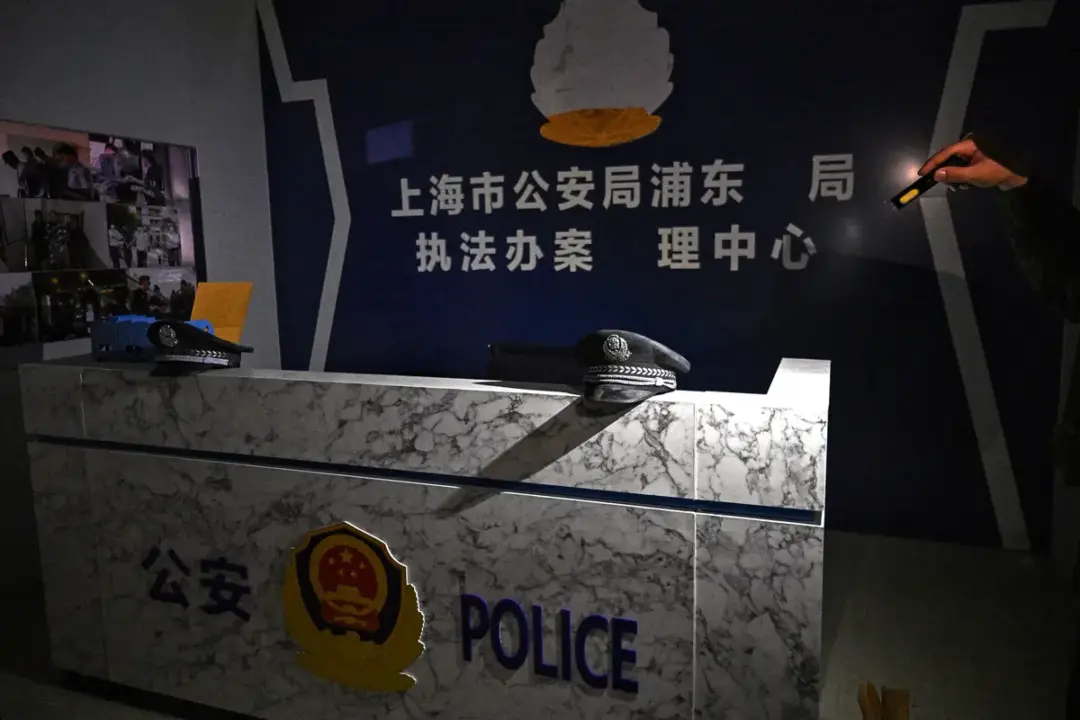
An undercover investigation has raised questions about alleged online scam operations at a sprawling Cambodian tourism development and possible links between its Chinese developer and Chinese intelligence officials.
The investigation, published as a documentary by Al Jazeera’s 101 East program on Oct. 10, features conversations between Chinese billionaire businessman Deng Pibing and the outlet’s undercover reporters in Cambodia.
Speaking in Mandarin, Deng is heard describing meetings with Chinese military personnel in Guangzhou in 2019 and recounting how Chinese officials approached one of his trusted employees about working for Beijing undercover inside the Cambodian government.
Deng, chairman of ZhengHeng Group, is also heard describing his connections to Cambodian officials and police. According to the documentary, his remarks suggested that he made payments to officials and had advance knowledge of enforcement operations targeting suspected scam compounds.
The investigation alleges that his company’s Long Bay development in Cambodia’s southwestern Koh Kong province, marketed as a luxury tourism destination, has been hosting compounds that the documentary associates with criminal activities including online telescams, illegal gambling, narcotics, and human trafficking.
In the documentary, Deng said Chinese regime officials had approached him repeatedly. In 2019, Chinese military personnel summoned him to Guangzhou for a private meeting about the Dara Sakor International Airport project in Cambodia, he said.
Deng demonstrated how he had been instructed to put his phone in a bag and place it in a refrigerator at a hotel in Nansha, Guangzhou, to prevent information leaks during the meeting.
According to Deng, Chinese officials wanted to cooperate on the airport project and purchase supplies in Cambodia for China’s military base in Djibouti, in East Africa.
The airport, a roughly $350 million Chinese-backed project, has drawn scrutiny because of its unusually long runway and proximity to Ream Naval Base, Cambodia’s largest naval facility, which has also received Chinese investment. The airport’s specifications have fueled speculation about potential military uses.
Deng and his team also described having contacts within Cambodian government agencies and police units responsible for monitoring online activity.
“I pay their salary,” he told the undercover journalists, according to the documentary, in what the outlet presented as a reference to local law enforcement personnel. He added that his company also “donated the money” for a new police station being built nearby his development.

Police Insider
The documentary also examined Deng’s relationship with Chiet Mony, a Cambodian woman who is a member of Cambodia’s National Police Bodyguard Unit. According to the outlet, she had accompanied him to meet former Prime Minister Hun Sen and was on duty during Chinese leader Xi Jinping’s state visit to Cambodia in 2025.
Deng claimed in the documentary that Chinese officials were impressed by Chiet, who is proficient in Mandarin Chinese, during Xi’s visit and approached her about becoming an undercover operative inside the Cambodian government. The Epoch Times has not independently verified that account.
According to Deng’s account, officials from the Chinese Communist Party’s (CCP) Central Guard Bureau asked whether she would work for them. He said she responded by telling them to consult her employer first.
In the documentary, Deng introduced Chiet, who appeared alongside him, as his employee. Cambodian officials have said the nature of their relationship has not been established.
Cambodian authorities said they have launched an investigation following the documentary, according to Cambodian state news agency AKP. The Interior Ministry’s deputy spokesman, Touch Sokhak, said on Oct. 13 that officials were investigating the people identified in the report, according to Cambodian media Cambodianess. He said authorities had not yet established the precise relationship between Chiet and Deng.
Cambodia’s immigration authorities reported that Deng left the country in late May, and Interpol had issued a red notice for him, according to the Chinese-language Cambodia-China Times.
An Interpol Red Notice is an international request sent to law enforcement agencies worldwide to locate and arrest a suspect pending extradition.
The Epoch Times has been unable to independently verify the existence of a Red Notice for Deng.
Other Scam Operators
Deng also described a longstanding friendship with She Zhijiang, a Chinese businessman extradited from Thailand to China in November 2025. She was accused of operating the Yatai New City project in Burma (also known as Myanmar), which media reports and authorities have linked to online gambling and other illicit activities.
In a 2024 interview with Al Jazeera’s 101 East, conducted through a Thai prison’s video visitation system, She Zhijiang claimed he had worked with China’s Ministry of State Security and developed the project under its direction. He also described the project as connected to China’s Belt and Road Initiative.
She Zhijiang alleged that Chinese authorities turned against him because he refused to surrender control of his projects and knew too much about the regime’s intelligence operations. The Epoch Times cannot independently verify those claims.

Deng told the undercover journalists that he and She Zhijiang were fellow natives of Hunan province and had known each other for more than a decade.
The investigation also noted that Deng left Cambodia shortly before the arrest of Chen Zhi, founder of Prince Group, a Cambodian conglomerate that authorities have accused of involvement in online scam operations. Chen was indicted by the U.S. Department of Justice in October last year. However, Cambodian authorities announced in early 2026 that Chen had been sent back to China.
An Australia-based former Chinese intelligence officer, known only as Eric, has alleged that the company supported the Chinese regime’s operations overseas. The Epoch Times cannot independently verify those claims.
In an Oct. 15 post on X, Eric said that, in his view, Al Jazeera’s investigation offered further evidence of connections between the Chinese regime and telescam networks, including efforts to recruit insiders within Cambodia.
The investigation adds to scrutiny of Cambodia’s efforts to combat online scams and of the relationships among criminal networks, business interests, and government officials. The extent of any Chinese regime involvement in the alleged activities at Long Bay remains to be established.
Tang Bing contributed to this report.
We had a problem loading this article. Please enable javascript or use a different browser. If the issue persists, please visit our help center.