

[The content of this article has been produced by our advertising partner.]
The future of law will be faster, smarter and more connected than at any point in history, and Hong Kong Legal Week 2025, held from December 1 to 5, brought that future into view. Across five days, nearly 6,000 executives and legal professionals from around 50 jurisdictions registered to take part, both online and in person, with three major programme streams held at the Hong Kong Convention and Exhibition Centre.
Participants joined the Department of Justice (DoJ) to examine how artificial intelligence (AI), judicial digitalisation and multilateral co-operation are transforming legal services. With the inaugural Hong Kong LawTech Fest at its core, the Week presented a clear picture of a profession shifting decisively towards technology-enabled practice and deeper international collaboration.
Advertisement
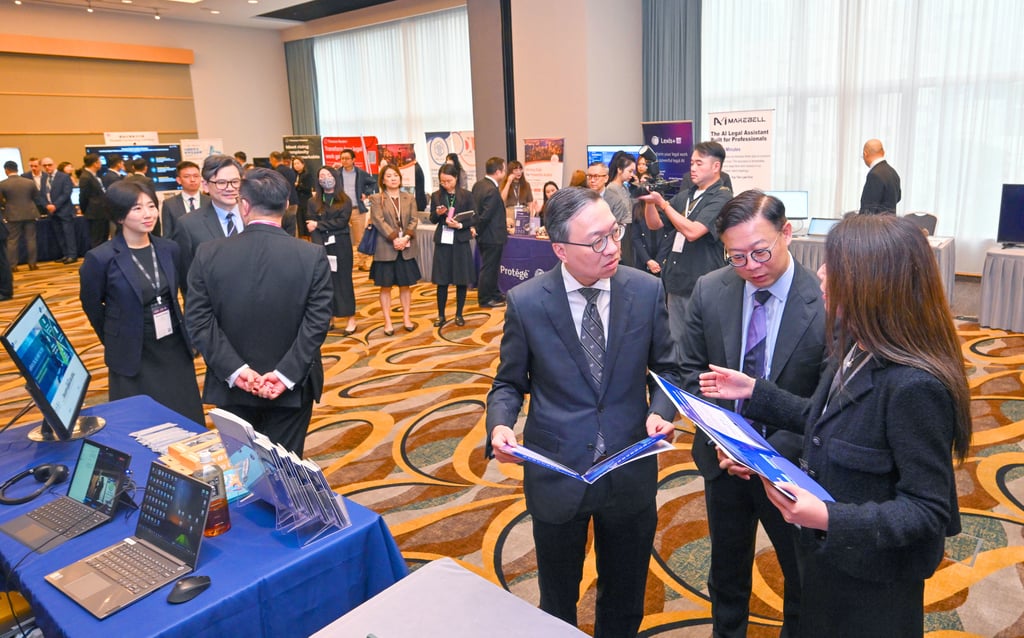
The inaugural Hong Kong LawTech Fest 2025 was part of this transformation. Held from mid-week onwards, it brought solution providers, legal professionals, academics and policymakers together to explore how AI is advancing legal practice.
Fifteen exhibitors showcased tools spanning legal research, drafting, contract analytics, online dispute resolution and digital hearing support.
Advertisement
One of them, an international legal tech firm, showcased an e-discovery and document-review platform capable of processing very large volumes of evidence, addressing the challenge that human reviewers cannot feasibly read or analyse millions of pages.
A Hong Kong-based start-up founded by practising lawyers displayed an AI assistant developed specifically for local procedures, offering transcription, document preparation and workflow automation that reduce the time practitioners spend on repetitive tasks.
Another home-grown legal tech company serving both professionals and the public presented tools for AI-supported legal analysis and document creation trained on Hong Kong law and case precedents that give users a clearer starting point before consulting a lawyer.
Advertisement
Other exhibitors demonstrated their systems designed to support daily operations, including hearing transcription tools, document-assembly software, electronic bundling utilities, case-management platforms and secure data-handling solutions.
The LawTech Conference and the LexGoTech Roundtable Series
Secretary for Justice Paul Lam, SC, articulated Hong Kong’s direction on AI, acknowledging its potential while underlining the continued importance of human judgement and ethical reflection. He said Hong Kong should adopt a Human-plus-AI approach as technology becomes more integrated into legal work.
Advertisement
The Chief Executive’s 2025 Policy Address identified AI as a core industry for Hong Kong’s development, according to Mr Lam. To advance this agenda, the DoJ will form an interdepartmental working group by year-end to review legislation needed to support wider AI deployment across sectors.
In the legal domain, the DoJ is pursuing a three-stage strategy: raising awareness, encouraging hands-on engagement with tools and cultivating a full ecosystem that attracts both local and international lawtech enterprises.
Deputy Secretary for Justice Dr Cheung Kwok-kwan remarked that lawtech and AI are no longer distant concepts and are already influencing how legal professionals research, draft and analyse. Automating routine tasks, he added, allows practitioners to concentrate on judgement, advocacy and client care.
Advertisement
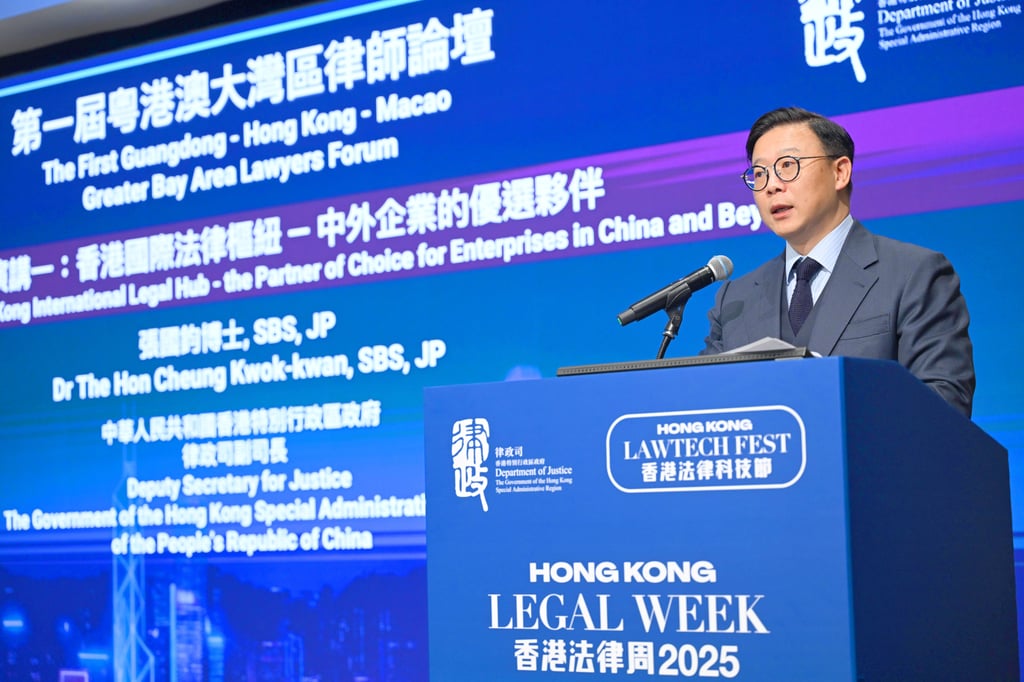
The Conference also hosted the 2025 Final Round of the LexGoTech Roundtable Series, the culmination of a year-long dialogue among practitioners and legal educators on the opportunities and risks of lawtech.
The DoJ released the LexGoTech Roundtables Report during the event. The publication captured a shared view that technology can improve efficiency and widen access to legal services, but also recorded deep concerns about accuracy, data protection and professional accountability.
International programmes: digital justice and judicial co-operation
Advertisement
As well as its lawtech focus, Hong Kong Legal Week 2025 showcased the city’s established strength in fostering international legal exchange. The opening half of the Week featured programmes drawing participants from courts, multilateral bodies and legal institutions across Asia-Pacific and beyond.
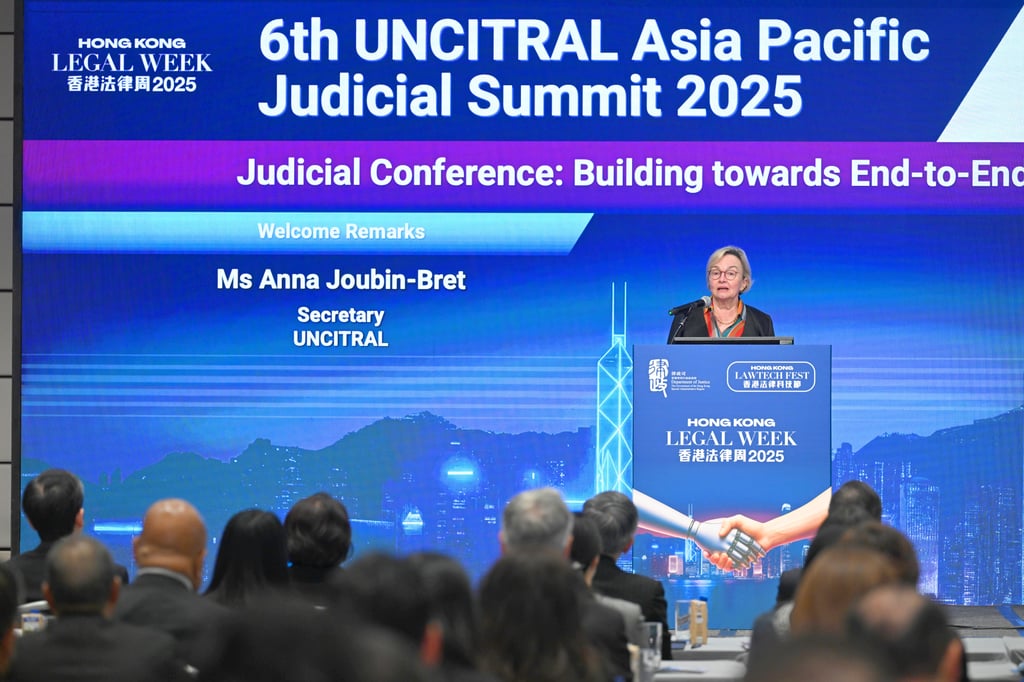
This edition also marked the first anniversary of the Hong Kong International Legal Talents Training Academy (HKILTTA). To commemorate the milestone, the DoJ published the Academy’s Anniversary Booklet 2024-2025, recapping the Academy’s achievements in judicial training and capacity building for Hong Kong, Chinese Mainland and jurisdictions along the Belt and Road.
Further judicial exchange followed at the Judicial Roundtable, where judges discussed “Recent Trends in Dispute Resolution”, including the rise of AI-related disputes and the evolving relationship between alternative dispute resolution and the courts.
Advertisement
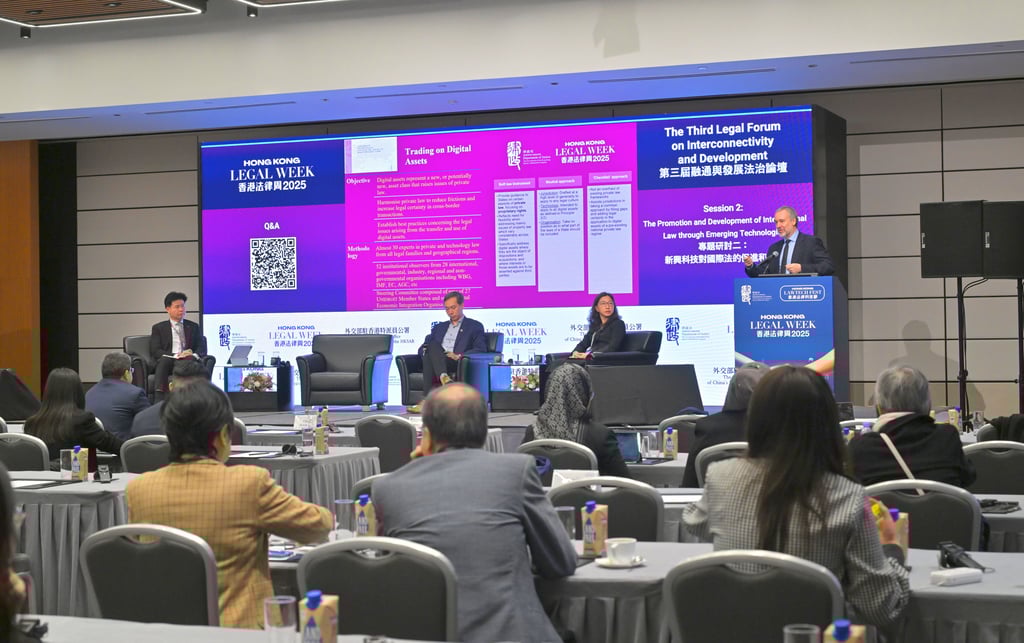
The Symposium of the HCCH Regional Office for Asia and the Pacific then examined “Transnational Litigation & Apostille: Innovating Practices under the HCCH Conventions”, including modernisation under the Hague Apostille, Service and Evidence Conventions and Hong Kong’s progress with digital Apostilles and remote evidence taking.
Later that day, the Capital of Mediation event explored Hong Kong’s mature mediation culture. Secretary for Justice Paul Lam said Hong Kong “serves as a neutral bridge between civil law and common law systems.”
One major topic of the event was the International Organization for Mediation (IOMed), headquartered in Hong Kong and described during the Forum as a long-needed institution for mediating disputes between states and investor-state parties.
Advertisement
With the Mediation Ordinance, Apology Ordinance, Practice Direction 31, Integrated Mediation Offices and the “Mediate First” Pledge campaign, the city has built a strong settlement focused culture, and the presence of IOMed now adds an international dimension.
Further developments: constitutional clarity and GBA connectivity
The Basic Law 35th Anniversary Legal Summit, held on Constitution Day, revisited how the Constitution and Basic Law form the constitutional foundation of the HKSAR. Speakers from finance, aviation, trade and higher education examined how these frameworks have supported Hong Kong’s status as a leading centre for commerce and talent.
Advertisement
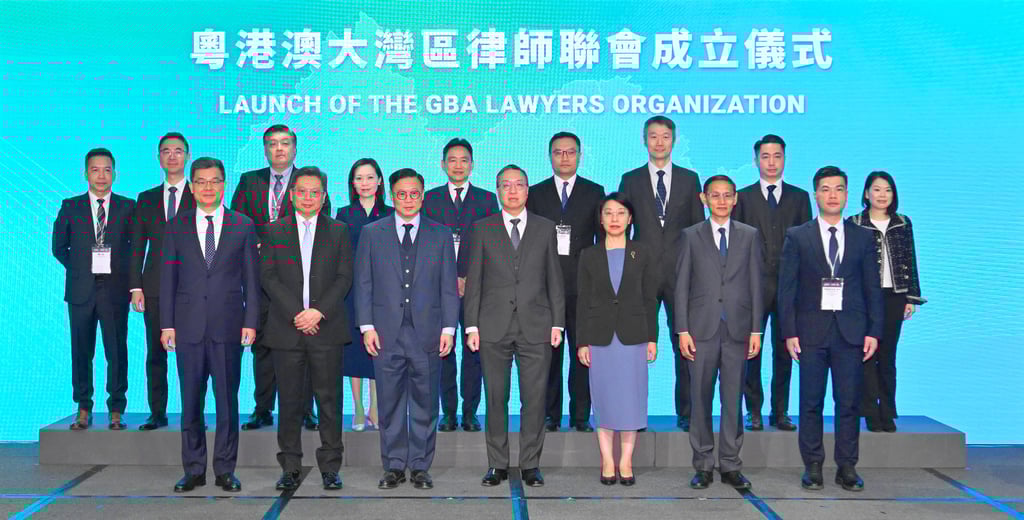
With HKILTTA entering its second year, lawtech adoption building momentum and institutions such as IOMed and the GBA Lawyers Organization taking root, Hong Kong is helping to steer legal development across the region and beyond while reinforcing its role as an international legal and dispute resolution services centre for a more digital and connected future.
Advertisement