
Beijing may seek to undermine the Solomon Islands’ government and help bring China-friendly politicians back to power after the South Pacific island nation signed a security treaty with Australia, experts warn.
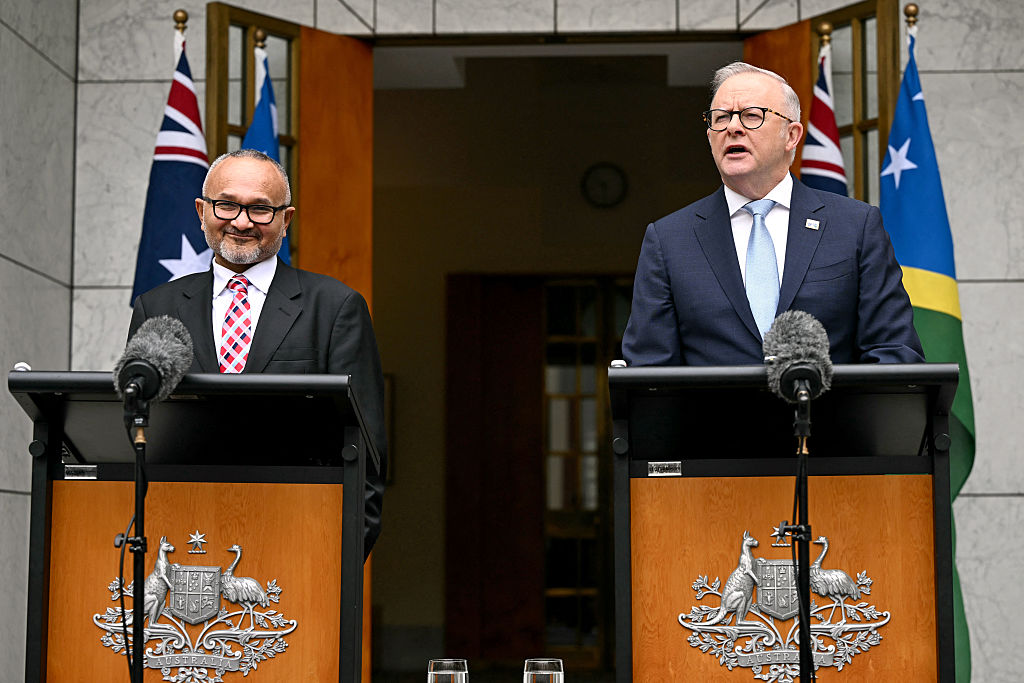
The remarks came after Australian Prime Minister Anthony Albanese and his Solomon Islands counterpart, Matthew Cooper Wale, signed the Australia–Solomon Islands Treaty in Canberra on Nov. 25, according to the leaders’ joint statement.
Under the treaty, the Solomon Islands chooses Australia as its primary security partner and rules out any foreign military or security base on its territory.
“Solomon Islands’ sensitive infrastructure will remain free from militarization, foreign interference and unauthorized access,” the statement said.
The deal arrived as the Solomon Islands’ secretive 2022 security agreement with the Chinese regime neared its expiry in April 2027. Honiara and Beijing both sidestepped questions about whether they would renew it.
“China will not give up,” Grant Newsham, a retired U.S. Marine officer and former U.S. diplomat, told The Epoch Times.
He said Beijing has not complained loudly about the treaty but is already sizing up the Wale government and its key supporters.
“[Beijing] is figuring out how to target them with the aim of bringing back into power the corrupt, pro-China local proxies,” Newsham said.
Michael Shoebridge, founder of Strategic Analysis Australia, said that he expects the regime to respond by rewarding other Pacific nations it is closer to, to demonstrate what the Solomons are missing out on.
“Vanuatu would be a likely place for some of this,” Shoebridge told The Epoch Times.
“Beijing is also likely to make promises to politicians in the Solomons who can undermine Mr. Wale as PM, to seek a change of government and a more favorable environment to advance Beijing’s interests.”
Vanuatu is also a South Pacific island nation with deep ties to Beijing, which funded the country’s presidential palace, completed in 2024.
Cleo Paskal, senior fellow at the Compass Point Institute, said Beijing could exert economic pressure on Canberra, which secured the removal of years of Chinese trade restrictions by the end of 2024.
“It seems Beijing much prefers Australia, with its tiny navy and compliant business sector, to be the ones ‘defending’ Pacific Islands rather than the United States,” Paskal told The Epoch Times.
“So having Canberra convince D.C. the region is ‘covered’ likely suits Beijing just fine.”
‘Far Better Option’
Newsham said aligning with Australia is “a far better option” for the Solomon Islands than slowly falling under Beijing’s sway and becoming its “vassal state.”
“Working through a corrupt local constituency, China had managed to insinuate itself into key parts of Solomon Islands’ political class, officialdom, and media and into key local industries,” he said.
“Beijing’s long-term objective is a security and military presence in Solomon Islands—and eventually displacing the Australian and Western presence.”
Beyond defense, the statement noted that Australia pledged to back the Solomon Islands’ free education policy, offer more Australian jobs to its workers, and help develop its border management system.
Paskal said the deal gives Canberra recognition as the Pacific Islands’ main security provider, while marking “a major outcome” for the Solomon Islands.
“The Wale government is very focused on reasserting sovereignty and raising the living standards for Solomon Islanders,” she said.
As opposition leader in July 2023, Wale warned that a policing agreement the then-Prime Minister, Manasseh Sogavare, signed with China could undermine peace and security in the Solomon Islands and the region.
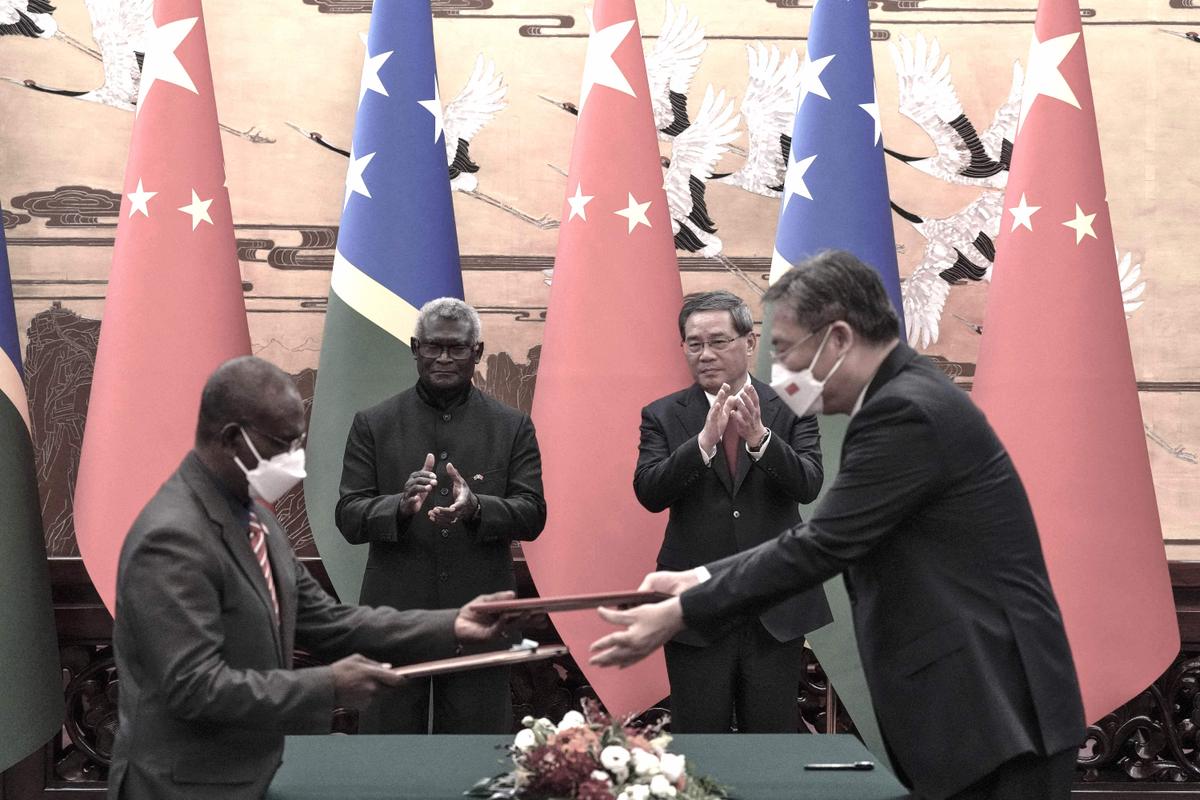
Shoebridge said the “authoritarian and pretty aggressive” methods of Chinese police may also have turned Solomon Islanders against Beijing’s growing security assistance.
“Mr. Wale has applied his principles about what is best for the Solomon Islands people, while also achieving very practical benefits for his people,” he said.
Opportunistic Beijing
Despite the treaty’s benefits for both sides, Paskal said more deals like this could shut the United States and Japan out of security cooperation with Pacific island nations that sign them.
“The Australian navy has around 10 major surface combatants. If, for example, Tuvalu is being attacked, it is unlikely the only place being targeted,” she said.
“If I was Beijing, I’d be encouraging more Pacific Island Countries to sign deals with Australia.”

For his part, Shoebridge said he does not expect a wave of similar deals, as the Solomons agreement is just another round in the region’s “continual arm wrestling.”
“Beijing has long-term goals and is highly opportunistic,” he said.
“Pacific leaders are skilled at maximizing opportunities for themselves and their people from the competition between Canberra and Beijing.”
Shoebridge said Australia gains most by keeping its promises to regional nations and ensuring its deals make a real difference for their citizens.
“That is the path to regional stability and success,” he said.
“And that path makes it much harder for Beijing to divide the region and bring the insecurity that a larger Chinese policing and military presence would involve.”
We had a problem loading this article. Please enable javascript or use a different browser. If the issue persists, please visit our help center.