
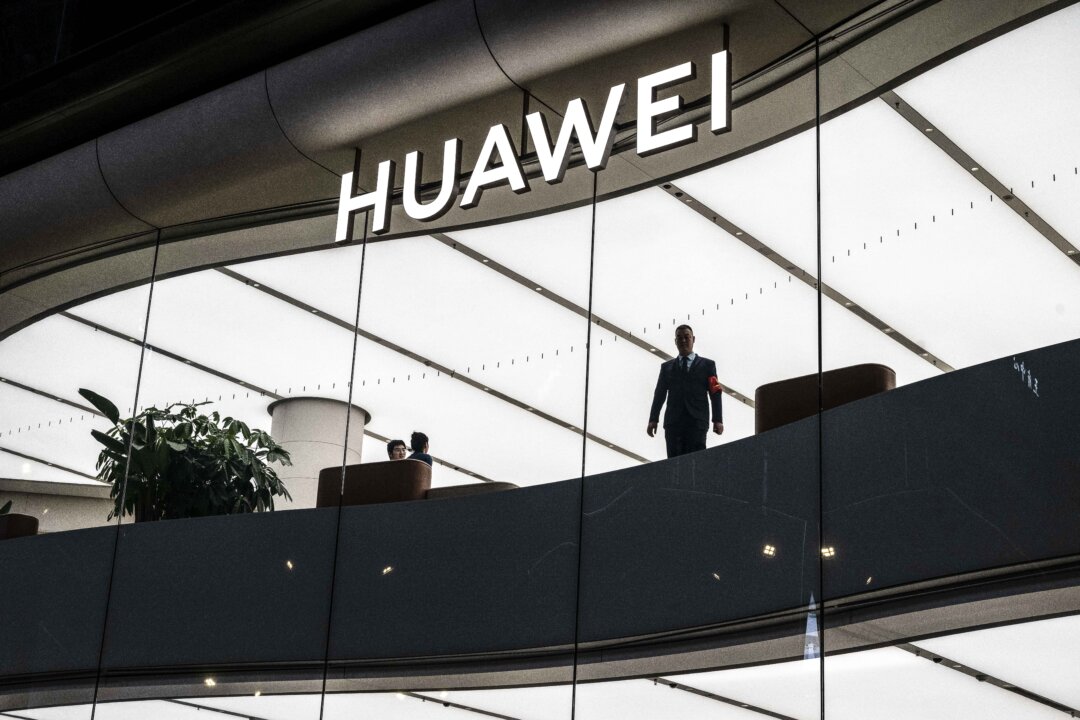
NEW YORK CITY—The trial against Chinese telecom device manufacturer Huawei Technologies for an alleged conspiracy to steal trade secrets has moved to jury deliberation in its 11th week.
The case, heard in Brooklyn federal court, alleges a 20-year conspiracy by Huawei to profit from stealing competitors’ trade secrets. The jury heard testimony from dozens of witnesses and thousands of emails and company documents.
The government has charged Huawei Technologies Co., Ltd., Huawei Device Co., Ltd, and Huawei’s U.S. subsidiaries with 12 counts, including a racketeering conspiracy, bank and wire fraud, conspiracy to steal trade secrets, and obstruction of justice.
Defense attorney Brian Heberlig delivered closing arguments for more than six hours on Nov. 17. He argued the prosecution’s case attempted to frame ordinary business as crime, and said that prosecutors were asking the jury to look at the evidence through “a window clouded by suspicion.”
Heberlig argued that, according to prosecutors, gathering information about competitors became theft and that establishing locations near other technology companies was for the purpose of hiring away competitors’ employees, rather than a business decision based on where the talent was.
“Huawei didn’t steal its way to success, it earned it,” Heberlig said. He argued that Huawei asked for permission and paid $11 billion to license other companies’ technologies.
Heberlig highlighted Huawei’s large compliance department with 1,500 employees and required compliance training and exams, which made stealing a clear violation of company guidelines.
“Can any compliance guarantee perfection? There is just no way to ensure no violations,” said Heberlig. He also argued the government failed to prove an overarching plot connecting the incidents together.
In rebuttal, Robert Pollack for the prosecution countered that Huawei’s compliance guidelines were largely “window dressing,” and that the law requires companies to actively police employees—not just when employee acts would hurt the company but also when they could help it.
The government presented evidence of Huawei employees stealing intellectual property from competitors Cisco, T-Mobile, and Fujitsu. As part of the pattern of criminal activity, prosecutors also alleged Huawei employees stole from antennae technology company Quintel and semiconductor company CNEX Labs.
Huawei said the Quintel and CNEX case represents a commercial dispute and admits no wrongdoing.
Heberlig argued that prosecutors ignored Huawei’s response to these incidents, firing the employees who took a piece of a T-Mobile robot meant to test cell phone touchscreens and dismissing Zhu Yibin, who took photos of a Fujitsu networking system’s circuit boards at a Supercomm trade show in 2004.
A jury awarded T-Mobile $4.8 million in damages in a civil lawsuit regarding the theft of a part of its testing robot.
In its closing statement, the government argued that senior executives were able to escape punishment.
Chief Financial Officer Cathy Meng, daughter of founder Ren Zhengfei who also goes by Meng Wanzhou, admitted to knowingly misleading HSBC about Huawei’s relationship with its subsidiary Skycom in Iran, according to a 2021 statement Meng signed.
After media reports raised concerns about Huawei’s business dealings in Iran, Meng told HSBC that Skycom was a business partner, when in fact the company controlled Skycom through Canicula Holdings. As a former Skycom employee in Iran testified, Skycom’s employees were Huawei employees using email addresses at Huawei’s domain.
In signing the 2021 statement, charges against Meng were deferred and later dismissed. Meng continued in her role as CFO and was even promoted to serve in the role of rotating chairman.
Corporate Senior Vice President Charles Ding allegedly misled Congress about Huawei’s business in Iran and its protection of intellectual property. Ding remains in his position.
“Huawei did not fall off a truck and end up in federal court,” said Pollack in rebuttal, arguing Huawei knew the law, but knowingly violated it. It’s not “an Etsy shop that got its paperwork wrong,” he said.
If found guilty, Huawei may be fined heavily and forced to forfeit property tied to the offense in the United States. Huawei Device USA has already exited the U.S. market, and only subsidiary Futurewei continues to operate in the United States.
We had a problem loading this article. Please enable javascript or use a different browser. If the issue persists, please visit our help center.