
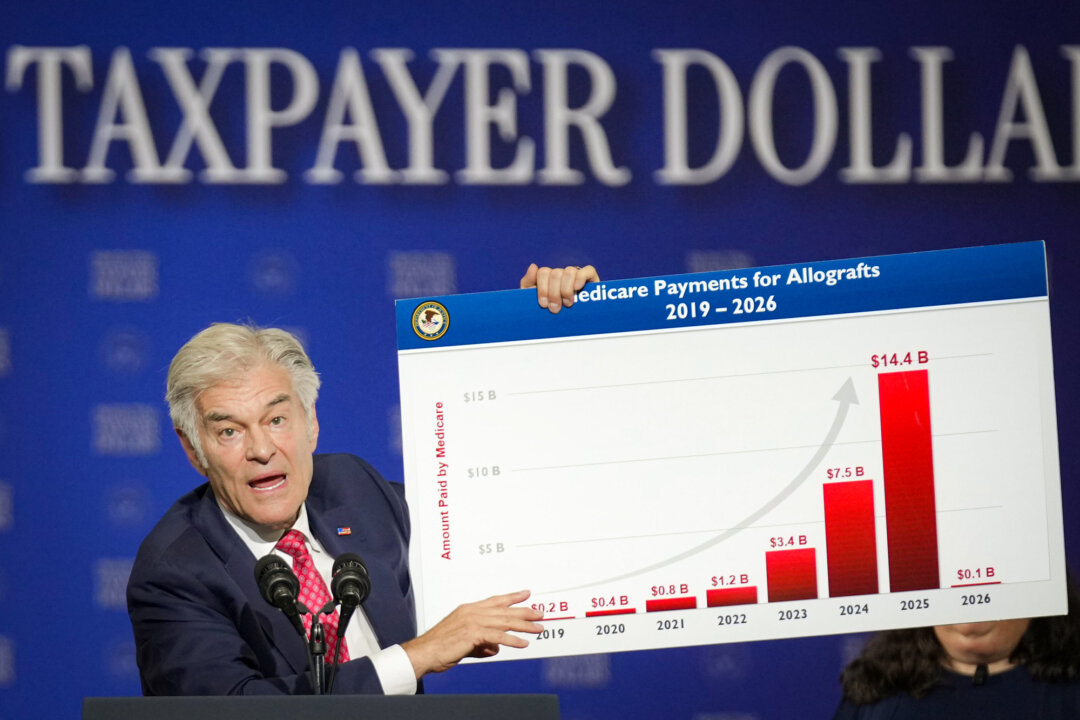
Centers for Medicare and Medicaid Services (CMS) has proposed a new regulation to combat fraud in Medicare, Medicaid, and the Affordable Care Act marketplaces, aiming to save taxpayers $90 billion over the next 10 years.
The proposed anti-fraud rule, dubbed the Comprehensive Regulations to Uncover Suspicious Healthcare or CRUSH, would target billions of overpayments for Medicare Advantage plans, strengthen state-federal collaboration in Medicaid fraud fighting, and hold bad actors accountable in the marketplace. The rule is open for comments till Jan. 19, 2027.
The Medicare Payment Advisory Commission estimated in a March report that the federal government paid $76 billion more for Medicare Advantage enrollees than it would have spent had those people been enrolled in traditional Medicare. That’s a 14 percent gap.
“CRUSH would give CMS stronger tools to block fraudulent payments, remove dishonest providers, and protect Americans from schemes that exploit their healthcare coverage,” said Health Secretary Robert Kennedy in a Nov. 16 statement.
“Fraudsters keep popping up. We keep knocking them down. And now, we’ve got a bigger hammer to swing,” CMS Administrator Mehmet Oz said on X.
“By confirming who actually owns and operates the businesses billing our programs, and by closing the gaps bad actors exploit as they move between Medicare, Medicaid, and the Marketplace, we can stop fraud at the front door,” CMS Deputy Administrator Kim Brandt said.
The CRUSH proposed rule builds on the Trump administration’s efforts to address healthcare fraud.
The Trump administration withheld $1 billion of Medicaid payments from California and Minnesota in July. The Department of Health and Human Services has cut funding for the Medicaid fraud control unit in New York and Hawaii.
The federal department’s efforts in cracking down on fraud, waste, and abuse have saved $41.9 billion in taxpayer dollars in 2025, up 59 percent from $26.3 billion in 2024, according to CMS.
“Behind every fraudulent claim is a real person: a senior whose identity was stolen, a family switched into a plan they never chose, a patient denied the care they were promised,” Brandt said. “That’s who CRUSH is built to protect.”
In addition, the National Alliance for Care at Home said, “It is equally important that CMS ensure that highly suspect and fraudulent billing activities do not impact home health and hospice payment rates or disrupt legitimate operations for compliant agencies,” in a March letter to Dr. Oz regarding the proposal.
Amid a sweeping fraud crackdown, CMS said it intends to conduct program integrity rulemaking on an annual basis going forward.
“To the extent a court may ultimately enjoin one provision of this section as finalized,” the federal department wrote, “CMS proposes that the other provisions should remain in effect, ensuring the continuity of the regulations.”
We had a problem loading this article. Please enable javascript or use a different browser. If the issue persists, please visit our help center.