
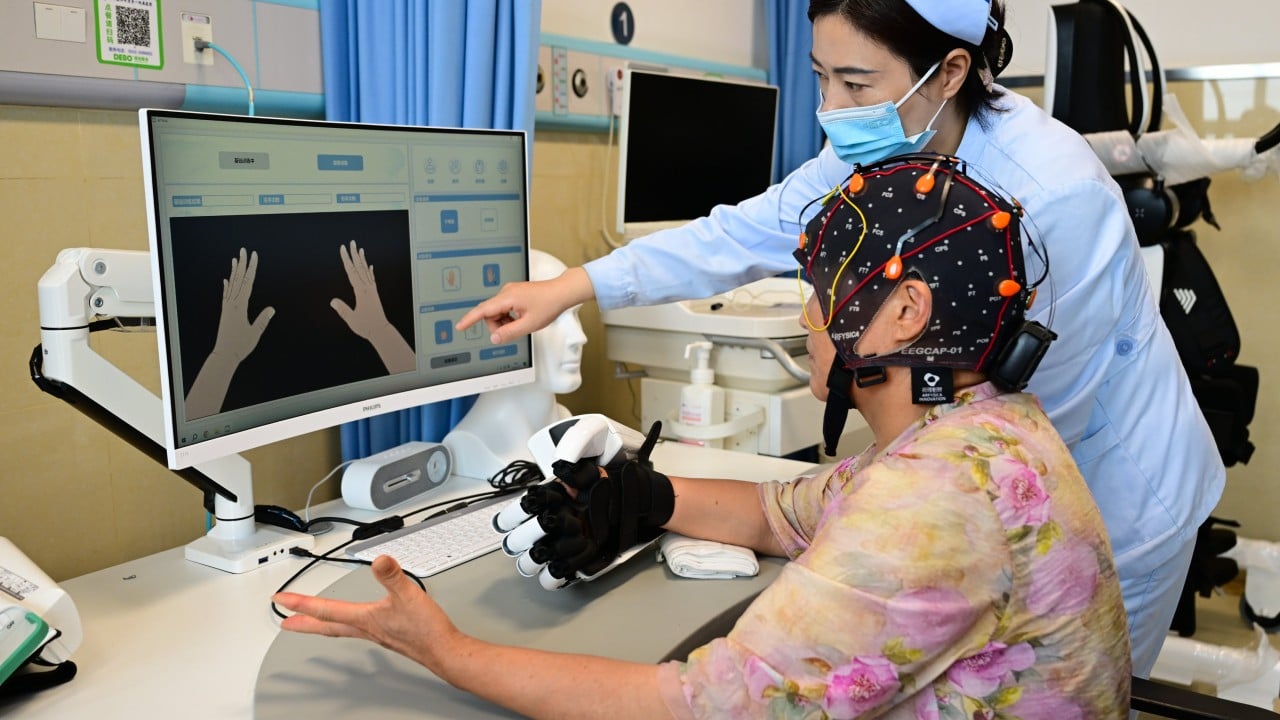
Chinese researchers have created a comfortable electrode for non-invasive brain-computer interfaces (BCIs) that achieved over 94 per cent accuracy in visual mind-typing tests during day-long use.
The gradient electrodes – designed to overcome the current trade-offs of conventional uniformly soft or rigid electrodes – were integrated into a commercial electroencephalogram (EEG) cap and tested during rest over the span of 14 hours.
Furthermore, the electrodes enabled eight hours of stable EEG brain recordings while a human subject engaged in daily activities, which helped overcome key barriers to the real-world deployment of non-invasive BCIs.