
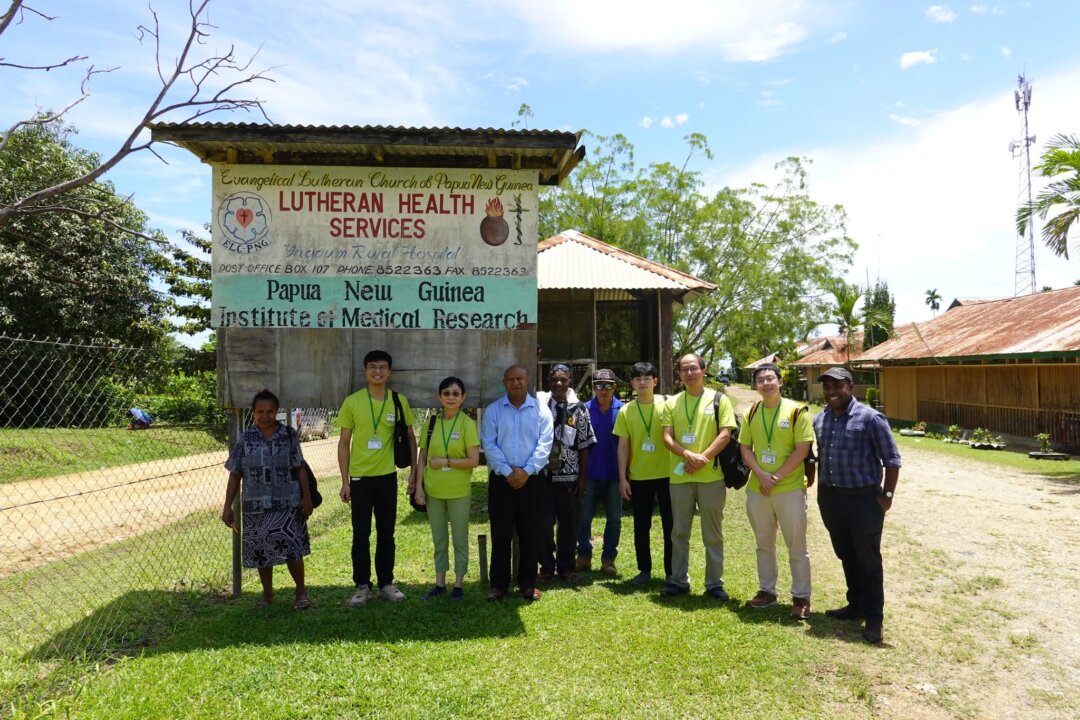
Taiwan accused Beijing of pressuring Papua New Guinea to restrict its international presence as it announced on Nov. 6 that it would close its representative office in the Pacific island nation, withdraw its personnel and end assistance programs.
The decision came months after Chinese Foreign Minister Wang Yi publicly praised Papua New Guinea’s order to shut the office, calling it an example for other countries handling Taiwan’s overseas representation.
Beijing claims Taiwan as part of its territory, although the Chinese Communist Party has never governed the island. China has sought to restrict Taiwan’s international participation and opposes foreign governments maintaining official relations with Taipei.
In July, Papua New Guinea ordered Taiwan’s representative office in its capital, Port Moresby, to close. The office had handled unofficial relations between the two sides, which do not maintain formal diplomatic ties.
Chinese Ambassador Yang Xiaoguang welcomed the decision in a July 20 article published in Papua New Guinea newspapers, arguing that closing Taiwan’s office would strengthen relations with Beijing. Two days later, Wang praised the move during a meeting with Papua New Guinea Foreign Minister Justin Tkatchenko in Manila, the Philippines.
Taiwan initially rejected the order and sought to preserve its office. But Papua New Guinea recently renewed its demand for Taiwanese staff to leave, prompting Taipei to announce the withdrawal and an end to agricultural, medical, scholarship and technical assistance programs.
Taiwan’s medical cooperation in Papua New Guinea dates back more than two decades. In October 2024, a six-member team from Changhua Christian Hospital performed surgeries and worked with local doctors at Modilon General Hospital in Madang, where the two institutions signed an agreement to train medical staff. In July 2025, Taiwanese and local surgeons performed what the hospital said was Papua New Guinea’s first total hip replacement.

Papua New Guinea has denied acting under Chinese pressure. Prime Minister James Marape said in July that the decision was made according to his country’s national interests and constitutional processes.
On Nov. 5, Marape met Chen Xiaodong, chairman of the China International Development Cooperation Agency, and reaffirmed his government’s longstanding one-China policy while seeking greater Chinese investment in energy, mining, agriculture, and infrastructure.
The United States had criticized the closure order in July. A State Department spokesperson told The Epoch Times that Washington was deeply concerned and described the move as part of Beijing’s intimidation campaign against Taiwan and countries that work with it.
Taiwan has also stopped purchasing Papua New Guinea’s liquefied natural gas (LNG) on the spot market and said it would sign no new spot-purchase contracts. Taipei said its purchases have accounted for roughly one-third of Papua New Guinea’s LNG exports and that alternative supplies had been secured. Taiwan’s Ministry of Foreign Affairs did not announce the termination of an existing long-term supply agreement.
We had a problem loading this article. Please enable javascript or use a different browser. If the issue persists, please visit our help center.