
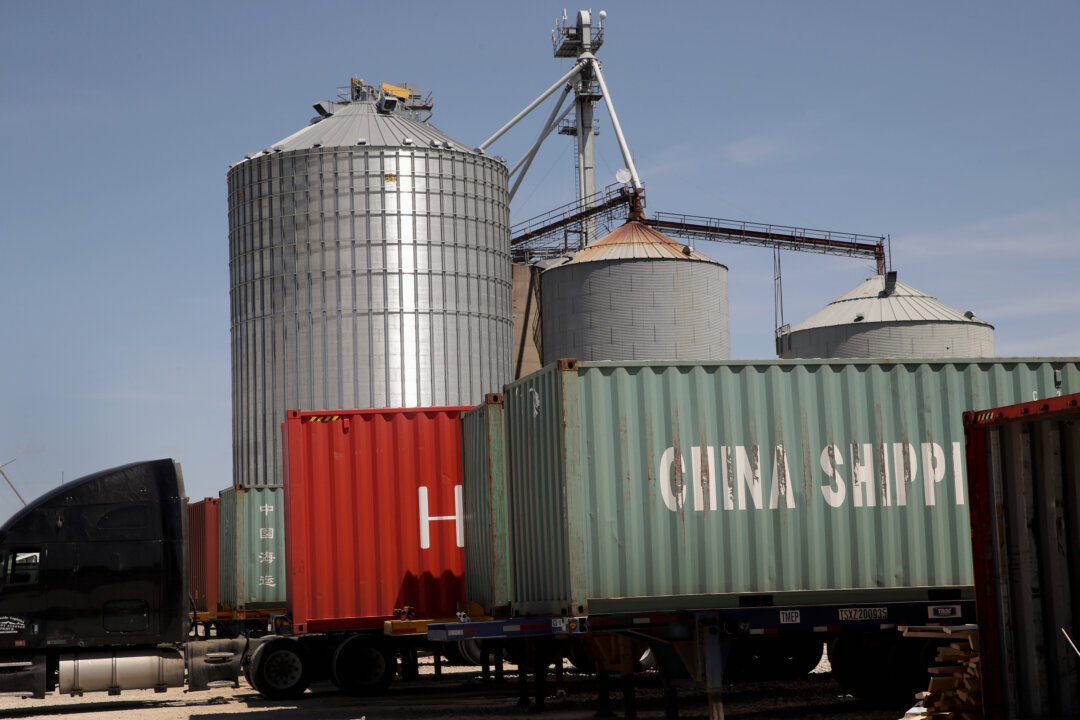
China said that increasing its U.S. farm product purchases depends on implementing a reciprocal tariff-cut agreement, a condition not specified in the White House’s earlier announcement of Beijing’s $17 billion annual commitment.
Chinese Commerce Ministry spokeswoman Huang Ling said during a Nov. 5 news conference that Beijing remained open to buying more American agricultural products, but only if the two countries implemented their agreed reciprocal tariff reductions.
“The prerequisite is that the ‘30-for-30’ reciprocal tariff-reduction arrangement agreed upon by the two sides is implemented,” Huang said.
She was responding to a question about a Nov. 2 meeting between China’s international trade representative, Li Chenggang, and a U.S. agricultural trade delegation, including whether the sides had agreed on additional purchases.
Under the tariff arrangement, each country would lower import duties on selected products representing approximately $30 billion in annual trade, based on 2024 figures. China’s list includes American agricultural products, along with medical devices and other goods.
The White House said in a May 17 fact sheet that China would buy at least $17 billion annually in U.S. agricultural products in 2026, 2027, and 2028, with the first year’s amount prorated. Those purchases were to be in addition to China’s existing soybean commitments.
The announcement did not say that China’s purchases depended on the reciprocal tariff cuts taking effect.
Beijing’s Earlier Account
The ruling Chinese Communist Party had previously connected expanded agricultural trade to lower tariffs and improved market access, but had not publicly described implementation of the tariff package as a prerequisite.
In a May 20 explanation of the trade negotiations, the Chinese Commerce Ministry described an indicative target for increasing agricultural trade between the two countries.
The ministry said the sides had agreed in principle to include relevant agricultural products in a reciprocal tariff-reduction framework. It also called for reduced trade barriers and improved market access to facilitate purchases.
At a May 21 news conference, when asked whether China could confirm the White House’s $17 billion annual purchase commitment, excluding soybeans, Commerce Ministry spokesman He Yadong did not confirm the amount, instead repeating that the two governments had established an indicative target for expanding agricultural trade.
Tariff Cuts Still Await Implementation
The two governments advanced their reciprocal tariff arrangement in September, approving lists of products that could qualify for lower import duties.
According to the Sept. 27 terms of reference, the tariff reductions would be determined and implemented through each country’s domestic legal procedures.
The published document does not expressly make China’s agricultural purchase commitment contingent on those reductions.
In a Sept. 27 statement, U.S. Trade Representative Jamieson Greer said the administration would continue ensuring compliance with agricultural and energy purchase commitments while pursuing more balanced trade and improved market access for American farmers and businesses.
China’s Commerce Ministry said on Sept. 28 that both countries would implement the tariff reductions simultaneously after completing their domestic procedures.
The Epoch Times contacted the Office of the U.S. Trade Representative as well as the White House to ask whether the tariff arrangement was an agreed prerequisite for China’s agricultural purchases and whether Washington still expected Beijing to meet the announced targets. Neither responded by publication time.
We had a problem loading this article. Please enable javascript or use a different browser. If the issue persists, please visit our help center.