
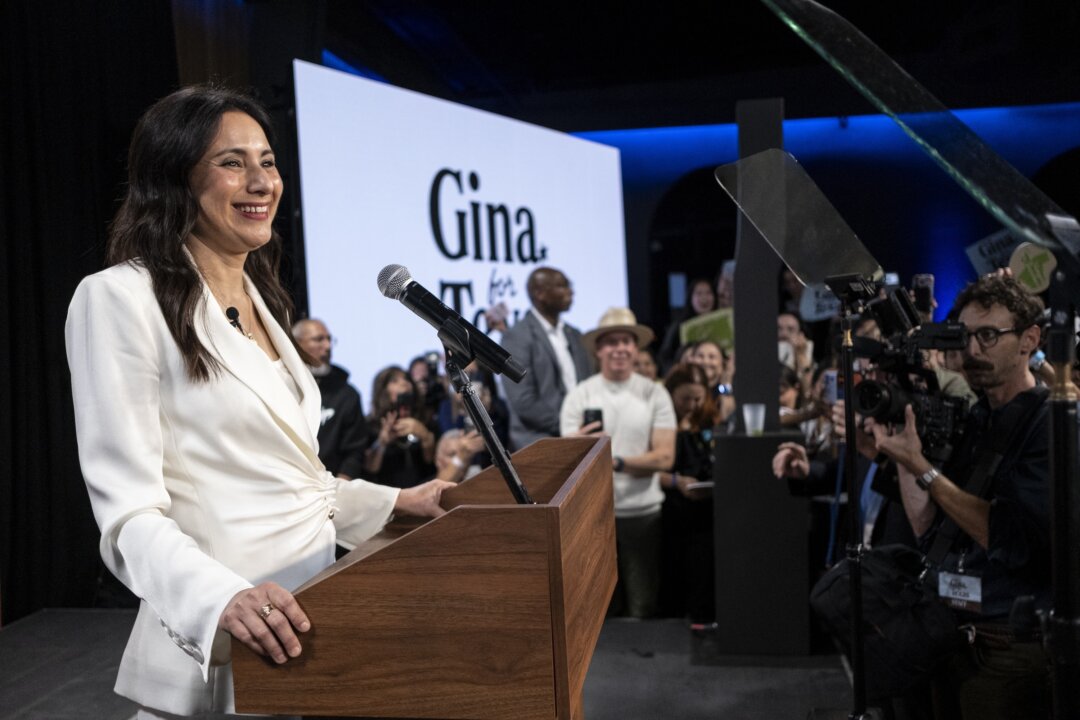
Governors’ mansions across the nation will be seeing big changes after the midterm elections. Democrats took a majority of governorships for the first time in 20 years on Nov. 3.
Noteworthy Firsts
Texans will have their first Latina governor and the first Democrat to hold the office in more than 30 years.
Underdog candidate Gina Hinojosa, 52, took the seat from incumbent Republican Gov. Greg Abbott to run the executive branch of the nation’s most populous red state.
Abbott’s policies on data centers, water rights, and public education caused some voters to abandon him after 12 years in office.
Hinojosa, who was outspent 5-to-1 on ads, according to AdImpact data, had support from fellow Latino politicians and the Democratic Governors Association.
In Georgia, Democrat Keisha Lance Bottoms, the former mayor of Atlanta, became the first black woman elected governor in U.S. history. Bottoms defeated Republican businessman Rick Jackson, flipping the top job in the swing state.
Amy Acton in Ohio is the first Democrat to win the seat in two decades, and the first woman to ever hold the state’s top political office.
A doctor and former COVID-19-era state health director, Acton campaigned on affordability and access to health care.
Wisconsin and Florida also elected their first black governors, with Democrat David Crowley and Republican Byron Donalds taking the positions in their respective states.
Crowley will replace Democratic Gov. Tony Evers, who chose to retire. His win also marks the first time in Wisconsin’s 178-year history that Democrats will hold the governor’s office for more than eight consecutive years.
In Tennessee, Republican Marsha Blackburn became the state’s first woman governor.
Blackburn, who has spent the last eight years in the Senate and a total of almost 28 years in public office, beat out Democrat Jerri Green, a Memphis city councilwoman and lawyer, in the tight race.
In New Mexico, Deb Haaland became the first Native American female elected governor in U.S. history. Haaland is a Laguna Pueblo citizen.
Party Changes
Another big upset came in Ohio, when Acton won the governor’s race against former Republican presidential candidate and biotech billionaire Vivek Ramaswamy.
Since the shakeup, Democrats will govern the nation’s top 12 most heavily populated states, with the exception of Florida, where the seat was kept by a Republican.
In Nevada, Democratic Attorney General Aaron Ford flipped the seat blue, ousting Republican Joe Lombardo after one term in office.
Ford was endorsed by dozens of groups, including Planned Parenthood and the Culinary Workers Union Local 226, which represents the 60,000 employees at hotels, resorts, and casinos on the Las Vegas Strip, including the Mandalay Bay, the Bellagio Hotel & Casino, and Caesars Palace.
In total, 36 states with about 80 percent of the nation’s population were voting for their governors on Tuesday. Nineteen of those offices were open, with no incumbent.
Before the election, Democratic governors represented about 60 percent of the nation’s population, while Republicans held 26 of the nation’s 50 governors’ offices.
In 2027, Democrats will hold at least 28 governorships, and possibly as many as 30, as Kansas and Alaska have yet to be decided.
Jacki Thrapp and The Associated Press contributed to this report.
We had a problem loading this article. Please enable javascript or use a different browser. If the issue persists, please visit our help center.