
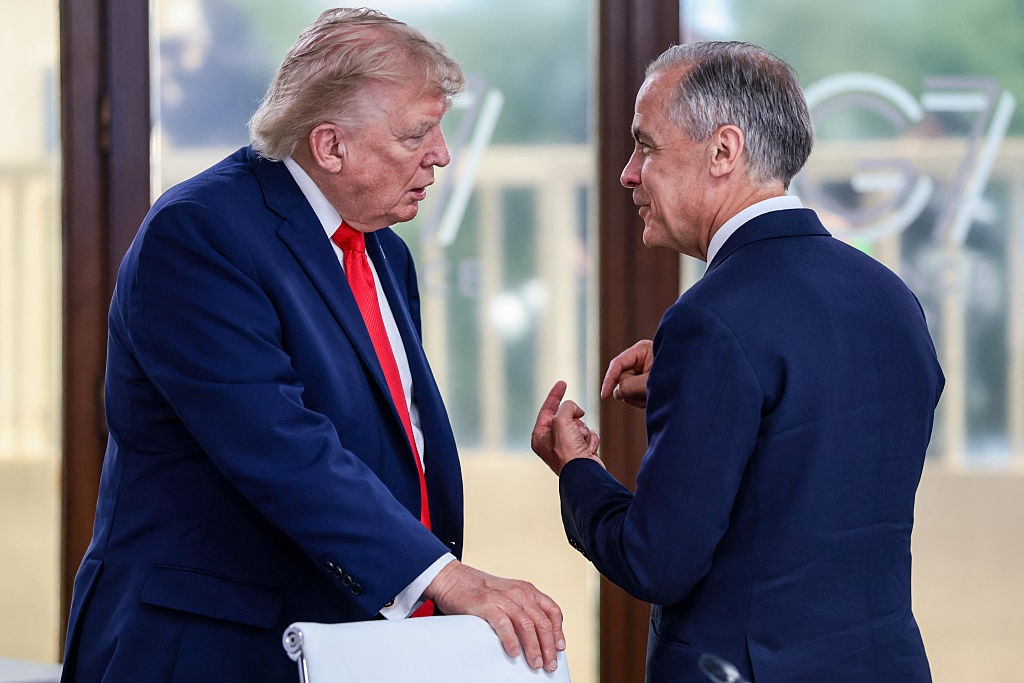
U.S. President Donald Trump says the United States and Canada are close to reaching a trade deal, adding that the two sides have “the concept of a very good deal.”
“We’ve been losing money for many years with Canada, 70, 75 years. So we are now very close to having a deal,” Trump told reporters in Dubuque, Iowa, on Nov. 1.
“I spoke with the [Canadian] prime minister the other day, I spoke to him again yesterday, and we have the concept of a deal that’s going to be great for our farmers, great for our country, and it’ll be fine for Canada too.”
Canadian Prime Minister Mark Carney said earlier in the day in his own statement that he had a “good conversation” with Trump on the future of trade between the two countries.
“This builds on our recent constructive discussions on the outlines of a mutually beneficial trade deal that would create jobs for our workers, boost affordability for families, and fully respect Canada’s languages, culture, and sovereignty,” Carney said in a social media post on Nov. 1.
“Our teams will now be working in the coming weeks to deliver that outcome.”
Trump said that under the new deal, “all tariffs” that U.S. farmers are subject to when they export to Canada will be removed.
“Part of the agreement is that our farmers will have to pay no tariffs,” he said. Ottawa hasn’t yet commented on this aspect.
Canada has a supply management system in place that applies quotas and tariffs to imports of products including dairy, poultry, and eggs. The system has long been a source of concern for successive U.S. administrations, but Carney has said Canada will not be removing it.
Trump also said the Keystone XL pipeline is part of the trade negotiations. The proposed pipeline, which was owned by TC Energy, would have carried Alberta oil to U.S. refineries but was cancelled after the Biden administration revoked its permit in 2021.
Calgary-based South Bow, which took over TC Energy’s oil pipeline business in 2024, is pursuing the Prairie Connector project, a proposed pipeline that would use existing Keystone XL infrastructure in Canada and connect to a new U.S. pipeline carrying Alberta oil to Wyoming. The Trump administration granted the pipeline a permit in April 2026. South Bow says it’s targeting a final investment decision by mid-2027.
“They’re going to build, which I think is great,” Trump said when asked about Keystone. “They’re going to pay for it.”Trade talks between the two countries collapsed on Aug. 21, after which Washington proceeded with previously announced plans to impose 50 percent tariffs on US$20 billion worth of Canadian imports. Canada retaliated with its own counter-tariffs on roughly the same value of U.S. imports, ranging from 15 to 50 percent.
Washington subsequently imposed additional tariffs on Canadian products and banned certain Canadian products, including most alcoholic drinks, from being exported to the United States.
Carney cited three main factors for the collapse of the talks, including Washington not applying tariff relief to Canadian-made medium- and heavy-duty trucks, wanting restrict Canada’s ability to establish trade deals with other countries, and demanding changes that he said would weaken Canadian protections for French-language content.
U.S. Trade Representative Jamieson Greer rejected Ottawa’s account of the breakdown in talks, saying Canada derailed a tentative agreement by bringing new demands to the table. He said the United States has no objections to Canada’s efforts to protect the French language, and that its main concern with Canada’s deals with other countries involves issues such as steel dumping by third countries, citing China as a “non-market economy country” of concern.
We had a problem loading this article. Please enable javascript or use a different browser. If the issue persists, please visit our help center.