
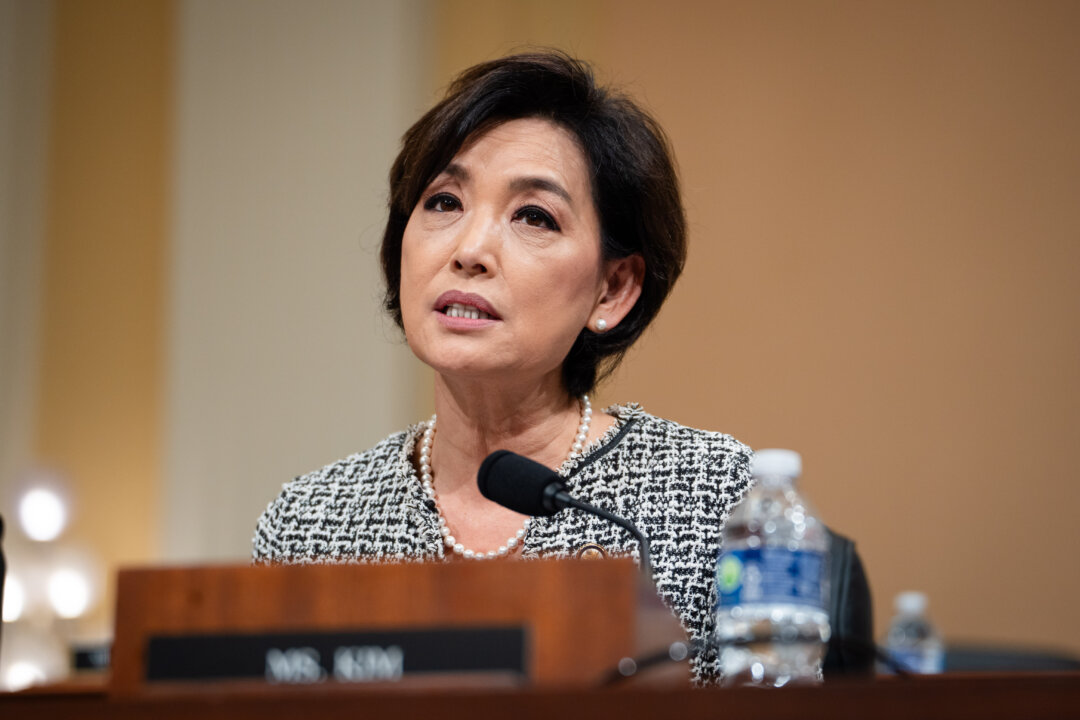
A congresswoman on the House Foreign Affairs Committee is urging Secretary of State Marco Rubio to raise China’s travel risk rating, saying Americans should be better informed about the risks of traveling to what she described as a “key adversarial nation.”
Rep. Young Kim (R-Calif.) sent a letter to Rubio on Oct. 29, urging the State Department to upgrade its travel advisory for China from Level 2, “Exercise Increased Caution,” to Level 3, “Reconsider Travel.”
In an Oct. 29 statement, Kim said the United States “cannot and will not tolerate a hostile foreign power” treating detained Americans “like pawns to be traded.”
“The Chinese Communist Party continues to use hostage diplomacy as leverage against our country, and Americans considering travel to China deserve a clear, honest assessment of the risks they face. Raising the advisory to Level 3 would deliver exactly that,” Kim said.
The State Department recently updated its travel advisory for China. In September, it added a fresh warning about exit bans and the risks of “unjust arrest or detention.”
In October, it updated the advisory again, adding a “D” risk indicator for wrongful detention while retaining the existing “O” indicator, which denotes “other potential risks not covered” by the department’s specific risk categories.
“Americans are at serious risk of wrongful detention,” the current U.S. travel advisory for China reads. “Expansive national security, counterespionage, and data security laws grant Chinese officials broad discretion to detain or interrogate foreign nationals.
“Wrongfully detained Americans may be held in prison for years, in poor conditions, and without due process or consistent access to U.S. government staff or their family.”
Kim argued that, unlike other countries with Level 2 travel advisories, such as Italy, Germany, and the UK, where the risks stem from non-state actors, the threat in China originates from the regime itself.
“The risk of traveling to China is the state apparatus itself, making the risks constant and country-wide,” Kim wrote.
The suggested upgrade to Level 3 would also trigger “a formal, semiannual review of China’s travel status,” Kim wrote, describing it as a reflection of the “heightened vigilance” advised by the State Department.
Kim, chair of the Foreign Affairs Subcommittee on East Asia and the Pacific, raised the prospect of elevating the travel advisory during a September congressional hearing.
Testifying before the panel, Jamestown Foundation president Peter Mattis backed Kim’s call for a stricter warning but urged lawmakers to go a step further by explicitly citing cases of Americans detained in China.
“I think we would actually do better by detailing all of those instances that we know of, so that people can have a clear sense of just how vast that scope of problems is,” Mattis testified at the time.
Kim also called on Rubio to list U Min Zin and Chen Youlin on the State Department’s website as “clear cases of unlawfully detained Americans,” calling both “important additions to the travel advisory.” The department has already designated both men as wrongfully detained in China.
Min Zin, a U.S. citizen and the executive director of the Institute for Strategy and Policy-Myanmar, accepted an invitation from a Chinese academic institution. However, authorities detained him upon arrival at an airport in China’s southwestern Yunnan Province on June 3 on espionage allegations.
Chen, another U.S. citizen and a seismologist, has been imprisoned since November 2024. Advocacy groups say Beijing targeted him because of his research on projects funded by the U.S. government.
Peter Humphrey, a former British journalist and a former prisoner in China, told a congressional hearing in 2024 that he estimated there were around 300 Americans incarcerated in China or under exit bans.
In September, Kim backed a bipartisan House resolution condemning China’s wrongful detention of Americans and urging the State Department to raise its travel advisory for China. Kim introduced a companion bipartisan resolution in the Senate.
If the State Department adopts her recommendations, it would “immensely benefit how Americans approach travel” to China, Kim wrote in the letter.
“Americans must be aware that traveling to a key adversarial nation comes with serious risks and potential consequences.”
We had a problem loading this article. Please enable javascript or use a different browser. If the issue persists, please visit our help center.