
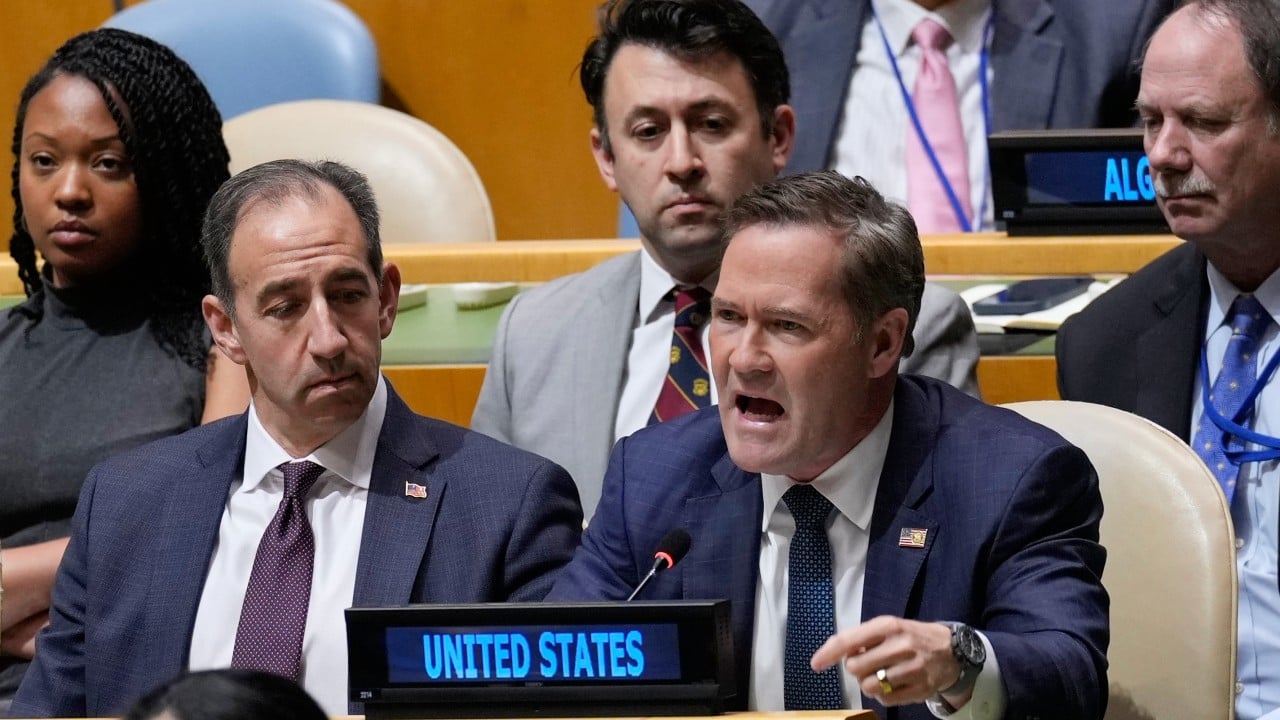
Last week, the United Nations General Assembly called for the 34th time for an end to the US embargo on Cuba. The resolution passed by 130 votes to 17, with 25 abstentions. It came as Cuba struggles with a severe energy crisis, mainly caused by a US fuel embargo, imposed after the abduction of Venezuela’s president to New York.
The energy blockade is only the latest of America’s crimes against the Cuban people. Sergio Vigoa de la Uz, Cuba’s ambassador to Namibia, laid out the human costs of US energy and economic restrictions in a recent article. The harm shows up in hours without power – in schools, hospitals and businesses; postponed medical treatment and disrupted utility services; and rising infant mortality rates.
The article cites a Cuban government submission to the UN secretary general, according to which roughly 1,400 megawatts of generating capacity – about a third of demand – could not be used at the end of May because there was no fuel. Some communities have gone without power for more than 30 hours at a stretch.