
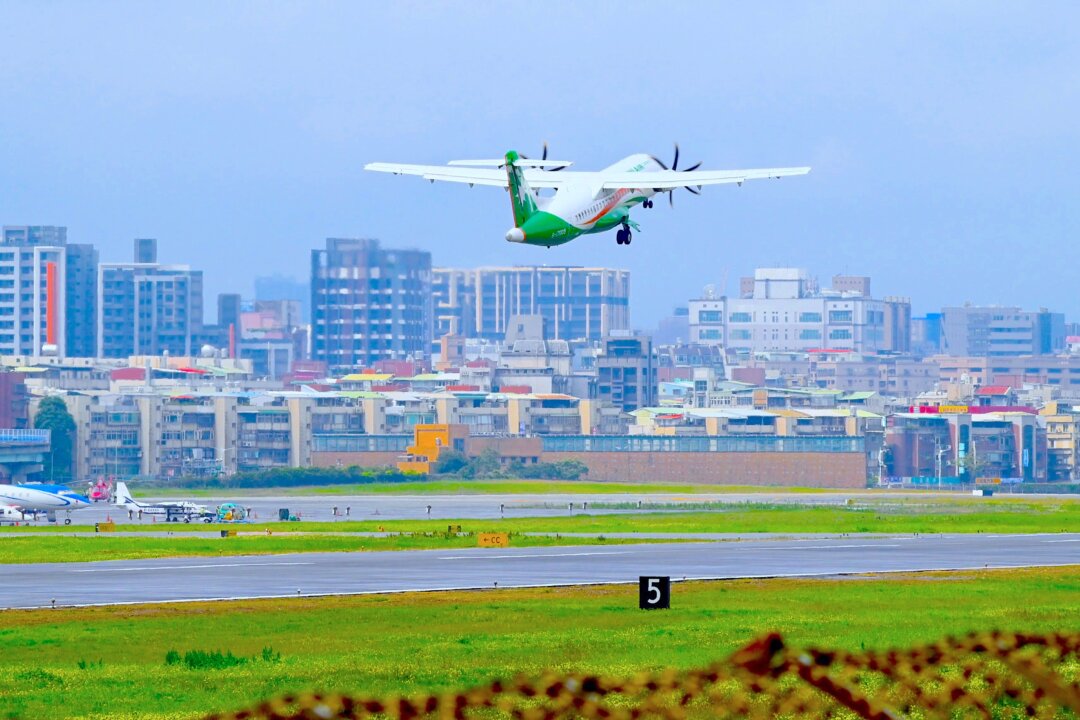
Taiwan accused Pakistan on Oct. 29 of following Beijing’s lead in restricting Taiwanese airlines’ access to its airspace, calling the move an attempt to turn international aviation into a political weapon.
The disruption lasted about three days. Taiwan’s China Airlines and EVA Air stopped using Pakistani airspace on Oct. 25 and were permitted to resume overflights on Oct. 28. Pakistan has not publicly released the original restriction order, leaving it unclear whether the interruption resulted from a formal ban or another aviation-clearance decision.
Taiwanese government spokesperson Lee Hui-chih accused Pakistan of disregarding international norms, undermining Taiwan’s sovereignty, and politicizing and weaponizing airspace.
The dispute concerned overflight rights—permission for an airline to pass through another country’s airspace without landing. Restrictions can force airlines onto longer routes, increasing flight times and operating costs.
Pakistan is a close diplomatic and military partner of Beijing. In a January 2026 joint communiqué, Pakistan reaffirmed its support for Beijing’s claim that Taiwan is part of China and its opposition to Taiwanese independence.
Taiwan is a self-governing democracy that the Chinese Communist Party has never ruled. Beijing claims the island as its territory and has threatened to use force to bring it under its control.
Pakistan Restores Overflight Access
Pakistan reopened its airspace to the two Taiwanese airlines beginning Oct. 28, according to Taiwan’s Civil Aeronautics Administration.
At the Oct. 29 press conference, Lin Chun-liang, deputy director-general of Taiwan’s Civil Aeronautics Administration, confirmed that Pakistan had reopened its airspace to Taiwanese airlines. He said the agency was maintaining close contact with the carriers about their flight operations.
The renewed permission covers Oct. 28, 2026, through March 27, 2027.
Lin explained that the period corresponds to the international aviation winter schedule. Airlines normally submit new applications for the subsequent summer schedule, rather than automatically losing access when the winter period ends.
Lin said airlines would continue selecting routes based on airspace availability, safety, weather, flight time, and operating costs.
Officials did not provide a figure when asked how many Taiwanese flights had been affected.
Beijing Responds
Chinese Foreign Ministry spokesman Guo Jiakun was asked about the Pakistani airspace controversy during an Oct. 29 press briefing.
A reporter cited Pakistan’s defense minister as saying on Oct. 28 that the country had closed its airspace to Taiwanese airlines to uphold the one-China policy.
Guo did not directly address Pakistan’s alleged decision. Instead, he reiterated Beijing’s position on its one-China principle and maintained that Taiwanese residents faced no obstacles to international travel.
We had a problem loading this article. Please enable javascript or use a different browser. If the issue persists, please visit our help center.