
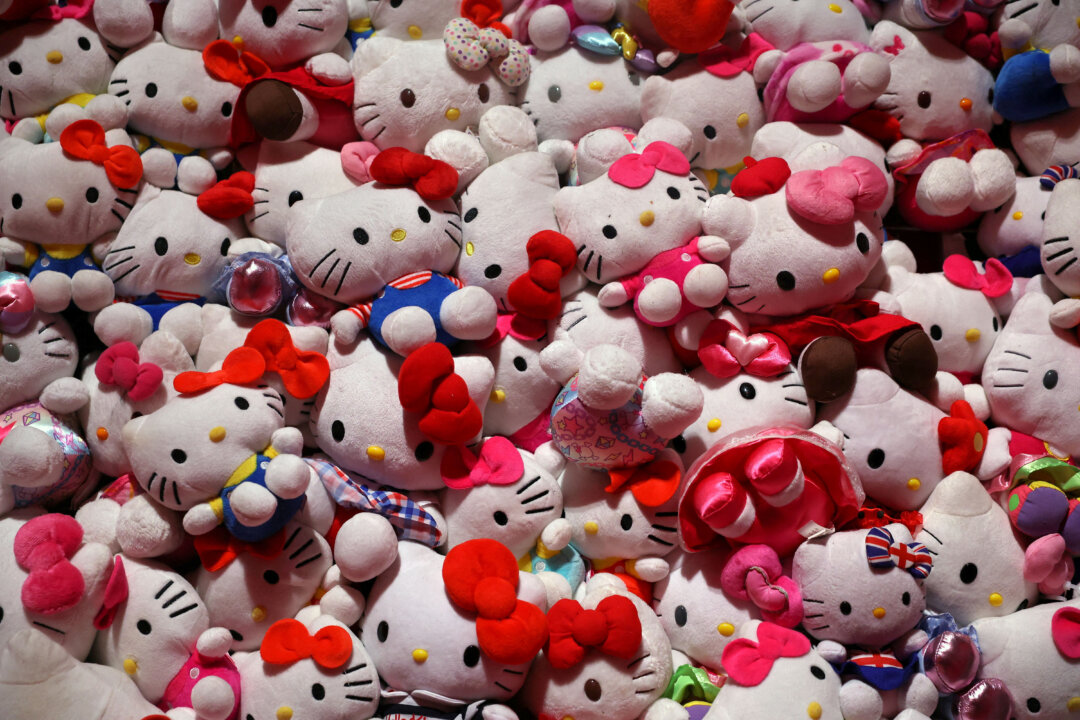
Sanrio, the company that makes Hello Kitty merchandise, has canceled a collaboration with a hit Japanese TV show after it sparked a backlash in China.
“Vivant,” produced by Japanese broadcaster TBS and also available on Netflix, is based around the actions of Japanese spies and a terrorist organization called Tent.
But the latest season includes a plotline in which some of the show’s stars are captured and tortured by a fictional Chinese intelligence agency.
Sanrio’s Chinese subsidiary announced Wednesday that it was canceling the commercial tie-up, which included producing soft toys, such as Hello Kitty, dressed as “Vivant” spies.
“Regarding this collaboration, we believe it contains expressions that are inconsistent with the corporate philosophy of the Sanrio Group. We have therefore decided to terminate this collaboration along with all subsequent projects and promotional activities,” the company said.
After several days of criticism of the show on Chinese social media, China’s state-owned media weighed in this week.
In an editorial in the Global Times, a newspaper affiliated with the Chinese Communist Party (CCP), it called “Vivant” a “Japanese drama notorious for smearing China” and called on Sanrio to “partner with works that convey sound values and, above all, uphold a correct understanding of history.”
Many Japanese Companies Rely on Chinese Market
China is the world’s second-largest market, and many Japanese companies rely heavily on exports to Beijing.
Sanrio sold 9.8 billion yen ($62 million) worth of products in China in the first quarter, and a consumer boycott would have been hugely damaging to the company, whose most famous brand is Hello Kitty, a cartoon cat created by illustrator Yuko Shimizu in 1974.
TBS has yet to comment on the cancellation of the tie-up, but Japanese media reported that its president, Masamine Ryuho, said at a press conference on Wednesday that the drama was “entirely fictional and has no intention of disparaging any specific country.”
The dispute comes amid tensions between Beijing and Tokyo over Taiwan.
Japanese Prime Minister Sanae Takaichi said in November 2025 that a Chinese attack on democratically ruled Taiwan could trigger a Japanese military response. Beijing demanded that she retract the comments.
U.S. Ambassador to Japan George Glass later that month reaffirmed Washington’s support for Tokyo.
Mbappé Apologizes Over Mao Remark
The “Vivant” incident is the second such episode in days. Earlier this week, French soccer star Kylian Mbappé apologized for remarks he made about the late Chinese leader Mao Zedong, which saw him lose several lucrative sponsorship deals in China.

In a video, Mbappé joked about a meme in which Mao’s face had been digitally replaced with his own, but he called Mao “some guy, I think he’s a Chinese dictator.”
The CCP continues to promote Mao as a revered founding figure.
Mbappé’s team, Real Madrid, also apologized, and the president of the Spanish soccer league, Javier Tebas, even met with Chinese ambassador Yao Jing over the issue.
Western brands have occasionally faced difficulties in China.
In 2018, Dolce & Gabbana canceled a fashion show after its ads appeared to mock a Chinese woman struggling to eat pizza with chopsticks.
Three years later, H&M, Nike, and Adidas were pressured by the Chinese regime after Better Cotton Initiative, a nonprofit of which they are members, pulled out of Xinjiang citing “increasing risks of forced labor at the farm level have contributed to an untenable operating environment.”
In 2020, a report by free-speech nonprofit PEN America claimed Hollywood studios were self-censoring their movies to avoid offending the Chinese market.
Reuters contributed to this report.
We had a problem loading this article. Please enable javascript or use a different browser. If the issue persists, please visit our help center.