
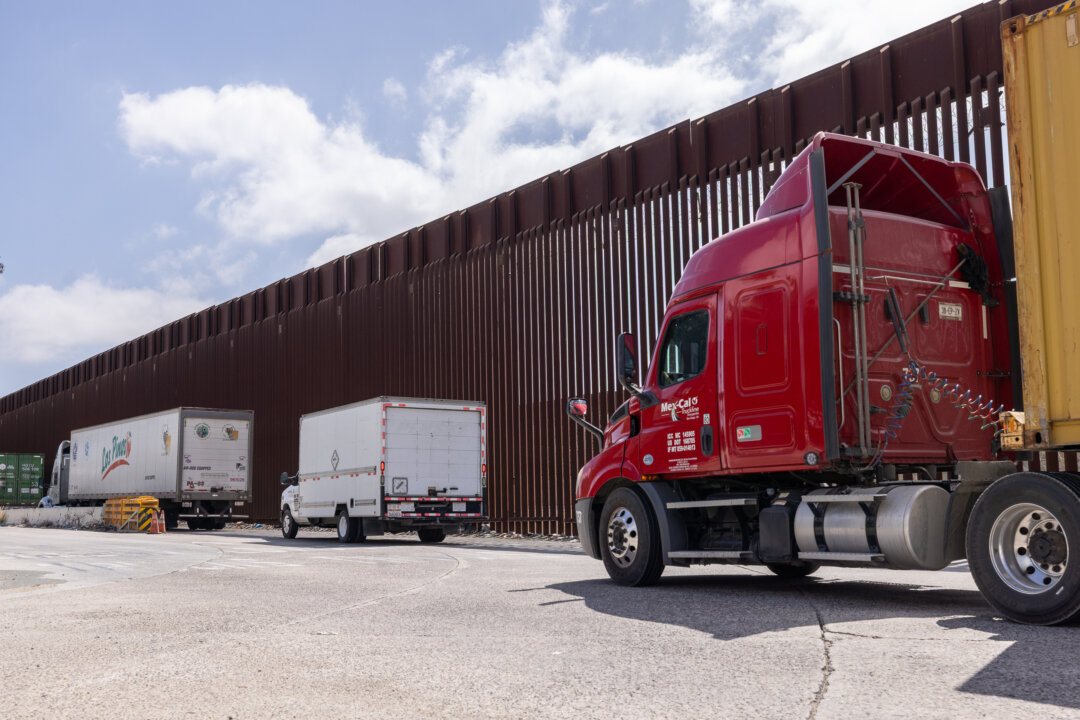
The United States has imposed duties totaling more than 264 percent on Chinese-made cargo trailers and their major components, after federal investigations found that dumped and subsidized imports had brought harm to American manufacturers.
The Commerce Department orders, published Oct. 28, cover enclosed trailers used to transport freight, including refrigerated trailers, as well as major components used to assemble them.
The duties consist of a 129.73 percent antidumping cash-deposit rate, targeting goods sold below fair value in the United States, and a 134.75 percent countervailing duty intended to offset the Chinese regime’s subsidies. Together, they amount to 264.48 percent.
The Chinese manufacturer selected for detailed examination withdrew from the investigation before Commerce officials could verify its information. As a result, the department relied on available evidence and drew adverse inferences in setting the 134.75 percent subsidy rate.
The orders follow a Sept. 25 ruling by the U.S. International Trade Commission (ITC) that the imports had materially harmed American trailer manufacturers. The Commerce Department separately determined that the Chinese products were being dumped and subsidized.
Chinese Components Assembled Abroad Also Covered
The duties apply not only to finished trailers imported from China but also to Chinese-made components used to assemble trailers in other countries.
For example, a trailer built in Canada using major components manufactured in China can still be subject to the new U.S. duties on Chinese merchandise.
A February ITC investigation found that Chinese imports consisted almost entirely of trailer components, not completed vehicles. Mexico, by contrast, was the largest source of imports measured by weight and value.
The investigation identified refrigerated trailers assembled in Canada by a Vanguard subsidiary using components supplied by an affiliated manufacturer in Qingdao, China.
Vanguard belongs to CIMC Vehicles, a Chinese trailer manufacturer with operations in North America.
The Commerce Department’s final orders specify that further processing or assembly in a third country does not remove covered Chinese-made components from the duties.
American Manufacturers Welcome Duties
The American Trailer Manufacturers Coalition, representing Great Dane, Stoughton Trailers, and Wabash, welcomed the decision.
“Today’s AD/CVD orders confirm that Chinese cheating cost American companies and their workers economic opportunities,” Robert E. DeFrancesco III, counsel to the coalition, said in an Oct. 28 statement.
The coalition accused Chinese manufacturers of using government subsidies to undercut American competitors, contributing to layoffs and reduced domestic production.
According to the coalition, the American trailer industry directly supports nearly 10,000 U.S. jobs, with another 50,000 supported indirectly. The group said the duties would give domestic manufacturers opportunities to expand production and employment.
The new duties also come on top of existing tariffs on imported steel and aluminum products.
Indiana-based Wabash said in an Oct. 6 statement that an additional 25 percent tariff brings the combined rate on covered Chinese trailers to 289.48 percent.
For a trailer valued at $35,000, that would mean about $101,300 in import duties, according to Wabash’s calculation.
Chinese Manufacturer Expands US Production
CIMC Vehicles, meanwhile, has been expanding its American manufacturing operations.
In an Aug. 3 filing with the Shenzhen Stock Exchange, CIMC said its Vanguard subsidiaries had accelerated the expansion of trailer-component production capacity at two U.S. factories. The upgrades were largely completed at the time, the company said.
CIMC said the expansion was intended to reduce disruption to its supply chain from the U.S. trade investigations.
The company also said higher import duties could increase supply-chain costs, with some or all of those costs potentially passed along to customers buying trailers in the United States.
CIMC Vehicles and its Vanguard subsidiary did not respond by publication time to The Epoch Times’ requests for comment on the U.S. duties and their potential impact on the companies’ North American operations.
We had a problem loading this article. Please enable javascript or use a different browser. If the issue persists, please visit our help center.