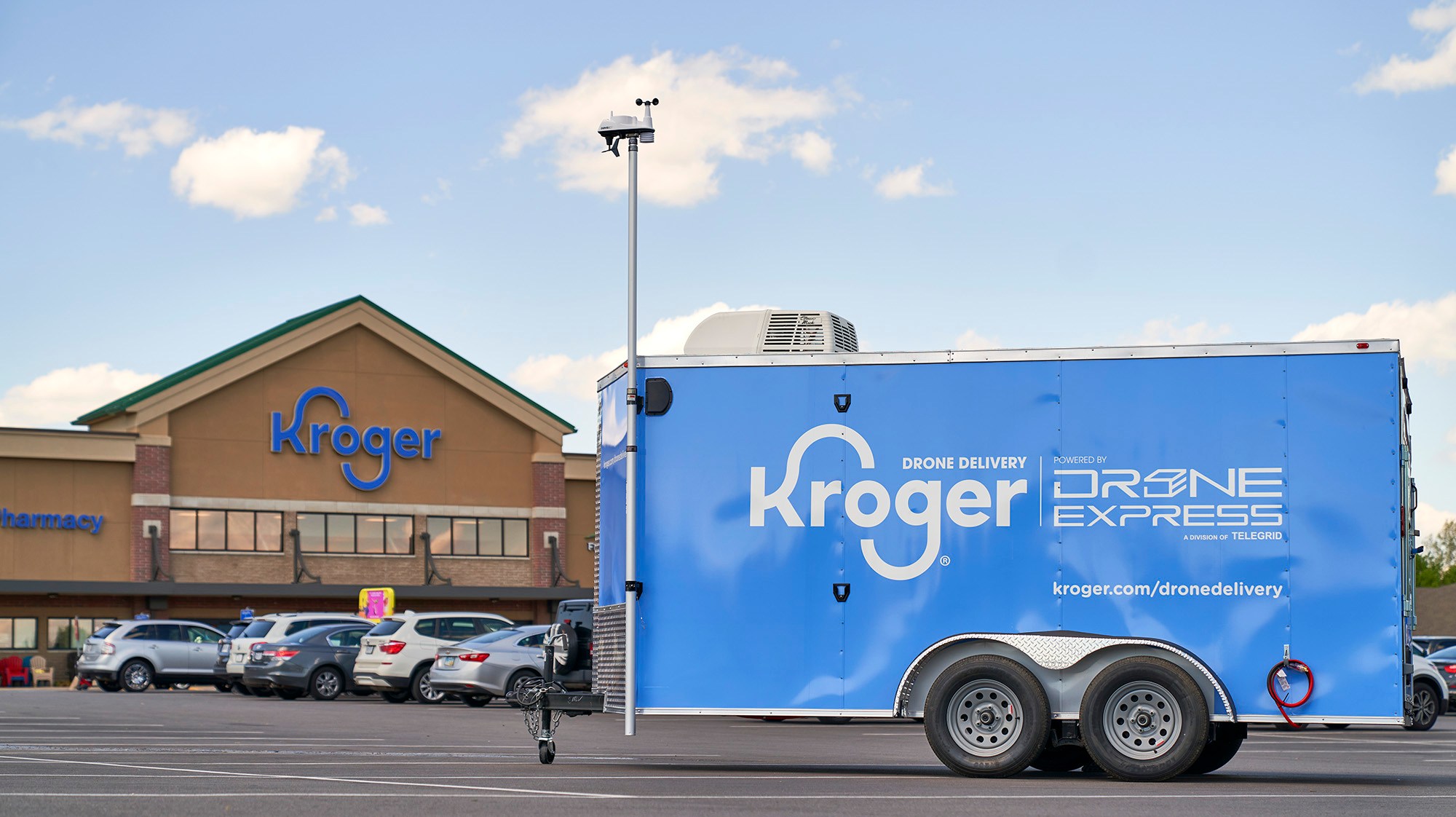
Kroger’s proposed merger could bring it lots of new data, in addition to storefronts.Kroger’s proposed merger could bring it lots of new data, in addition to storefronts.Oct 28, 2026, 12:00 PM UTCImage: KrogerKroger’s $1.65 billion proposed acquisition of Giant Eagle might not only consolidate the grocery market, but also a vast surveillance network that includes Flock cameras, a new report warns.Beyond standard concerns that a merger could decrease competition and increase prices, the American Economic Liberties Project (AELP), which advocates for competition policy reforms, says that the consolidation could also expand customer surveillance by a single company. It comes at a time where Americans are particularly on-edge about surveillance technologies like Flock cameras and surveillance pricing, heading into a midterm election largely defined by affordability issues.A combined Kroger-Giant Eagle — which would add Giant Eagle’s 200-plus stores to Kroger’s 2,700 — could pose risks in two ways, according to AELP. The first is by enabling Kroger to acquire data on customers across a broader geographic area, which it can use to serve customers personalized pricing based on inferences about their backgrounds and shopping behaviors. It could also use that data to fuel its retail media arm, which repackages consumer insights for other brands. The second is by expanding or combining an existing physical surveillance network consisting of technologies like Flock cameras and Cooler Screens, a company that previously touted its ability to scan shoppers’ faces but backed off that messaging after public backlash. Kroger has denied using in-store facial recognition to serve customers’ prices, but has acknowledged in its privacy policy that it uses facial recognition at some stores for security purposes. Kroger and Giant Eagle did not immediately respond to The Verge’s requests for comment.Similar privacy concerns were raised during Kroger’s earlier attempted merger with Albertsons, a much larger deal that courts blocked in late 2024 after the Federal Trade Commission and state attorneys general challenged it. AELP argues that the proposed merger with Giant Eagle is also deserving of scrutiny, because of the way it could significantly reduce options in places like Columbus, Ohio, and also because of Kroger’s buying patterns and incentives. They urge the FTC and Ohio attorney general to seek to block the merger, though experts have predicted they might not, both because of the relatively small size of the deal compared to Albertsons, and the Trump administration’s more open approach to settlement deals than the prior administration.“Buying bleach or yogurt now comes with the prospect of being scanned, tracked, and profiled,” the report says. “With every store Kroger buys, the data and surveillance apparatus grows.”Follow topics and authors from this story to see more like this in your personalized homepage feed and to receive email updates.Lauren FeinerThe Verge DailyA free daily digest of the news that matters most.Email (required)By providing your information, you agree to our Terms of Use and our Privacy Policy. We use vendors that may also process your information to help provide our services. This site is protected by reCAPTCHA and the Google Privacy Policy and Terms of Service apply.
How a grocery merger could expand a surveillance network