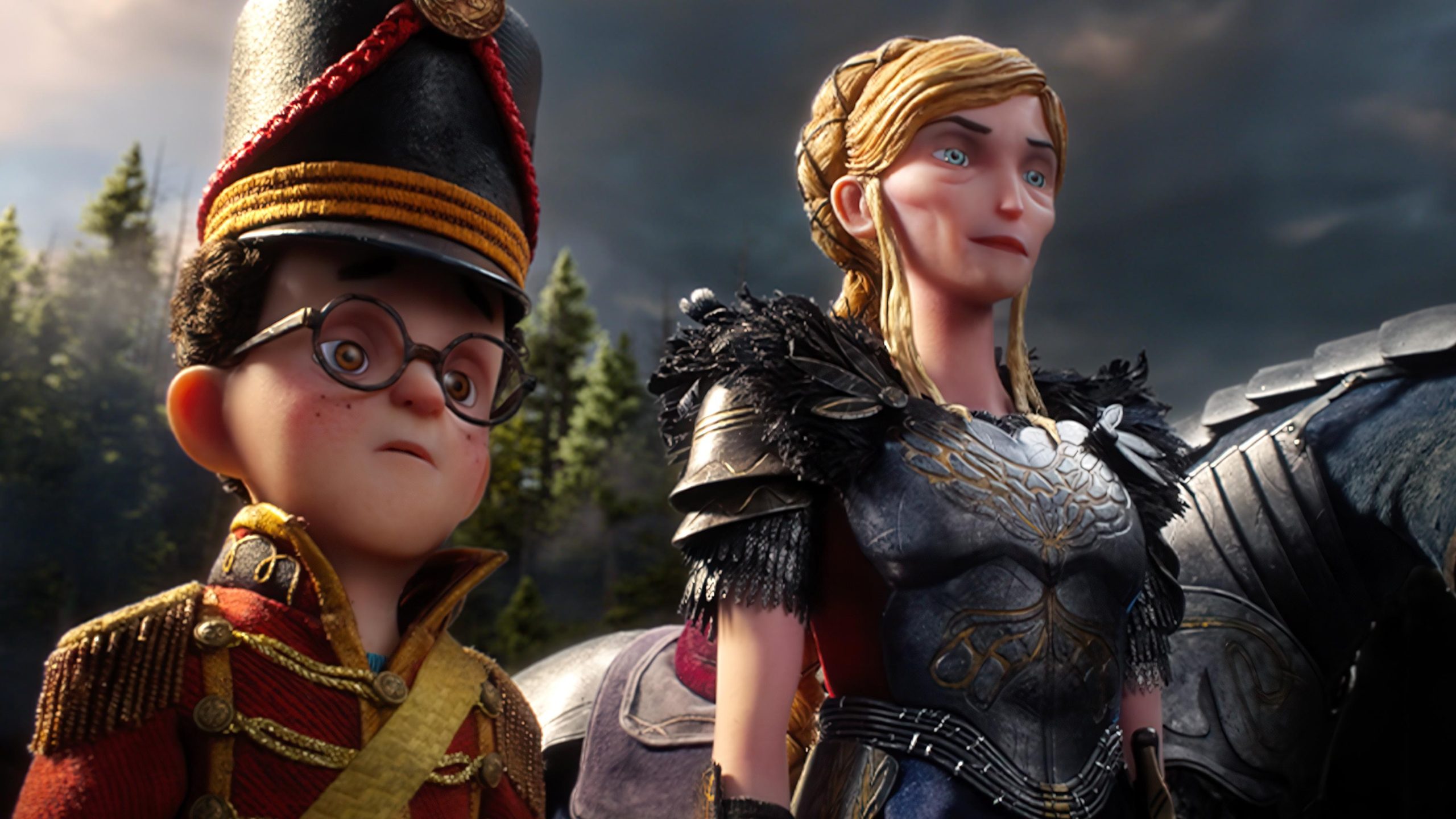
Laika CEO Travis Knight explains why he remains hopeful despite the potential for AI to be ‘devastating.’Oct 22, 2026, 4:16 PM UTC Image: LaikaWildwood is the most ambitious film yet from Laika, the stop-motion studio best known for the likes of Coraline and ParaNorman. It’s a sprawling fantasy adventure that took five years to complete. The process involved more 230 puppets — including 36 of the main character Prue alone — which were brought to life by a team of 49 animators. All told, more than 1,000 artists worked on the film in some form. The painstaking process that goes into making a Laika film offers a distinct counterpoint to the instant progress promised by generative AI tools.Recently Wildwood director and Laika CEO Travis Knight joined a chorus of influencer filmmakers in denouncing the technology. So when I had a chance to speak to Knight ahead of Wildwood’s premiere on October 23rd, I asked him what it’s like releasing a film like this at a time when AI tools seem inescapable.“In so many ways generative AI is antithetical to everything that we are at this studio,” Knight told me. “It’s not that we don’t believe in technology. We do. We use technology, we use computers. We’re not just making films entirely with tools that we’ve inherited from a watchmaker’s widow. A pencil is technology, a paintbrush is technology, a 3D printer is technology, a computer workstation is technology. But all of these things have meaning and value when you put them in the hands of an artist.”In fact, Wildwood is full of technical advances for Laika, many of which iterate on the studio’s previous work. Many puppets are now equipped with diaphragms, for instance, that animators can use to make it appear as if characters are breathing. There is more advanced musculature on the puppets’ limbs, as well as more robust and flexible materials for clothing, hair, and fur. All of these elements together create a film that is decidedly more lifelike than its predecessors. (For a more detailed look at how Laika works, check out this good rundown from Tested.) For Knight, these tools and their continued advancement are an important part of the filmmaking process, but generative AI is something very different.“When the technology is doing the work of the artist, that’s a different proposition,” he explains. “And that’s something that I am steadfastly against, because there is no humanity in what comes out of the other side of that. When you’ve ingested the material that an artist has actually created, and then regurgitate it in a different way, there’s no soul, there’s no spirit, there’s no humanity behind it. That’s theft. I really do believe that when you’re telling a human story, when you’re telling a story about loss and grief and something that means something to someone, that has to come from a person. A computer has never fallen in love. A computer has never lost someone. They’ve never made a terrible choice and lost a brother. They’ve never had their heart broken. Only a person has done that. And so only a person can speak to what that experience is and what that feels like.”Even though AI-generated films still leave a lot to be desired, the technology is infiltrating Hollywood in various ways, whether it’s the prospect of digital replicas of movie stars, studios training AI models on their films and shows, or some of the biggest players in the field investing heavily in the technology. This can make a studio like Laika, which is firmly entrenched in its handmade approach to filmmaking, stand out all the more. Ultimately Knight says he isn’t entirely against AI in fields outside of the arts, but rather wary of how it’s being used, both now and in the future.“I think AI is extraordinary technology,” he says. “On the one hand you have to marvel at the advancement of it. And I do think that it’s going to be disruptive to our society and our world. I think there are a great many benefits that can come from it when you look at medicine and science. There’s a world in which these things can benefit humanity tremendously. And then there’s a world where they can be devastating. I fear for the latter, I hope for the former, but it requires people to be good stewards of this technology. As a group of humans we have not shown generally that we’re good at that. But I’m ever an optimist, and I hope that collectively we can see the value in the technology and use it responsibly, and see the danger in the technology and push back against it.”Follow topics and authors from this story to see more like this in your personalized homepage feed and to receive email updates.Andrew WebsterThe Verge DailyA free daily digest of the news that matters most.Email (required)By providing your information, you agree to our Terms of Use and our Privacy Policy. We use vendors that may also process your information to help provide our services. This site is protected by reCAPTCHA and the Google Privacy Policy and Terms of Service apply.
Wildwood’s director says AI is ‘antithetical to everything that we are at this studio’