
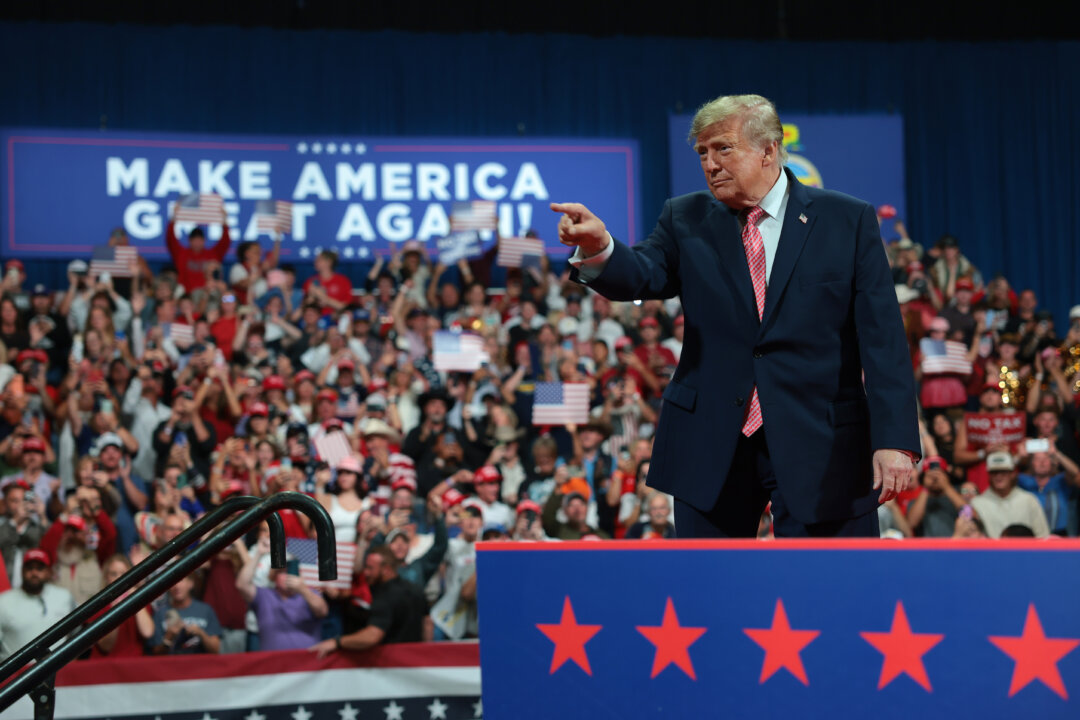
With the midterm elections around two weeks away, Senate Republicans are finding themselves playing defense in some unexpected places as Democrats continue to chip away at their hold in the polls.
Most observers for the past year have expected that Democrats would reclaim the House, boosted by historical trends such as the presidential “six-year itch,” which favor the out-of-power party, and by diminishing approval for congressional Republicans.
But few observers expected Democrats to reclaim the Senate following Republicans’ sweep of the upper chamber in 2024, when the GOP picked up four seats for a total of 53.
That’s changing as Democrats make polling gains in key Senate races.
Here’s what to know.
Texas Race Devours Republican Funds
Perhaps the most watched race of the entire cycle is in Texas, where Democratic state Rep. James Talarico has maintained a consistent and compelling lead over Texas Attorney General Ken Paxton across the election cycle.
For decades, Democrats in the Lone Star State have dreamed of “turning Texas blue.”
They came close in the 2018 race against Sen. Ted Cruz (R-Texas), when Democratic nominee Beto O’Rourke came within around 2.5 percentage points of unseating the incumbent.
Then, in 2024, President Donald Trump swept the state by 14 points. For many Democrats, that seemed to be the end of their hopes to flip the state.
But now, the race is devouring Senate Republicans’ funding as Talarico has consistently led in polls, with downstream effects on funding for Republicans across the country.
Both parties have poured hundreds of millions of dollars into the race, between the contentious Republican primary earlier this year and the general election fight.
Talarico has built a campaign based on his values as a liberal Presbyterian seminarian and on his track record as a state legislator, leading in 18 out of the 19 polls conducted since July. Paxton has led in a single poll conducted by Emerson College.
North Carolina Abandoned, Georgia Slipping Away
In a sign of the party’s growing electoral woes, Republicans in early October pulled funding out of former Republican National Committee Chairman Michael Whatley’s Senate race against former North Carolina Gov. Roy Cooper entirely.
Polls have shown Cooper favored this cycle, leading in every poll since July 2025. Cooper leads by around 9.2 percentage points, based on an average of the six most recent polls.
North Carolina has long been seen in national politics as a purple state—but one inclined, in most cases, to favor Republicans. Still, some recent elections have been nail-biters for Republicans.
Trump himself has acknowledged concerns about his handpicked candidate’s struggles in North Carolina.
“I am worried about him,” Trump told reporters Friday as he left for an Alabama campaign rally. “I hope he wins.”
In Georgia, Democratic Sen. Jon Ossoff is favored by observers and polling to hold onto his seat in the blue-shifting state, leading Republican nominee Rep. Mike Collins by 7.6 percentage points in an average of five recent polls.
As the Atlanta metropolitan area has grown, the state as a whole has trended increasingly toward Democrats in recent years, beginning with President Joe Biden’s victory over Trump in 2020. In 2024, amid a favorable national environment, Trump reclaimed Georgia by about 2.2 percentage points—Republicans’ lowest margin of victory in the Peach State since 1996.
Great Plains Republicans See Warning Signs
There are also warning signs for Republicans in Great Plains states such as Kansas and Nebraska.
Kansans have long been known in national politics for their deeply Republican voting tendencies.
But in recent years, some observers began to notice a rising purple streak in the state’s national voting habits that could boost Democrat Adam Hamilton, a United Methodist megachurch pastor and author who’s making a competitive showing in polls against incumbent Republican Sen. Roger Marshall.
Marshall is an obstetrician-gynecologist who was first elected in 2020 after beating out a crowded primary field. He’s been the subject of controversy in the state after The New York Times reported that he had sued hundreds of his former patients over unpaid medical bills, leading to 81 arrests due to missed court dates.
Marshall has decried the report as a political hit job, saying he used standard billing practices and maintaining that he has delivered thousands of babies free of charge to lower-income families.
The race was originally rated lean Republican by Cook Political Report, which now rates it a toss-up. Although Marshall led in the first poll taken of the race released on Sept. 11, every poll since has shown him either tied with or running behind Hamilton, and Republicans appear to be worried.
The funding pulled from North Carolina has been pushed into the Kansas race by national Republicans. Trump spoke in support of Marshall at a rally near Wichita on Oct. 19.
In 2020, key population centers such as Shawnee County—which houses Topeka, the capital—and Riley County backed the Democrat in the Senate and presidential races for the first time since the 1970s.
Much will come down to Johnson County, a Kansas City suburb lying just west of the border with Missouri, and by far the single most important county in state politics, making up around one-fifth of the state’s entire population.
For years, it’s been shifting left, backing both Biden and Vice President Kamala Harris in the previous two elections.
In Nebraska, independent candidate Dan Osborn—who made national news following his close fight against Sen. Deb Fischer (R-Neb.) in 2024—is making another bid for the office.
This year, he’s running against Republican incumbent Sen. Pete Ricketts, and polls have shown a tight race. In surveys taken in September and October, Ricketts led by 4 and 5 points, respectively. Osborn led by about the same margin in polls taken in May and September.
Republicans maintain a structural advantage in the state. Although 53 percent of registered Nebraska voters live in rural areas, the urban and suburban population in Nebraska is reliably Republican—but could swing in line with an anti-Republican national environment.
Omaha is a crucial decision-maker in the race, as its population has trended away from Republicans in recent cycles, voting for Harris in 2024.
Graham Boosted in South Carolina
In another shift, Republicans are moving $5 million into Sen. Darline Graham’s (R-S.C.) race against physician Annie Andrews.
Graham was appointed to the seat by outgoing Gov. Henry McMaster earlier this year, following her brother Lindsey Graham’s death in July.
The $5 million investment into the race is significant as the state has rarely needed such funding from the national party in the past, though it’s not an amount that necessarily signals alarm.
Currently, Graham leads in all three polls taken of the race, but the margins are rather narrow in a state that backed Trump by around 18 percentage points just two years ago.
On average, Graham sits at 44.7 percent in polls. Andrews, running as a moderate Democrat in the Republican stronghold, has 43.3 percent support, trailing Graham but well within the margin of error.
Trump is scheduled to visit the state as part of his blitz of midterm campaign rallies.
Iowa and Ohio—Once and Future Battlegrounds?
Though it’s almost forgotten now, Iowa and Ohio were—as recently as 2012—seen as quintessential political battlegrounds.
Both states have been seen as reliably Republican over the past several cycles, ever since Trump won them back from Democrats in 2016 with a nearly 10-point victory in Iowa and an 8-point victory in Ohio.
But this year, Senate races in the Midwest states are proving competitive, raising the prospect that the states could be on the cusp of returning to their swing-state status.
In Iowa, Republican Rep. Ashley Hinson is facing off with state Rep. Josh Turek, a Democrat, after Sen. Joni Ernst (R-Iowa) declined to run for a third term. Hinson has led in five polls conducted of the race since April, while Turek has led in four, and Cook Political Report recently moved the race from “lean Republican” to a toss-up.
In Ohio, former Sen. Sherrod Brown, a Democrat, is set for a November fight against incumbent Republican Sen. Jon Husted. Brown has led in all 10 polls conducted in the state since July, excluding one poll that showed the race tied.
A key concern for both states has been farming prices, as farmers have widely reported financial difficulties amid the international tariffs imposed by Trump.
We had a problem loading this article. Please enable javascript or use a different browser. If the issue persists, please visit our help center.