
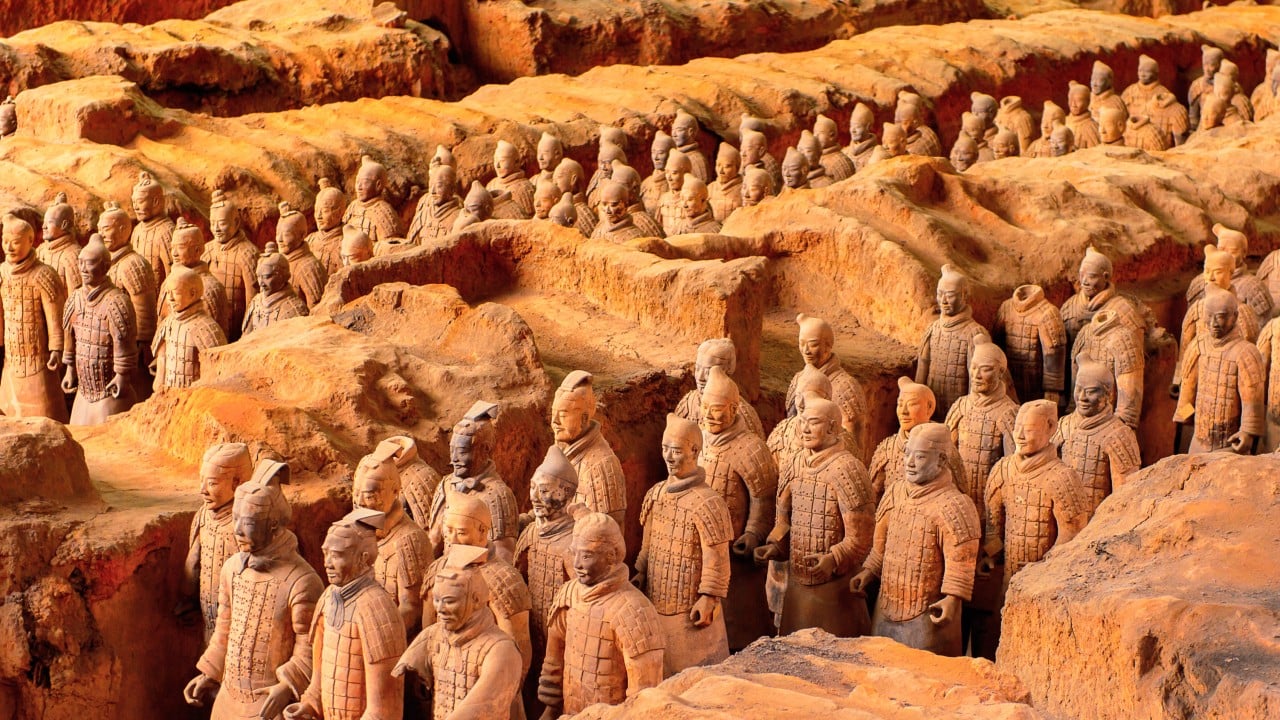
Some 5 metres (16.4 feet) underground near one of China’s oldest cities lies the life-size army of thousands of terracotta warriors.
The purpose of the army, located 35km (22 miles) northeast of historic Xian, was to protect China’s first emperor, Qin Shi Huang, in the afterlife. The Terracotta Army was buried with him after his death in 210BC.
Now, a new study shows that a portion of the terracotta warriors was largely made by adult women and minors, not solely by men as previously thought.
“These findings challenge the long-held assumption that Terracotta Army production relied exclusively on adult male labour, providing the first quantitative biological evidence for a diverse workforce including women and children,” Shen Jingyi wrote in the paper published on October 13 in the peer-reviewed Journal of Cultural Heritage.