
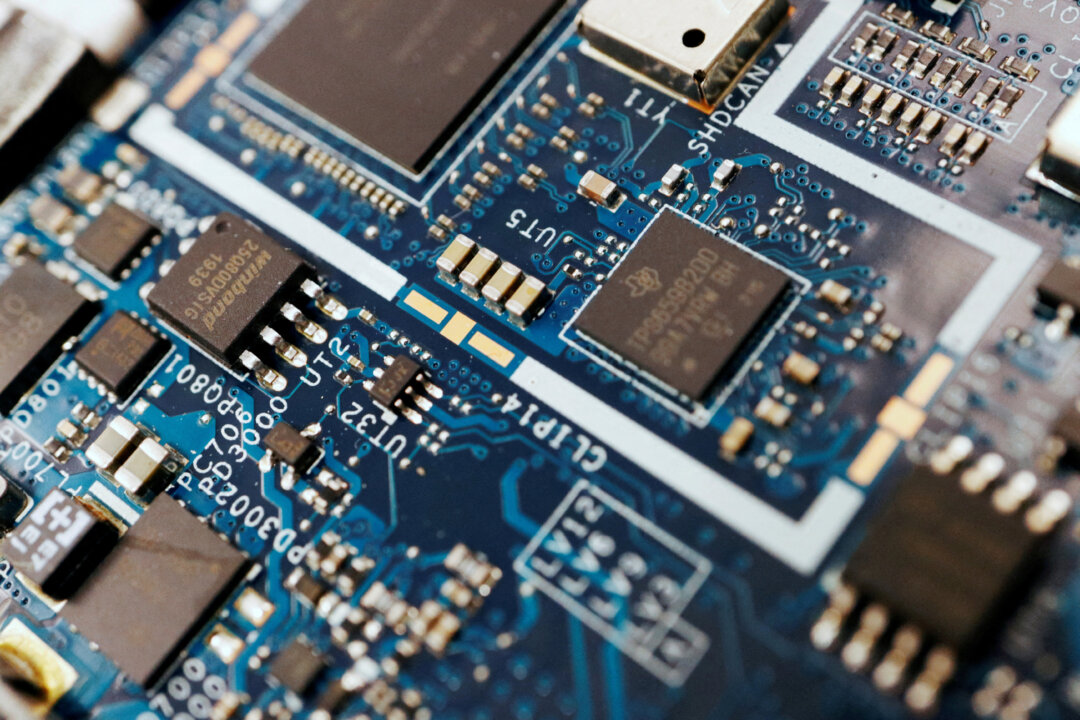
Japan will invest up to $21 billion to build two chip factories in New York under a trade agreement with U.S. President Donald Trump, as Washington seeks to expand domestic semiconductor production.
They will be jointly owned by the U.S. government and Japanese interests and operated by GlobalFoundries, the company said on Wednesday.
Construction of the first factory is scheduled to begin this year, with chip production expected in 2029. GlobalFoundries executives said the partners will decide whether to build the second factory before the end of 2028.
The initiative was part of a deal struck by the Trump administration last year for Japan to invest $550 billion in the United States. In return, the United States lowered its import tariff rate on Japanese cars and other imports from a threatened 25 percent to 15 percent.
“This is a bold new initiative for semiconductor manufacturing, bringing together the United States and Japan with GF’s differentiated technology and decades of manufacturing expertise to accelerate trusted capacity in New York,” said Tim Breen, CEO of GlobalFoundries.
“GF was selected because fabs of this scale require more than capital. They require differentiated technology, operational excellence and a proven ability to execute.”
The U.S. government previously held a 3 percent stake in GlobalFoundries.
Breen said that would rise to 7 percent. Japan will provide all of the investment capital under the deal.
The first site in Malta, New York, is expected to add approximately 900,000 300mm wafers of annual U.S. manufacturing capacity when fully operational.
A second would add the same amount.
“President Trump’s historic U.S.–Japan Trade Deal is delivering another massive manufacturing investment into America,” said Secretary of Commerce Howard Lutnick.
The Malta site will create thousands of construction jobs and support more than 1,000 highly skilled manufacturing jobs in the New York semiconductor industry, New York Gov. Kathy Hochul said.
According to a 2023 CRS report, nearly 90 percent of the world’s leading-edge semiconductor production is concentrated in the self-governed democratic island of Taiwan, which the Chinese Communist Party claims as its own territory.
Trump has taken action on semiconductors by imposing tariffs on advanced chips and measures to encourage manufacturing in the United States, and has concluded semiconductor-related agreements with at least three major partners, including Japan, Taiwan, and South Korea.
The U.S. Commerce Department announced a massive U.S.–Taiwan chips deal on Jan. 15.
On June 9, South Korea agreed to $200 billion in direct investment in strategic U.S. industries, including semiconductors, AI, pharmaceuticals, American oil and natural gas, and critical minerals.
Reuters, Melanie Sun, Catherine Yang, Eva Fu, and Frank Fang contributed to this report.
We had a problem loading this article. Please enable javascript or use a different browser. If the issue persists, please visit our help center.