
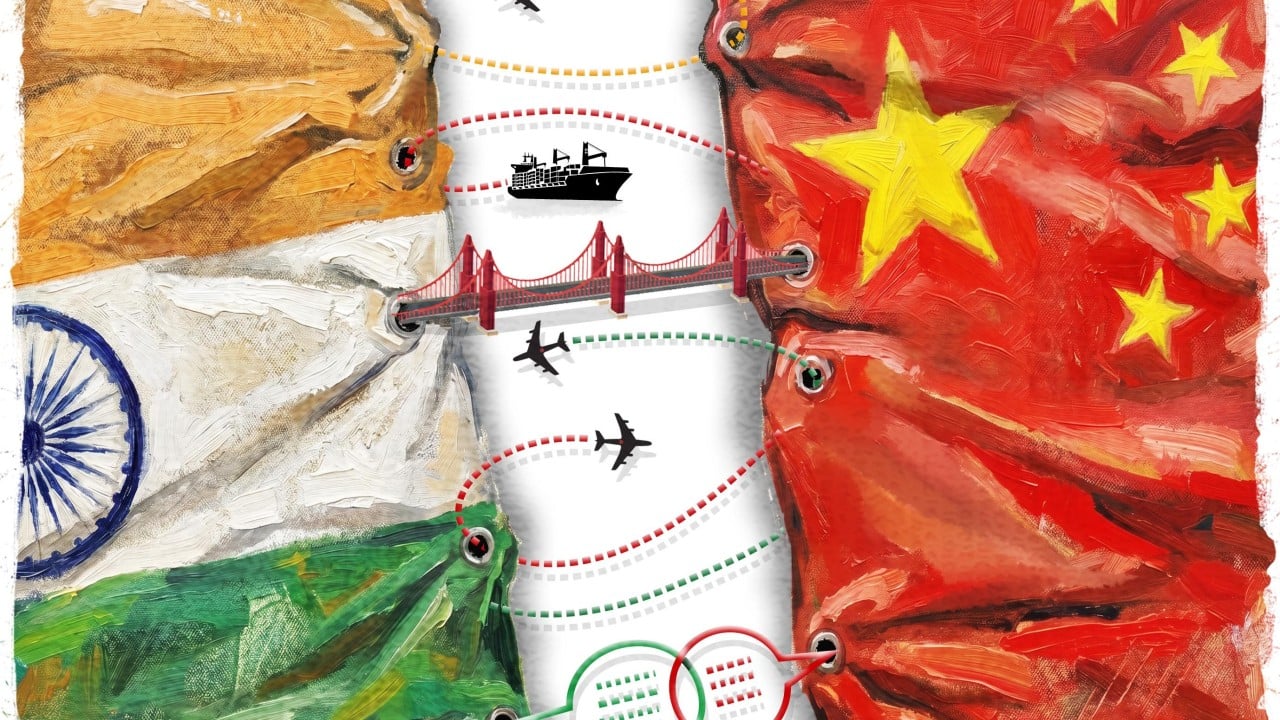
Last month, President Xi Jinping travelled to New Delhi to attend the Brics summit – his first visit in seven years. On the summit’s sidelines, Xi and Indian Prime Minister Narendra Modi had an in-depth conversation that explored topics of shared interest between them, such as leveraging open-weight artificial intelligence (AI) for mutual benefit.
Even so, such sanguine signals were soon drowned out by a spate of downbeat headlines. One recent story warned of the “asymmetric” relationship between the two, with China’s manufacturing dwarfing India’s. Another reported Delhi’s renaming of 28 sites in Ladakh, situated near the heavily contested Line of Actual Control.
For keen observers of Sino-Indian relations, such dynamics are by no means a new phenomenon. Positive reassurances from the top leadership are welcome, yet they take time to percolate through to the policy level. Impediments to warming ties, on the other hand, are aplenty – especially concerning territorial claims.