
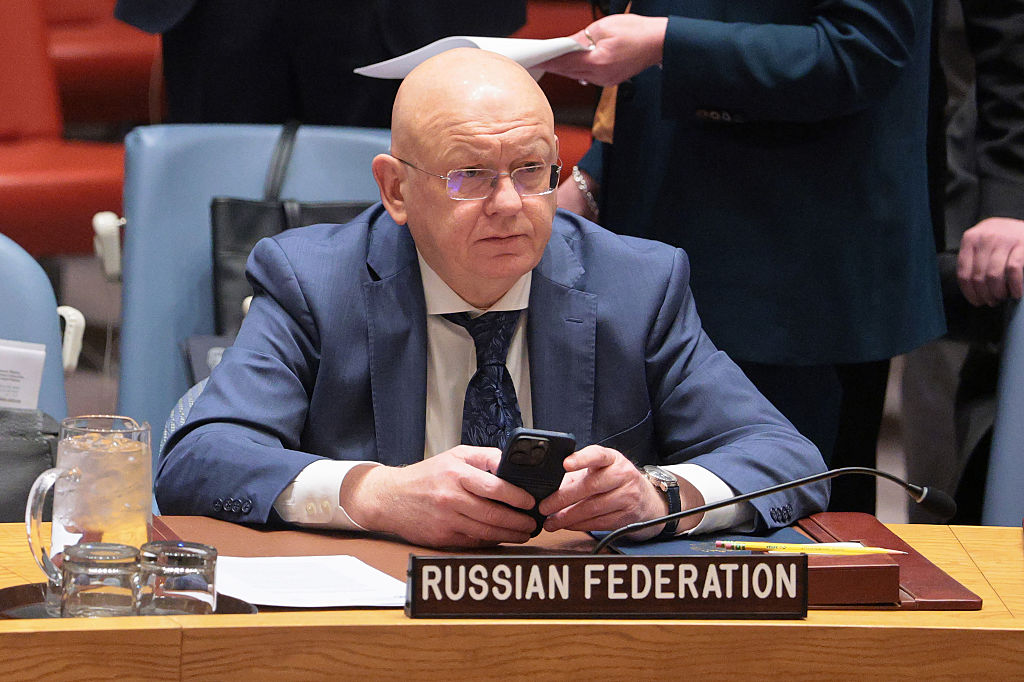
China and Russia on Thursday vetoed a U.S. resolution that would have allowed a United Nations panel to continue monitoring sanctions reimposed on Iran last year over its nuclear program.
The United States had drafted a resolution to extend the sanctions panel’s mandate for a year, but it was defeated in a vote of 11 in favor and two against, with China and Russia using their veto power as permanent Security Council members to block it, according to a Sept. 17 statement from the U.N.
The Security Council sanctions, which penalize the development of Iran’s ballistic missile program, halt arms deals with Tehran, and freeze Iranian assets abroad, among other measures, are still in effect.
In 2015, the Security Council backed the Joint Comprehensive Plan of Action when it adopted U.N. resolution 2231. The plan provides sanctions relief for Iran in exchange for a 10-year monitoring framework and limits on its nuclear program.
Last September, shortly before the 10-year framework expired, plan signatories France, Germany, and the UK said that Tehran’s failure to adhere to the agreement would trigger a snapback mechanism, automatically renewing the sanctions against Tehran.
Sanctions were reapplied on Sept. 27, and a panel of experts was authorized to monitor implementation.
Russia and China disagreed that the mechanism had been triggered validly, adding that the draft resolution had no legal basis.
Monitoring Gap
U.S. Deputy Ambassador to the U.N. Jennifer Locetta said the United States was not surprised by the outcome of the vote, because these experts would have shone a “light on the prohibited bilateral defensive cooperation between Iran and its partners.”
“Without an independent Panel of Experts, this Council loses its principal source of impartial, evidence-based reporting on sanctions violations—creating a monitoring gap that only benefits the Iranian regime and those who profit from evading those measures.”
Iran’s U.N. mission thanked Russia and China for the veto, saying that the draft U.S. resolution was politically motivated.
The mission said in a post on X that resolution 2231 “expired definitely” on Oct. 18, 2025, and that all restrictions, provisions, and measures were permanently terminated.

British Ambassador to the U.N. Sarah MacIntosh said, according to the U.N. statement, that the UK regretted the veto of the draft resolution, adding that Iran has expanded its nuclear program and failed to cooperate with the International Atomic Energy Agency.
MacIntosh said that the vetoes do not alter the existing sanctions against Tehran and its nuclear proliferation.
Cause for Concern
Jérôme Bonnafont, France’s ambassador to the UK and president of the Security Council, said in a separate statement that Iran’s nuclear program “remains a major concern.”
He said that the vetoes deprive the Security Council of an essential tool to ensure its decisions are implemented and “deprive the entire international community of a reliable and impartial source of information on a crucial issue of international peace and security.”

Bonnafont added that Tehran’s ballistic missile program was threatening stability in the Middle East, “as evidenced by the indiscriminate strikes carried out in recent months against the Gulf States.”
France will look at how to ensure sanctions are enforced, he said.
The Associated Press contributed to this report.
We had a problem loading this article. Please enable javascript or use a different browser. If the issue persists, please visit our help center.