
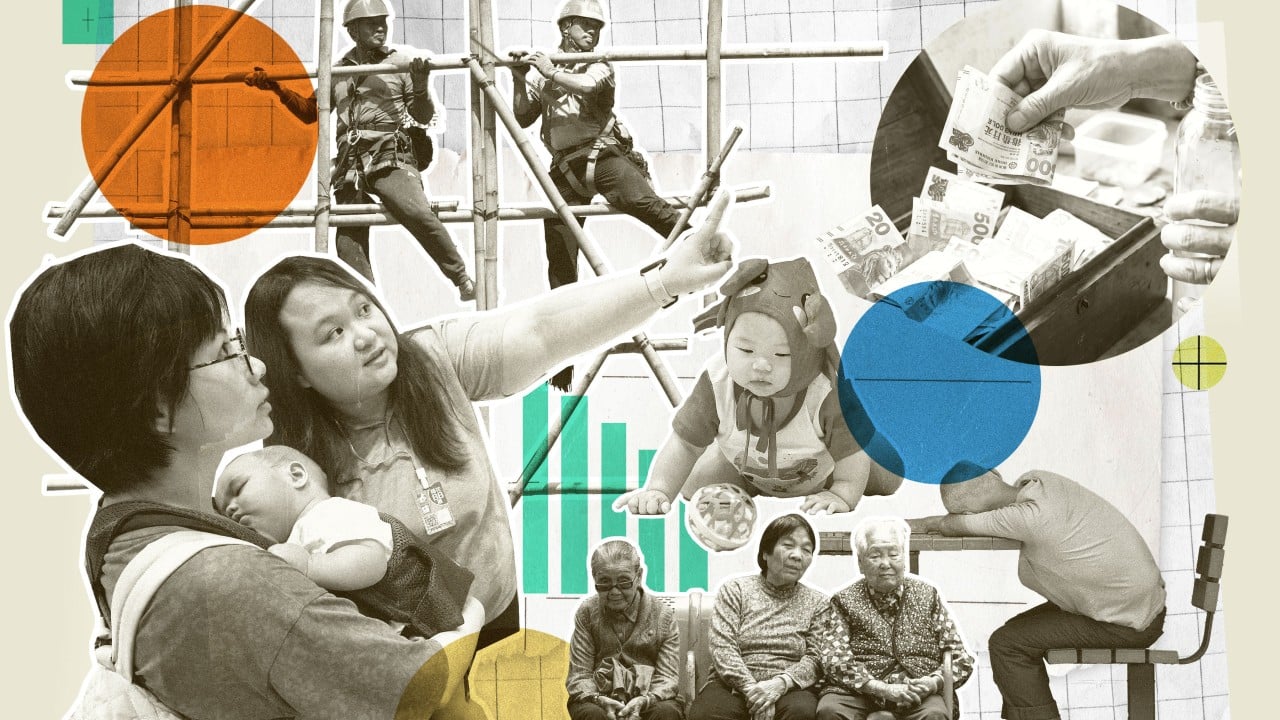
In the fourth of our series of previews on the five-year plan and policy address, to be announced on September 16, Fiona Sun and Edith Lin analyse how to improve livelihoods in the city by tackling the impact of demographic changes and technological advancement. Read part one here, part two here and part three here.
Twenty-eight-year-old Hong Kong resident Fong and his wife want to have a child but he knows they cannot afford one for now.
He earns about HK$10,000 (US$1,275) a month as a construction worker and lives in a subdivided flat in Prince Edward, paying roughly HK$3,000 a month for the 100 sq ft space. His mainland Chinese wife, 27, remains in Guangdong province as she waits for a one-way permit to be in Hong Kong with him.
With unstable working hours and wages, Fong said he struggled to make ends meet. The cost of raising a child in one of the world’s most expensive cities is too heavy a burden to bear for now.
“If you bring a child into the world, you have to raise them. It’s not something to be taken lightly,” he said.
“It requires real commitment and a good environment for the child to grow up in.”
Fong is among the thousands of Hongkongers who are staying child-free as reflected in the city’s record-low births, with residents wrestling over their financial woes, housing constraints and concerns over access to education and the lifestyle trade-offs they have to make to have children.