
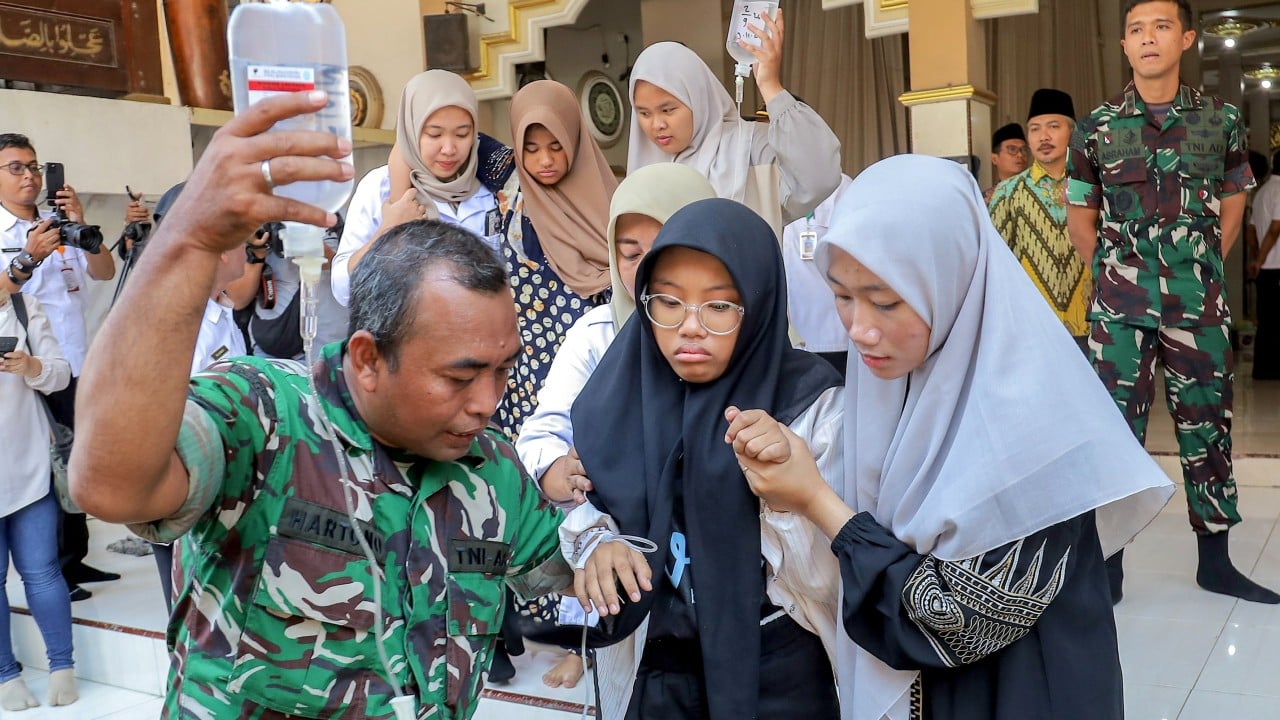
Indonesian President Prabowo Subianto’s flagship free nutritious meals programme is facing renewed scrutiny after yet another wave of mass food poisoning that affected more than 2,000 students, raising questions about why safeguards on paper fail to translate to food safety on the ground.
A series of illnesses were reported in Java, Sumatra, and Sulawesi in the past week. The latest was on Tuesday in Rembang, Central Java, where 200 students of an Islamic school showed symptoms of food poisoning such as vomiting and diarrhoea after eating meals from the programme.
Between September 1 and 3, a total of 1,961 students suffered from food poisoning across the country, many requiring medical treatment.
In the case in East Java’s Sidoarjo on Thursday, at least 730 students of Manbaul Hikam Islamic boarding school fell ill after lunch. Sudaryono, head of the National Nutrition Agency (BGN), which supervises Prabowo’s initiative, chalked up the incident to “deliberate negligence”.
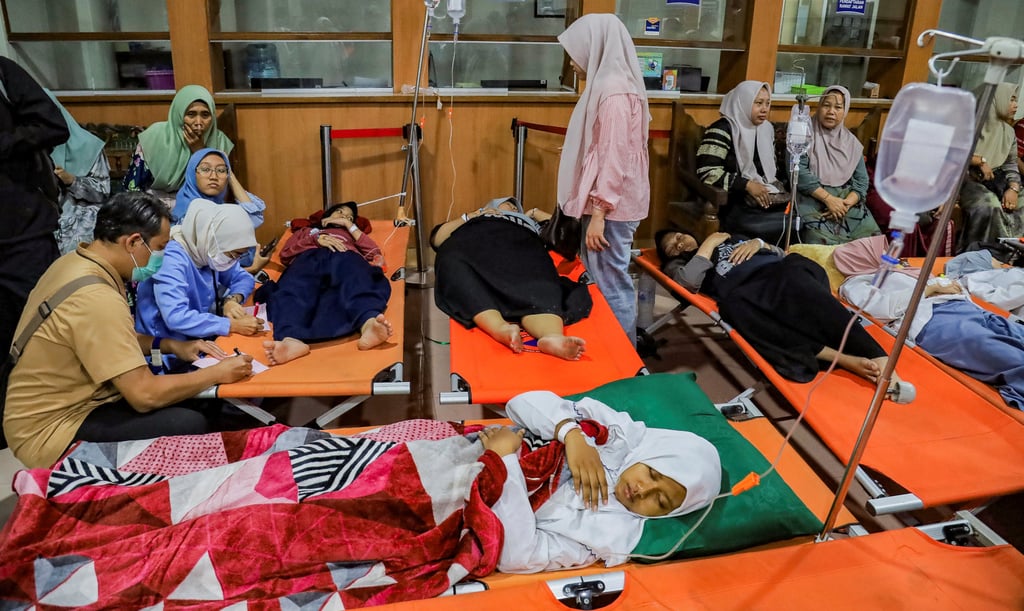
Last month, BGN issued new safety protocols to prevent mass food poisoning – a recurring problem since the US$15.2 billion programme was launched in January 2025. At least 43,000 children had suffered from food poisoning linked to the programme by the end of August, according to data from the Network for Education Watch.