
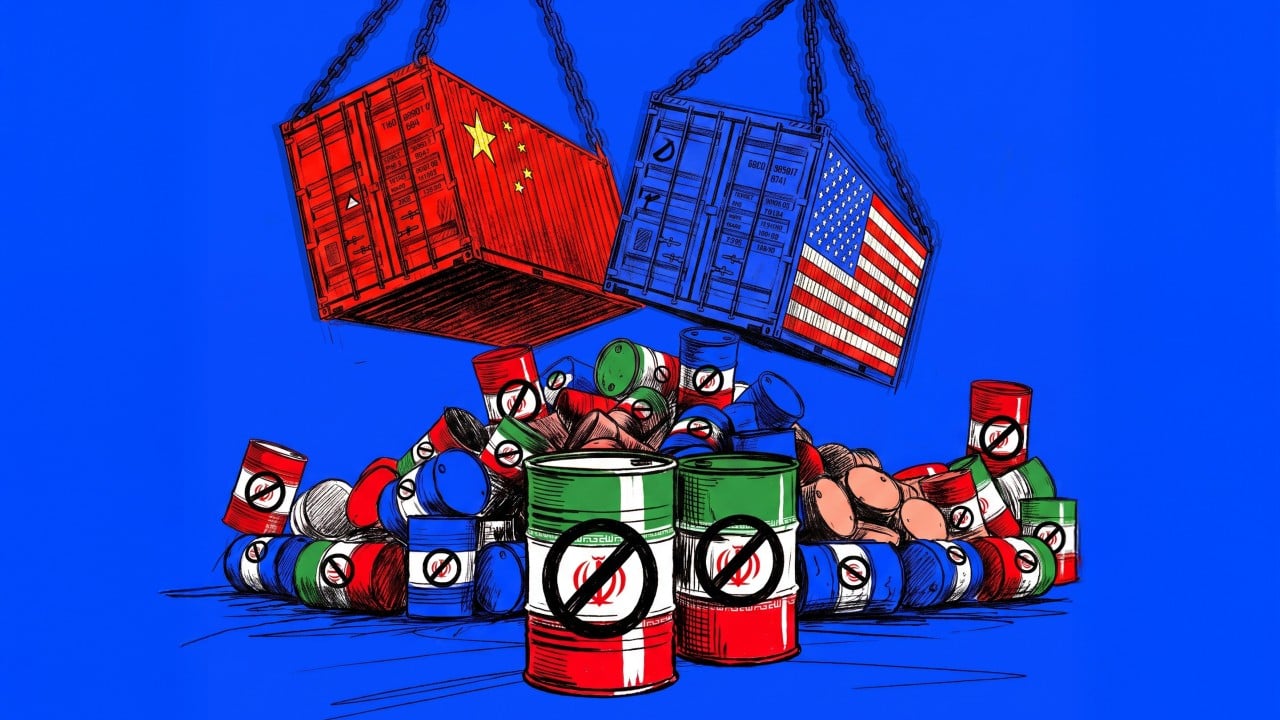
Earlier this month, when US Treasury Secretary Scott Bessent threatened sanctions against any nation continuing to purchase Iranian crude oil, he did not name China. He did not need to. China, the Islamic Republic’s largest oil customer, is squarely in Washington’s crosshairs.
The US has already unveiled new sanctions against 60 individuals, companies and vessels linked to Iranian trade, including some in mainland China and Hong Kong. Just three months after the May summit between President Xi Jinping and President Donald Trump appeared to stabilise bilateral trade relations, the fragile calm is being tested again.
So far, China has signalled it will not be coerced. The stand-off sets the stage for what could be the next major rupture in an already fraught relationship.
Washington has not been idle since May. In June, the Pentagon added dozens of companies – including Alibaba, Baidu and BYD – to its list of “Chinese military companies”, a designation that can restrict these companies’ access to US capital and market. In July, it announced a 10-12.5 per cent tariff on goods from 60 economies, including China, following its Section 301 investigation into forced labour.
This was followed by a ban on imports of Chinese robots and power inverters (July) and a 15 per cent tariff on polysilicon (August). The cumulative message is clear: Washington is tightening the screws on multiple fronts, and Iran is merely the latest lever.
Beijing’s response to this onslaught has been deliberate and calibrated. Gone are the days of blanket tariff retaliation. Instead, China has preferred to hold its fire where the cost of escalation outweighs the benefits, striking back with precision when core interests are threatened.