
President Donald Trump’s administration has issued a memo to universities aimed at restricting certain internship work authorizations for international students. Officials cautioned that schools failing to comply could have their certification to enroll foreign students revoked.
The memo, which is dated Aug. 24 and issued by the Student and Exchange Visitor Program under U.S. Immigration and Customs Enforcement (ICE), said the agency “has observed a rise in Curricular Practical Training (CPT) authorizations that appear to violate regulatory requirements which permit CPT only where the training is an integral part of an established curriculum.”
“Failure to comply with SEVP regulations may result in an institution losing certification to enroll foreign students,” the memo said.
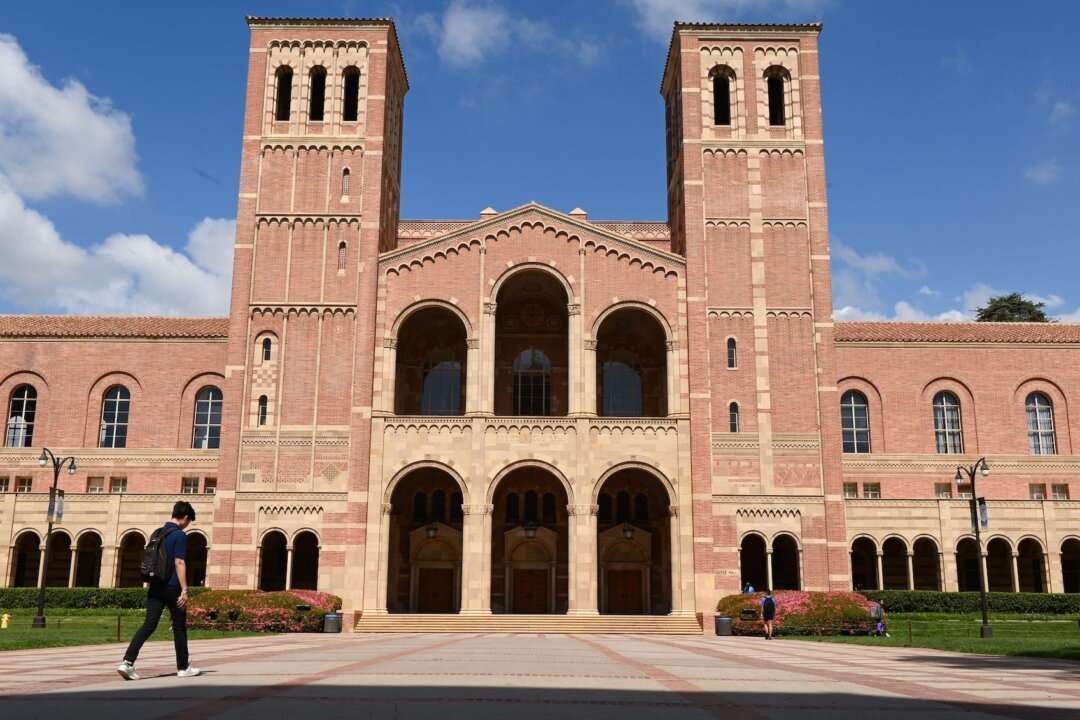
Some schools have already stopped processing applications. The University of California, Los Angeles ceased issuing certain CPT authorizations while it reviewed the guidance.
“UCLA has paused certain Curricular Practical Training authorizations while it reviews recent federal guidance and determines next steps,” a UCLA spokesperson said.
At the University of California, Berkeley, the international office described the Aug. 24 memo as “more narrow in focus, more direct, and includes content that is more restrictive in nature.”
An earlier memo had been issued in mid-August. Berkeley said it is unlikely to process certain work authorization applications “in the near future” and told international students to plan accordingly.
The university will keep handling “degree-requirement” CPT as usual and plans to resume “Doctoral Dissertation and Master’s Thesis Research CPT.”
University officials said they would consult legal experts to align processes with the new federal requirements.
The Department of Homeland Security (DHS), ICE’s parent agency, said the underlying regulations have not changed.
“However, schools and employers should consider themselves on notice: under President Trump, abuse of this generous system will no longer be tolerated.”
CPT allows eligible international students to participate in internships or training when the work forms an integral part of their academic curriculum. The memo stresses that the training must connect to an established academic program.
This step fits into an overarching set of changes for foreign students. In July, DHS completed a rule ending the long-standing “duration of status” policy. That system had permitted many F, J, and I visa holders to remain in the country without a fixed departure date.
The new rule, published in the Federal Register on July 17 and effective Sept. 15, limits most stays to four years unless students apply for extensions through the U.S. Citizenship and Immigration Services. Extensions will require screening, background checks, and fraud reviews. The grace period after the conclusion of studies is reduced from 60 days to 30 days.
“For nearly half a century, the outdated ‘duration of status’ system has compromised national security and created an environment ripe for immigration fraud,” DHS Secretary Markwayne Mullin said at the time.
“By implementing clear, finite limits on these visas, the United States is reclaiming its ability to properly screen, vet, and monitor individuals within our borders.”
The rule is being challenged in court by a coalition of unions and advocacy groups that say the new rule makes the United States less competitive as a destination for international talent.
Earlier this year, ICE published the findings of an investigation into Optional Practical Training, a separate post-graduation work program.
Acting ICE Director Todd Lyons said investigators “have identified over 10,000 foreign students who claim to be working for highly suspect employers.”
Visits turned up empty buildings, locked doors, and addresses associated with hundreds of students who were not involved in the activity they claimed, he said. Officials also found “phantom employees” who never reported to the listed sites, as well as complex international financial transactions, according to Lyons.
Reuters contributed to this report.
We had a problem loading this article. Please enable javascript or use a different browser. If the issue persists, please visit our help center.