
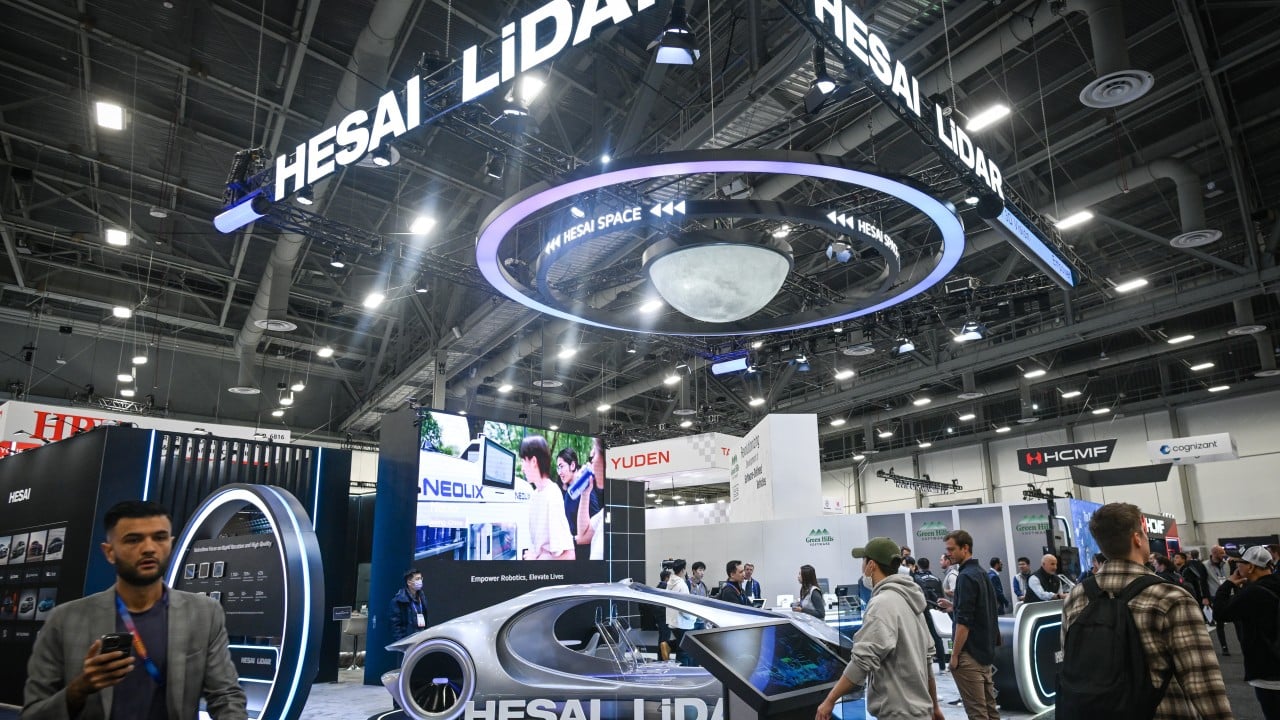
Chinese carmakers’ reinforced push to produce more smart vehicles could sustain growth for hi-tech component suppliers, even as the broader automotive market remains lacklustre, according to Hesai Group chief financial officer Andrew Fan.
“Orders for our lidar sensors [this year] were higher than in the same period last year,” Fan told the South China Morning Post on Wednesday. “An increasing percentage of new [car] models are now fitted with lidars as brands make them more intelligent.”
Hesai – the world’s largest maker of lidar sensors, which help cars map terrain – supplies products to the top 10 Chinese automotive groups amid a race to build driverless vehicles.
“It is expected that millions of new cars will be equipped with lidars,” Fan said. “The growth driver is big enough for us to pursue further expansion.”
Short for light detection and ranging, lidar sensors use lasers to measure distance to objects. Smart cars can use this data to build highly accurate maps of their surroundings.
We envision turning Hesai into a technology firm, rather than just an automotive supply chain vendor
In mainland China, 12 per cent of new cars priced between 150,000 yuan (US$22,300) and 200,000 yuan were fitted with lidars in 2025. The proportion climbed to 27 per cent in the first quarter of 2026, data from the China Passenger Car Association showed.