
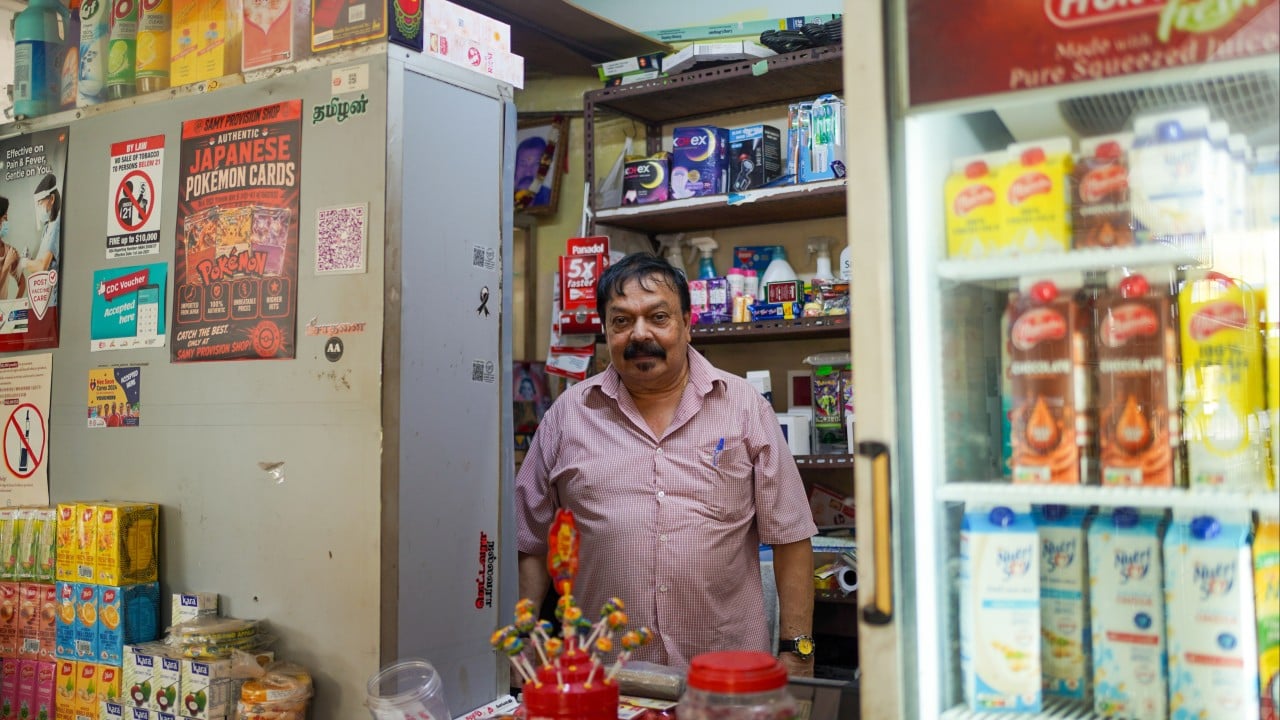
Surrounded by a clutter of carton boxes, bottles of dishwashing liquid and rows of dry snacks, Ramasamy Vellasamy holds court behind a cashier. For nine hours a day since 1986, he has been running a provision shop on the ground floor of a housing block in northern Singapore and knows the neighbourhood and its residents like the back of his hand.
Despite Samy Provision Shop’s enduring presence, it was barely breaking even, said Ramasamy, who lamented the struggle of adapting to the ever-shifting preferences of his customers.
The racks of vegetables and spices which used to front his store have disappeared over the years. “Nowadays, nobody cooks and everybody just presses buttons on their phones to order delivery or dabao [takeaway],” the 75-year-old said.
When Ramasamy first raised his shutters in the 1980s, there were about over 560 standalone provision shops but the number has now dwindled to under 250, according to local media, citing data from the Housing Development Board (HDB).
Increased competition, high rents and the lack of successors have snuffed out many such stores, according to industry observers.
Sales at retail stores stocking daily and other items in Singapore have reportedly been falling in recent years, with online competition cited as a major factor. Within this retail segment, shops run by the likes of Ramasamy are facing strong competition from minimarts and convenience stores.
Such shops, which operate on thin margins and small transaction values, lose out to larger retailers who are better positioned to negotiate wholesale prices and spread business costs across outlets, according to Lee Kwan Ok, professor of real estate and deputy head at the National University of Singapore Business School.