
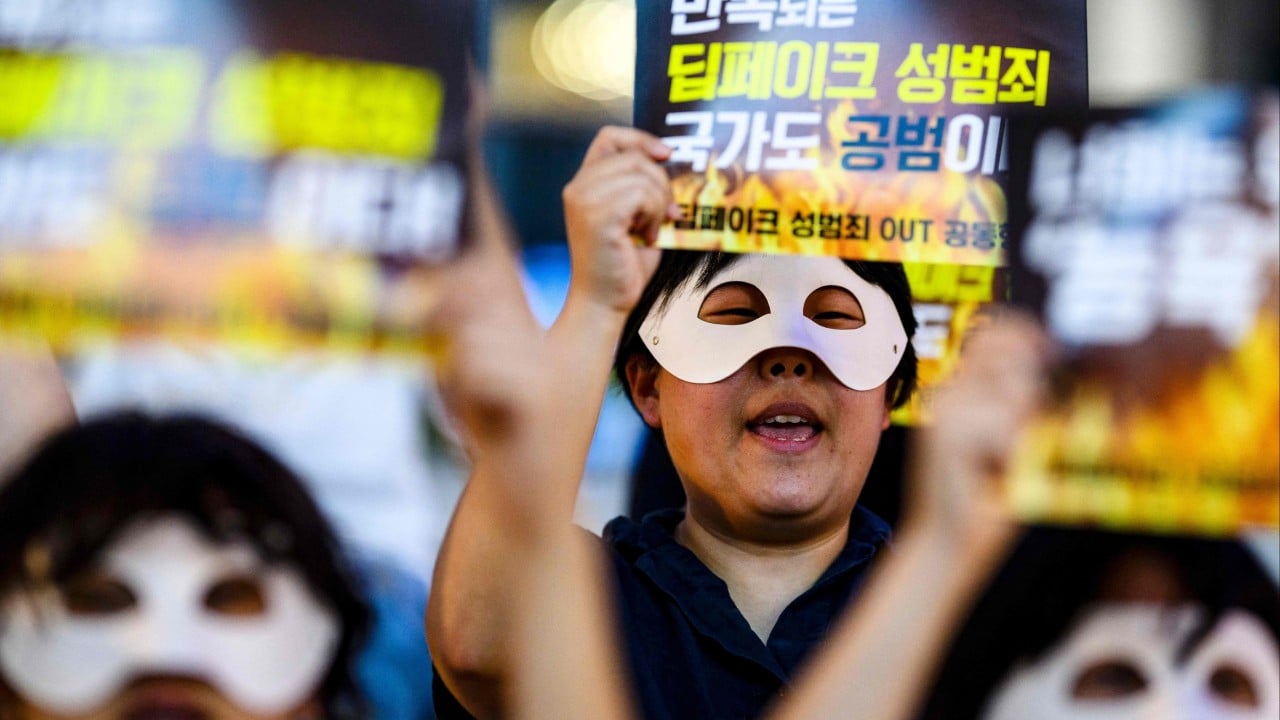
South Korea is working to close a legal loophole that allowed people sharing AI-generated pornography featuring fictional personas to go scot-free.
The move by lawmakers came after a court in Goyang, Gyeonggi province, acquitted a man accused of distributing deepfake images of nude women in a Telegram chat room.
Despite prosecutors presenting the evidence under a law carrying up to seven years in prison or a maximum fine of 50 million won (US$35,341), a judge last August ruled that the victims were virtual, not human.
“There is no material confirming the origin or synthesis method of the image, making it difficult to conclude that a real person was depicted,” Lee Jung-hoon of the Uijeongbu District Court said in the case, as reported by the Dong-A Ilbo.
That verdict prompted representative Huh Young and nine other lawmakers of the ruling Democratic Party of Korea to propose a bill criminalising the creation, distribution and possession of sexually explicit material made using artificial intelligence, even when it does not depict a real person.
“Rapid advances in AI have made it easy for anyone to create images of virtual people that are difficult to distinguish from real individuals,” the legislators said in the proposal referred to detailed review by the subcommittee of the National Assembly’s Legislation and Judiciary Committee, according to The Korea Times.
“However, the technology has also been misused to produce and distribute manipulated sexual content that causes sexual humiliation or disgust, which is emerging as a serious social problem.”