
The international physics community has hailed a Chinese-led discovery as a “triumph” after researchers presented the strongest evidence yet for the existence of the “glueball” – a mysterious particle made of pure force.
On Chinese social media, the conversation centred on whether the research could lead to a Nobel Prize.
The announcement was made last week at the International Conference on High Energy Physics in Natal, Brazil.
Made entirely of gluons – the tiny, massless carriers of the force that holds atomic nuclei together – glueballs were theoretically predicted in the early 1970s but remained one of the greatest unsolved puzzles of modern physics.
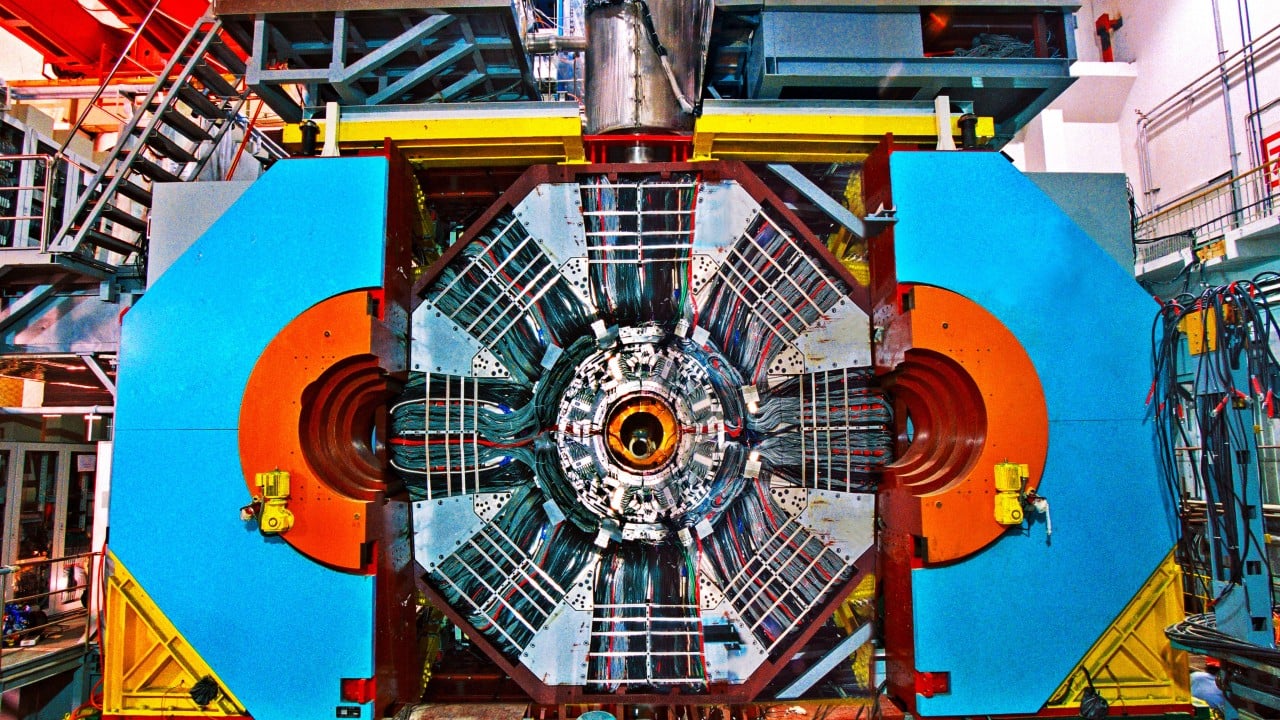
The breakthrough came after 15 years of work by researchers from 15 countries, who sifted through billions of measurements made at an underground collider in western Beijing to piece together the strongest evidence yet for the long-sought particle.
Colin Morningstar, a theoretical physicist at Carnegie Mellon University in Pittsburgh, Pennsylvania, called the study “an experimental triumph”.