
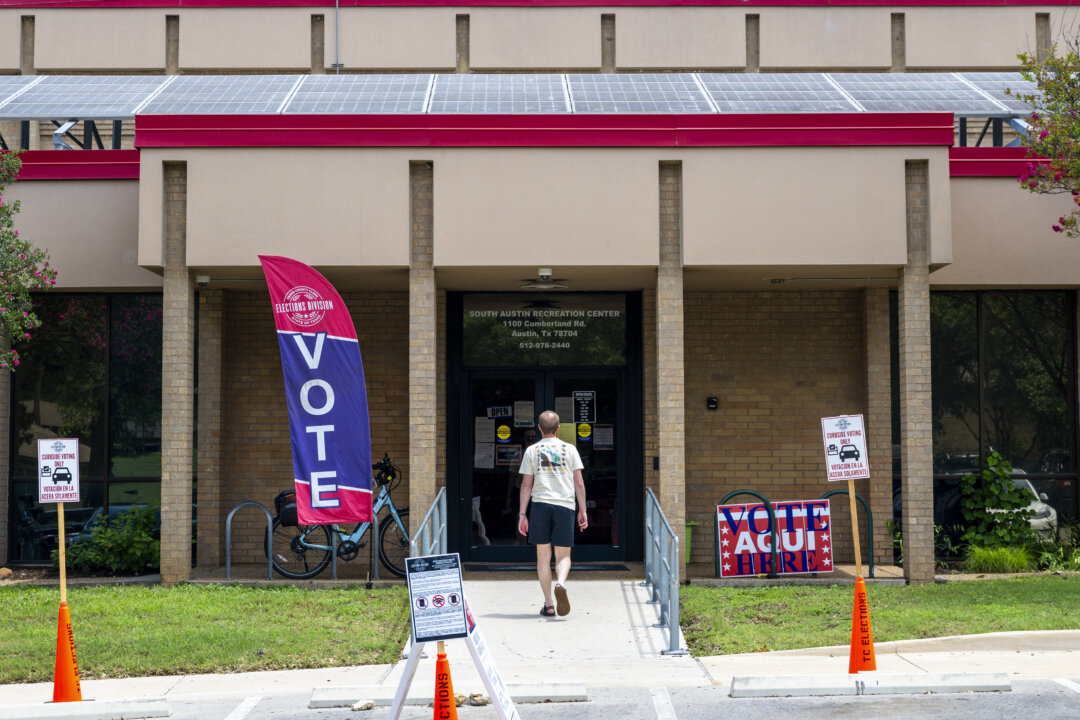
A divided Supreme Court ruled on June 29 that states could count mail-in ballots received after Election Day as long as they were postmarked by then.
The case, known as Watson v. Republican National Committee (RNC), focused on a challenge to Mississippi’s practice of accepting late-arriving ballots. However, the 5–4 ruling affects the approximately 30 states that the National Conference of State Legislatures says accept mailed ballots received after Election Day.
Within hours, President Donald Trump criticized the ruling on Truth Social, saying it was a “tremendous loss … concerning Voter’s Rights” that permits ballots to be counted “LONG AFTER an Election is over.” The president said the ruling shows how important it is to pass the stalled proposed SAVE Act, which would require voters to show photo ID and proof of citizenship, and ban mail-in ballots, except for illness, disability, travel, or military deployment.
The RNC and the Mississippi Libertarian Party argued that Mississippi’s law conflicted with three federal laws setting the date of the election.
The first law, 2 U.S.C. Section 7, sets the day for the election of representatives for the Tuesday after the first Monday in November. The second, 2 U.S.C. Section 1, sets the day for the election of senators on the Tuesday following the first Monday in November. The third, 3 U.S.C. Section 1, sets the day for the appointment of presidential electors for the same Tuesday.
All ballots had to be received by Election Day, they argued.
The Supreme Court disagreed, holding that voters just needed to cast their votes by Election Day.
States Decide When Ballots Can Be Received
Justice Amy Coney Barrett wrote in the majority opinion that the case was not about the Constitution or even the scope of congressional authority to regulate federal elections.
The case was about three federal election-day statutes, which said the “defining element of an ‘election,’” was always that voters chose a candidate, not when a ballot was received for tabulation.
“The electorate’s choice is made when voting is complete, not when ballots are received,” she said.
This principle can be seen by looking at the federal Uniformed and Overseas Citizens Absentee Voting Act, which confirms that states determine when ballots may be received, Barrett said.
The statute “repeatedly presupposes that ballot receipt is a matter of state law,” she said.
Barrett said that Mississippi’s law was not preempted by the federal election-day statutes because those statutes only regulated the timing of the election. She said they were not concerned with the administrative issue of when ballots must be received by officials.
One of the federal statutes, the Uniformed and Overseas Citizens Absentee Voting Act, makes it clear that states determine the rules regarding official receipt of ballots.
That law mandates that states allow absent military and overseas voters to cast absentee ballots in federal elections and establish a federal absentee voting system “as a backup.”
The act “repeatedly presupposes that ballot receipt is a matter of state law,” Barrett said.
When Does a Voter’s Choice Count?
In his dissent, Justice Samuel Alito took a different tack, finding that the choice only becomes “authoritative” when the ballot is received, and the choice itself is required to “be made on election day.”
Alito questioned whether a ballot in transit truly represents a completed choice. He said the problem with considering the choice to have been made when a voter presents a ballot to “the party who will deliver it,” is that the U.S. Postal Service allows customers to recall mail that is already in mid-transit, and many parcel services do the same.
“Given that fact, is a voter’s ‘selection’ truly ‘final’ when he or she puts a ballot in the mailbox?” Alito said.
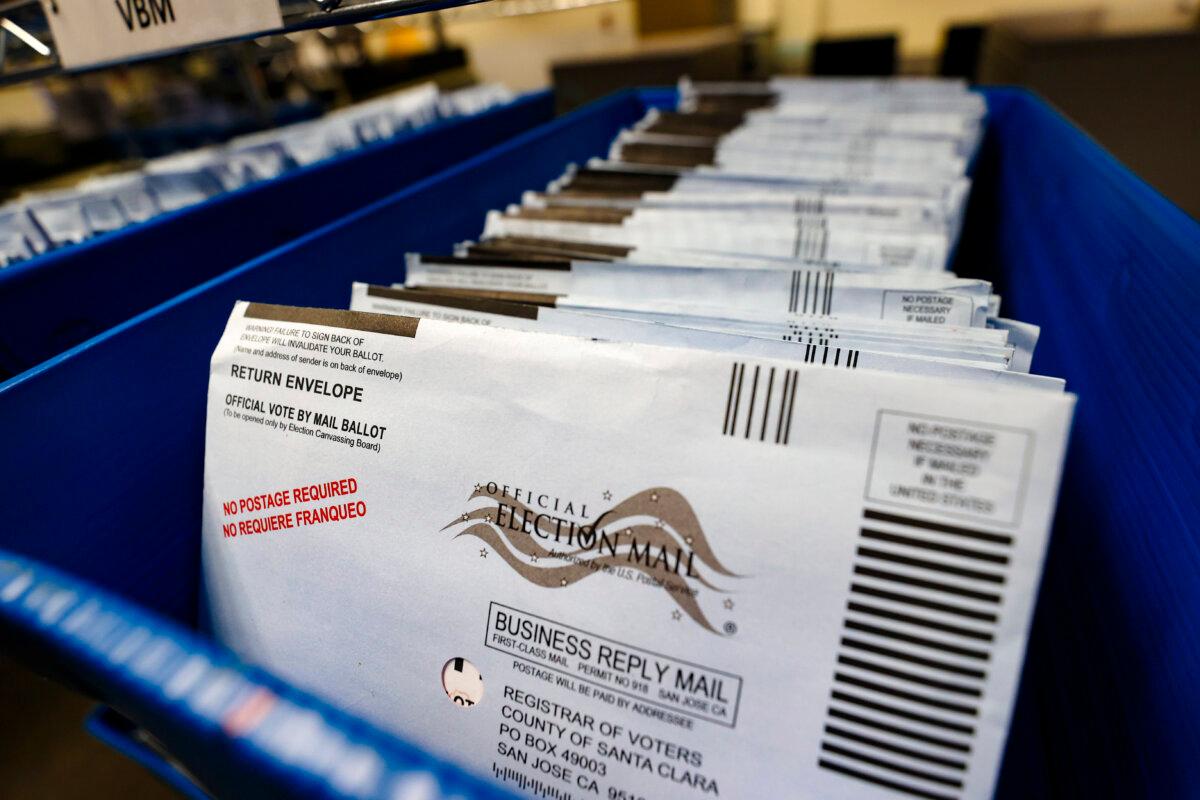
Dissent Says Mississippi’s Law Illegally Extends Election Day
The dissenting justices—Alito, Clarence Thomas, Brett Kavanaugh, and Neil Gorsuch—said all the ballots taken together are like a document expressing the voter pool’s choice, and “what the election-day statutes demand is that this authoritative choice be made on election day.”
“If ballots received after election day are added to the set of ballots that dictate the election’s outcome, the electorate’s choice does not occur on election day, and the federal election-day statutes are violated,” Alito wrote in his dissent.
“The acceptance of these late-arriving ballots effectively postpones the date on which the electorate’s choice is made, and federal law precludes that postponement.”
A look at the Civil War showed that such was the correct historical understanding, he said. States used different approaches during the conflict—such as mailing ballots or proxy votes—to ensure election officials had soldiers’ ballots by election day.
But Mississippi didn’t identify any state that extended the ballot-receipt window during the war, Alito said.
Possibility of Voter Fraud
Alito also warned that counting late-arriving ballots created “a slurry of troubling election-law questions and risks further undermining Americans’ confidence in election integrity.”
He noted that the ruling didn’t apply any time limit: Mississippi counted ballots up to five days late, but that could be extended much further. Some states would date ballots based on the day they were signed, not by postmark, he added.
“Indeed, some States will count mail-in ballots that arrive as late as 21 days after election day,” he wrote.
And they didn’t need to be delivered by the postal service; a ballot harvester, a courier, or an Uber driver would suffice.
Barrett agreed, but said that didn’t matter because it had nothing to do with the legal question at hand. She also dismissed Alito’s concerns about late ballots “trickling in” and flipping the outcome of the election. “Last-minute flips are possible, because the election-day statutes set no deadline for counting ballots or certifying election results,” she said.
“The question today is not whether requiring ballots to be received by election day is a good or bad idea; the question is whether the idea has made its way into the United States Code,” she wrote.
We had a problem loading this article. Please enable javascript or use a different browser. If the issue persists, please visit our help center.